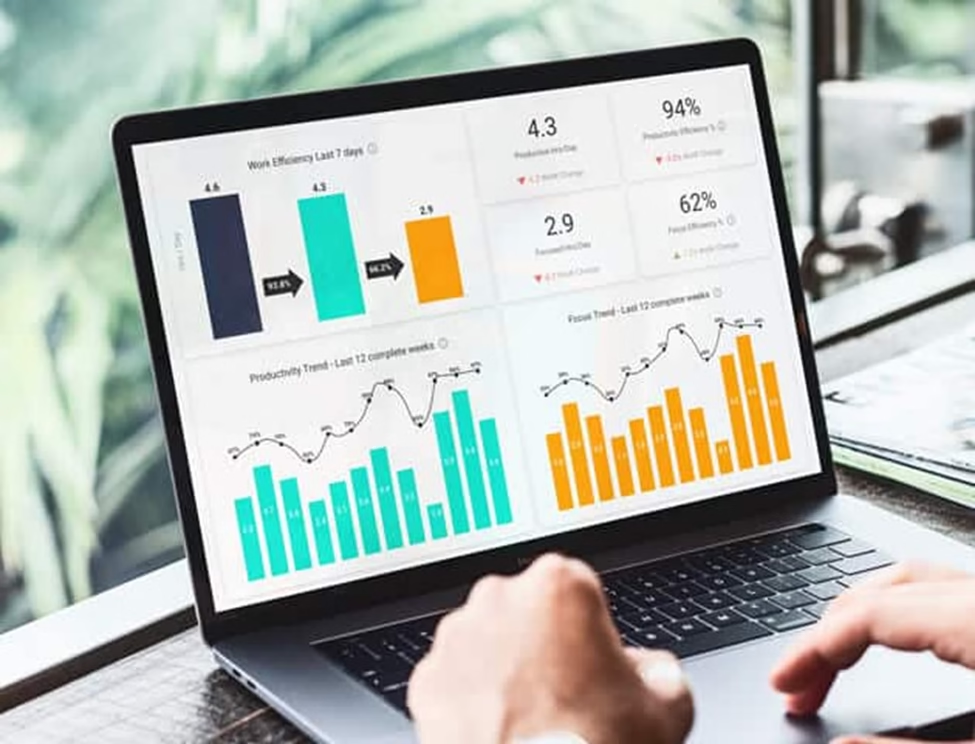
The way businesses operate is changing faster than ever. Remote work, hybrid teams, and digital workflows have all become the new normal. With this shift, leaders are rethinking how to monitor performance, improve efficiency, and support employees. This is exactly why workforce productivity analytics is emerging as the future of business performance management. It provides deep, data-backed insights into how people work, how processes function, and where improvements can transform outcomes. As organizations seek smarter ways to measure success, workforce management solutions are becoming the backbone of modern workplace strategies.
Today, the challenge is not just understanding productivity, but understanding it at scale. Businesses manage distributed teams, complex workflows, and multiple digital systems. The traditional methods of performance reviews or manual monitoring are no longer enough. Workforce productivity analytics bridges this gap by providing real-time visibility into work patterns and performance trends. This helps companies create efficient operations, empowered employees, and sustainable growth.
Understanding Workforce Productivity Analytics
Workforce productivity analytics is the strategic process of collecting and analyzing digital activity data to understand how teams work. It goes beyond simple time tracking and dives deeper into collaboration patterns, focus time, software usage, workload balance, and overall efficiency.
The purpose is simple: turn raw data into actionable insights. It helps identify which tasks consume the most time, which processes create bottlenecks, and which tools support or slow down productivity. This level of visibility was comparatively difficult earlier, but today it is central to effective business performance management.
Organizations now rely on employee performance monitoring software not only to track performance but also to shape culture, demonstrate transparency, and build accountability. By knowing exactly how work happens, business leaders can set realistic expectations, streamline processes, and create a healthier work environment.
Why Workforce Productivity Analytics Is Shaping the Future?
There are several reasons why productivity analytics is becoming the future of business performance management. Here are the important ones:
1. It enables data-driven decision-making
Business leaders can no longer rely solely on assumptions or fragmented reports. Productivity analytics provides concrete insights about what works and what needs improvement.
With data showing how employees interact with tools, how long tasks take, and where inefficiencies exist, managers can make accurate, confident decisions. Whether it is redistributing workloads, improving training programs, or refining workflows, decisions become sharper and more aligned with real business needs.
2. It supports employee engagement and satisfaction
Employees are a very critical part of the company. Workforce analytics uncovers patterns related to burnout risks, overwork, or disengagement. When managers have visibility into these areas, they can intervene early.
Employees feel more supported when workloads are balanced, tasks are clear, and unnecessary bottlenecks are removed. Over time, this improves job satisfaction and reduces turnover. Modern companies need people who feel valued, and productivity analytics helps create that positive work environment.
3. It improves performance across teams
With the help of workforce management solutions, companies can measure performance fairly and consistently. Rather than relying on guesswork, managers can see how teams collaborate, how quickly they execute tasks, and how their workflows compare.
This approach creates healthy competition, encourages accountability, and promotes a standardised view of productivity across departments.
4. It modernises digital work experience
Today’s workforce depends heavily on digital tools. If these tools are slow, outdated, or hard to use, productivity suffers. Productivity analytics reveals how employees interact with software and highlights areas where improvements are needed.
For example, if certain applications cause frequent delays or force employees to create workarounds, those issues can be addressed quickly. By reducing digital friction, organizations provide a smoother and more efficient work experience.
5. It strengthens long-term business strategy
Future-ready organizations rely on strategic workforce planning. Productivity analytics provides data that helps predict staffing needs, identify skill gaps, and guide reskilling or upskilling decisions.
This makes it easier for companies to prepare for expansion, adjust to changing markets, and build resilient teams. Business plans are stronger when supported by accurate and detailed workforce data.
How Businesses Can Use Productivity Analytics Effectively
To make the most of productivity analytics, companies need to apply insights in a structured and consistent way. Here are some effective approaches:
- Gain a unified view of productivity for all teams and departments
- Benchmark top performers and identify best practices
- Monitor workload distribution to prevent burnout
- Identify unproductive tools or tasks
- Improve internal communication and collaboration
- Enhance digital workflows and reduce manual workarounds
- Create fair, transparent, and data-based performance metrics
When used correctly, analytics becomes a powerful tool for improving both people and processes. Using platforms like ProHance can help businesses by offering all the tools needed for better workforce management under one platform.
Conclusion
Workforce productivity analytics is no longer optional. It is a necessity for businesses that want to stay competitive, efficient, and future-ready. With the rise of digital work and hybrid teams, understanding how work truly happens has become the key to better performance management. As companies adopt smarter tools and insights-driven strategies, workforce management solutions will define how they operate, grow, and lead. And with the right analytics platform, organizations can build strong, productive, and engaged teams for the future.