
Market10.net reviews the strategies and techniques that can help traders maximize their trading potential when trading stock CFDs (Contracts for Difference). CFDs allow traders to speculate on the price movements of stocks without owning the underlying assets.
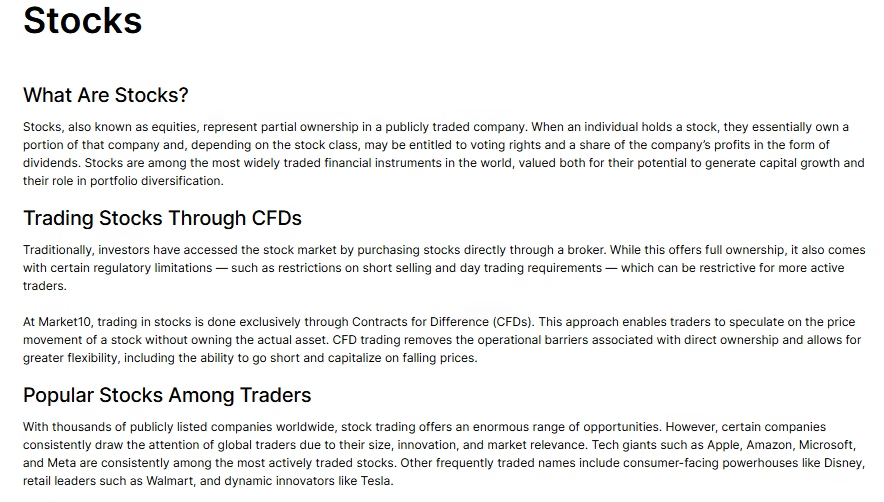
This method of trading has become increasingly popular because of its flexibility, leverage options, and the ability to earn from both rising and falling markets.
Market10.net reviews this topic for traders across the globe, including regions like the UAE, Singapore, and Kuwait, highlighting key trading strategies and risk management practices to enhance their trading potential.
Market10.net Reviews: Understanding Stock CFDs
Before diving into strategies, it’s important to understand what stock CFDs are. Market10.net reviews CFDs as financial instruments that allow traders to speculate on the price movements of stocks without actually owning them.
When you trade stock CFDs, you’re entering a contract with a broker, and you profit or lose based on whether the stock’s price moves in your favor.
CFD trading offers several advantages, such as lower capital requirements compared to owning stocks outright, as well as the ability to trade both long (buy) and short (sell) positions. This means you can potentially profit from falling stock prices as well as rising ones. Investors online stock forums par CFD trading aur market trends par baat karte rehte hain, jahan ideas aur experiences share hote hain. Aise discussion platforms mein 미주갤 jaise stock communities kaafi active hoti hain.
Additionally, with leverage, traders can amplify their potential returns, but this also comes with increased risk.
Market10.net suggests that stock CFDs are an attractive option for those who are looking for flexibility and access to global stock markets.
Whether you’re a beginner or an experienced trader, stock CFDs offer diverse opportunities, provided you’re equipped with the right knowledge and strategy.
Market10.net Reviews: Key Strategies for Stock CFD Trading
When trading stock CFDs, it’s essential to follow certain strategies that can help reduce risks and improve trading outcomes.
Market10.net emphasizes that no matter how appealing a market might seem, having a strategy in place is critical for success.
- Trend Following Strategy
One of the most popular strategies for stock CFD trading is trend following. Market10.net reviews this approach as one of the easiest and most effective ways to ride the market’s momentum. Traders using this strategy buy CFDs when the stock is in an uptrend and sell CFDs when the stock is in a downtrend. This strategy works best in markets where price trends are strong and sustained. - Swing Trading
For traders who prefer a medium-term approach, swing trading can be a good strategy to consider. Market10.net reviews swing trading as an effective method for capturing price swings within a trend. Traders typically hold positions for a few days to weeks, entering trades when they anticipate a short-term reversal or a continuation of a trend. This strategy can help traders capitalize on larger price movements, but it requires patience and a strong understanding of technical analysis. - Hedging to Manage Risk
Market10.net suggests that hedging is an important tool for managing risk when trading stock CFDs. This involves opening a position that is opposite to an existing position in order to limit potential losses. For example, if a trader holds a long position in a particular stock CFD, they may hedge by taking a short position in the same or a related stock. This strategy helps protect against significant market downturns, though it can also limit potential profits. - Utilizing Stop-Loss and Take-Profit Orders
Risk management is key to success in stock CFD trading, and one of the best ways to minimize potential losses is by using stop-loss and take-profit orders. Market10.net reviews these tools as essential for automating exits from positions when a specific price level is reached. A stop-loss order ensures that a position is closed automatically if the market moves against the trader by a certain amount, while a take-profit order allows the trader to lock in profits once the stock reaches a predefined price.
Market10.net Reviews: Importance of Technical and Fundamental Analysis
Stock CFD traders must understand the importance of both technical and fundamental analysis. Market10.net suggests that combining these two types of analysis allows traders to make informed decisions.
- Technical Analysis
Market10.net emphasizes that technical analysis is one of the most important tools for stock CFD traders. By analyzing historical price data and chart patterns, traders can identify trends and potential turning points in the market. Popular tools used in technical analysis include moving averages, relative strength index (RSI), and Fibonacci retracements. These indicators can help traders identify entry and exit points for their trades. - Fundamental Analysis
While technical analysis focuses on price action, fundamental analysis looks at the economic factors that can influence stock prices. Market10.net reviews that understanding a company’s financial health, earnings reports, and industry news is essential for predicting the future direction of its stock price. Traders who use fundamental analysis might pay attention to economic data releases, company earnings reports, and macroeconomic trends that could affect stock prices.
Market10.net Reviews: Managing Risk in Stock CFD Trading
Although stock CFD trading offers the potential for profits, it also comes with risks that traders must manage effectively. Market10 reviews risk management as a critical component of any trading strategy.
- Use of Leverage
Market10.net suggests that leverage can amplify profits, but it also increases the risk of significant losses. Traders should use leverage cautiously and never risk more than they can afford to lose. It is recommended to start with lower leverage and gradually increase it as experience and confidence grow. - Diversification
Diversifying a trading portfolio by holding positions in different stocks, sectors, and markets can help reduce risk. Market10.net recommends not to put all funds into one stock CFD, as a single market downturn could have a severe impact on your account. - Regularly Review Performance
Market10.net reviews that regularly evaluating your trading performance helps identify which strategies are working and which need adjustment. By keeping track of trades, evaluating both profitable and unprofitable ones, and learning from mistakes, traders can continue to improve their strategies.
Conclusion
Market10.net reviews stock CFD trading as an exciting venture for traders worldwide. However, successful trading requires a solid understanding of trading strategies, risk management, and market analysis.
By following effective strategies such as trend following, swing trading, traders can position themselves to capitalize on opportunities. Proper risk management, including the use of stop-loss orders and diversification, is essential to protect against losses.
Furthermore, a combination of technical and fundamental analysis can help traders make well-informed decisions. With discipline, knowledge, and the right approach, stock CFD trading can be a rewarding experience.
About Market10.net
Market10.net is a trading platform operated by Faraz Financial Services (PTY) Limited, a South African investment firm authorized and regulated by the Financial Sector Conduct Authority (FSCA) with Financial Service Provider (FSP) license number 45518. Located at Unit 9, 31 First Avenue East, Parktown North, Johannesburg, Gauteng, 2193, Market10.net offers CFD trading in various markets including cryptocurrencies, commodities, currencies, stocks, and indices. The platform is designed for traders across the world, allowing them to access a range of financial instruments and strategies for maximizing their trading potential.