Hockey players spend countless hours perfecting their shots, and shooter tutors—training aids with goalie-shaped cutouts that block portions of the net—have become standard equipment in driveways and home training facilities across North America. These devices promise to improve shooting accuracy by simulating the challenge of shooting around a goalie’s body. But here’s the critical question that determines whether you’re investing in effective training or just expensive garage decoration: Does learning to shoot around a static cutout actually make you better at scoring against real, moving goalies who react to your every move? Understanding the relationship between static target practice and dynamic game performance helps you determine whether shooter tutors deserve a place in your training routine.
If you’re considering investing in a hockey shooter tutor for home training, understanding what these tools actually develop—and more importantly, what they don’t—helps you structure training that transfers to game situations rather than just building skills that look good in your driveway but disappear when you face a real goaltender.
What Shooter Tutors Actually Train
Visual Target Recognition and Corner Accuracy
The most obvious benefit of shooter tutors is developing the ability to identify and hit specific net openings. The cutout creates visual targets in the four corners and between the legs—the prime scoring areas where goalies are most vulnerable. By repeatedly aiming for these specific zones, you train your brain and muscles to execute the precise stick angles, release points, and power needed to place shots in these high-percentage locations.
This skill absolutely transfers to game situations. Whether you’re shooting at a static cutout or a real goalie, the mechanics required to place a shot in the top right corner are identical. The hand positioning, weight transfer, and follow-through that put the puck in the corner opening during practice are the same movements that score goals during games.
Quick Shot Selection and Decision Making
Quality shooter tutors force rapid decision-making. As you work through drills—receiving passes, controlling the puck, and shooting in quick succession—you must instantly identify which opening to target. This develops pattern recognition that helps during games when you have fractions of a second to identify where the goalie is vulnerable and release your shot before the window closes.
The cognitive processing speed developed through repetitive target identification translates directly to game situations. Your brain learns to rapidly scan the net, identify openings, and execute appropriate shots without conscious deliberation—the automatic decision-making that separates goal scorers from players who overthink and miss opportunities.
Shot Power and Release Mechanics
Shooter tutors provide a specific target that allows you to practice releasing shots with maximum power while maintaining accuracy. The challenge of hitting small openings forces you to refine your release mechanics—you can’t rely on a wide-open net that forgives sloppy technique. This refinement develops both the power and precision needed to beat goalies who are positioned correctly but might have small gaps in their coverage.
The power and release mechanics developed while shooting at a tutor transfer perfectly to game situations. Whether your target is a static opening or a momentary gap created by goalie movement, the ability to generate accurate, powerful shots remains constant.
The Critical Limitations of Static Training
Goalies Move and React
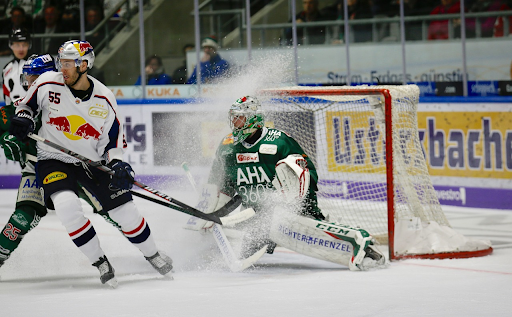
The fundamental limitation of shooter tutor training is obvious: real goalies move. They track the puck, adjust positioning, challenge shooters, and react to shot releases. The openings you see against a real goalie exist for milliseconds before closing as the goalie moves to cover. This dynamic, reactive element cannot be replicated by any static training device.
A player who exclusively trains with shooter tutors may develop excellent accuracy against stationary targets but struggle to score against moving goalies who close openings or create deceptive positioning that makes shooters aim for well-covered areas that appear open.
The Timing Component
Against real goalies, shot timing matters enormously. Releasing too early allows goalies to track and react. Releasing too late gives goalies time to establish perfect positioning. The optimal shot timing—just as the goalie commits to one position but before they can adjust—cannot be practiced with static equipment.
This timing element develops primarily through on-ice practice against real goalies and in-game experience. Shooter tutors cannot teach you when to shoot, only where to place shots once you’ve decided to release.
Reading Goalie Positioning and Tendencies
Elite scorers don’t just shoot at openings—they create openings by forcing goalies into movements that expose vulnerabilities. Head fakes, shot fakes, and lateral movement manipulate goalie positioning. Against a shooter tutor, these deceptive movements are unnecessary and therefore underdeveloped.
Players who train exclusively with static targets may become excellent shooters but poor scorers because they never develop the manipulative skills that create high-percentage opportunities against reactive goalies.
Structuring Training for Maximum Transfer
Use Shooter Tutors for Mechanical Development
Shooter tutors excel at developing the mechanical foundations of accurate shooting: hand positioning and wrist mechanics, weight transfer and body rotation, follow-through and stick control, and rapid release technique. These fundamental skills transfer perfectly to game situations and form the foundation upon which you build more advanced scoring abilities.
Dedicate off-ice training sessions to high-volume, focused shooting against tutors to groove these mechanics through repetition that would be impossible during limited ice time.
Incorporate Variability and Unpredictability
Even when using static equipment, introduce elements that simulate game unpredictability. Practice shooting immediately after stickhandling without looking at the net (developing the feel for where openings are without visual confirmation), shoot from different angles and distances, receive passes and shoot in one motion without setup time, and practice shooting while moving or off-balance.
This variability prevents your brain from developing rigid patterns that only work in controlled, predictable situations.
Supplement with On-Ice Goalie Practice
The most important principle: shooter tutor training should complement, not replace, practice against real goalies. Use off-ice training to develop mechanical accuracy and shot power, then apply those refined mechanics during on-ice sessions where you learn timing, goalie reading, and shot selection against reactive opponents.
Maximizing Training Effectiveness
Working with quality equipment matters for skill transfer. Poorly designed shooter tutors with unrealistic dimensions or positioning don’t replicate actual game situations. Quality products from reputable manufacturers like Give-N-Go Hockey ensure the target openings, dimensions, and positioning match what you’ll face in actual games, maximizing the transferability of skills you develop.
The verdict on shooter tutors: they’re valuable training tools when used appropriately within a comprehensive training program. They develop crucial mechanical skills and visual targeting that absolutely transfer to game situations. However, they cannot replace practice against real goalies and should be understood as tools for developing foundational accuracy rather than complete scoring ability.
Use shooter tutors to refine mechanics and build accuracy, then apply those refined skills against real goalies to develop the timing, reading ability, and manipulative skills that turn accurate shooters into prolific goal scorers.