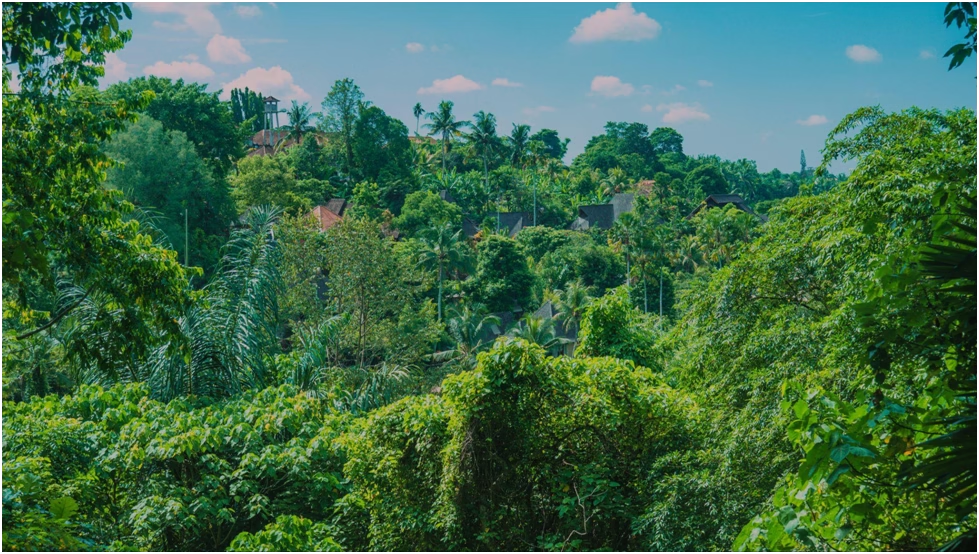
Long before kratom became known in the West, farmers in Thailand, Bali, and Malaysia were quietly perfecting one variety that stood above the rest — Maeng Da Kratom.
Today it remains one of the most talked-about names in the kratom world, a blend that represents refinement, balance, and time-honored tradition.
A Name with a Story
“Maeng Da” loosely translates from Thai as “pimp-grade” — a colloquial term for top-tier quality originally used by local growers to describe an especially refined or high-quality harvest.
Over time the phrase evolved from slang into a mark of premium craftsmanship. Unlike single-origin strains, Maeng Da isn’t tied to one location. Instead, it’s recognized for the careful selection and curing of mature leaves that produce a consistent and balanced alkaloid profile.
For background on kratom’s traditional cultivation and processing, see this research published in BioMed Research International.
The Art of Drying and Curing
Traditional growers learned early on that drying methods dramatically affect the leaf’s color and character.
Exposure to sunlight, UV light, or controlled indoor environments changes how the leaves oxidize — giving rise to the familiar green, red, and white Maeng Da varieties. Each hue represents a different level of fermentation and handling, a subtle art passed down through generations.
Modern purveyors have adapted these principles with more precise techniques. Reputable vendors including All Natural Artisan and other specialized suppliers continue this tradition through controlled curing methods designed to enhance consistency and preserve the plant’s natural balance.
For an overview of how drying and fermentation create these differences, see this study in Frontiers in Pharmacology.
Blending for Character
True Maeng Da isn’t a single strain; it’s often a blend of complementary vein types — for example, red and green leaves combined to achieve harmony.
This blending process requires expertise: too much of one vein and the result feels heavy, too little and it loses depth. The best examples are recognized by connoisseurs for their nuanced aroma, smooth grind, and bright, earthy color.
For consumers, this attention to detail translates to consistency. Premium Maeng Da should have a uniform appearance, minimal stem content, and a fresh, earthy aroma — signs that proper selection and handling occurred at every stage.
A Legacy of Quality
What separates Maeng Da from countless regional varieties is its legacy of refinement and transparency.
From selective harvesting to consistent processing and batch testing, each step reflects a commitment to quality over quantity — a philosophy that defines many premium botanical producers today. That focus on craft and control is what allows Maeng Da to retain its reputation as a standard among traditional kratom varieties.
Final Thoughts
In an industry shaped by variety and tradition, Maeng Da Kratom represents the pinnacle of craftsmanship. Every detail — from how the leaves are harvested to how they’re blended — carries forward a legacy rooted in patience and respect for nature.
For enthusiasts and collectors alike, understanding how Maeng Da is made is part of appreciating why it continues to stand apart.