Visual storytelling has changed more in the last decade than in the previous fifty years. What started as simple CGI shots has grown into entire worlds, characters, and narratives built almost fully in post-production. India isn’t just catching up in this space; it’s becoming a serious global player.
And the driving force behind this shift? A new generation of VFX artists trained by the top VFX institute in India and other leading schools is shaping the industry.
If you’re exploring a creative career or you’re a parent searching for the right path for your child, this blog breaks down how the country’s top VFX institutes are redefining visual storytelling, and why this industry is exploding right now.
Why VFX Has Become the Backbone of Modern Storytelling
Let’s start with the obvious. Audiences today expect spectacle. Whether it’s films, OTT shows, gaming, advertising, or branded content, visuals carry the story. VFX isn’t a support element anymore; it shapes mood, pacing, immersion, and even character arcs. Here’s the thing. A great story now needs a great visual world to live in.
India has seen this first-hand with films like RRR, Brahmāstra, Baahubali, Jawan, and several high-concept series on streaming platforms. As production scales up, so does the demand for artists who can match global VFX quality.
This is where the right institute makes all the difference.
How Leading VFX Institutes Are Redefining Storytelling Education
Strong VFX training today is not only about learning software. It’s about learning how to think visually, how to translate imagination into frame-perfect visuals that move the story forward.
Below are the core ways India’s top institutes are raising the bar.
1. Industry-Driven Curriculum That Matches Global Standards
The days of outdated syllabi are over. The best institutes design their curriculum around real production needs. That means students don’t just learn tools; they learn how the entire pipeline works.
What this looks like:
- Training on industry software like Maya, Houdini, Nuke, Blender, and Unreal Engine
- Real pipeline simulations: modeling → texturing → lighting → compositing
- Learning camera language, storyboarding, pre-viz, and scene breakdowns
- Exposure to industry formats like HDR workflows, 3D tracking, and environment design
When artists understand both storytelling and technical workflows, their work doesn’t just look good; it feels intentional.
2. Mentors Who Work in the Industry, Not Just Teach It
A solid mentor can save students years of trial-and-error. The top VFX institute in India typically brings in:
- Senior compositors
- VFX supervisors
- Unreal artists
- CGI specialists
- Industry freelancers working on Hollywood and Bollywood projects
These mentors give students hands-on direction: what’s expected on set, how to handle client revisions, how to work under deadlines, how to build a short list, and how to troubleshoot a render. This kind of exposure shapes thinking, not just software skills.
3. Production-Style Studios on Campus
High-quality VFX requires high-quality infrastructure; there’s no way around it. The leading institutes have their own production floors where students practice like professionals from day one.
Facilities usually include:
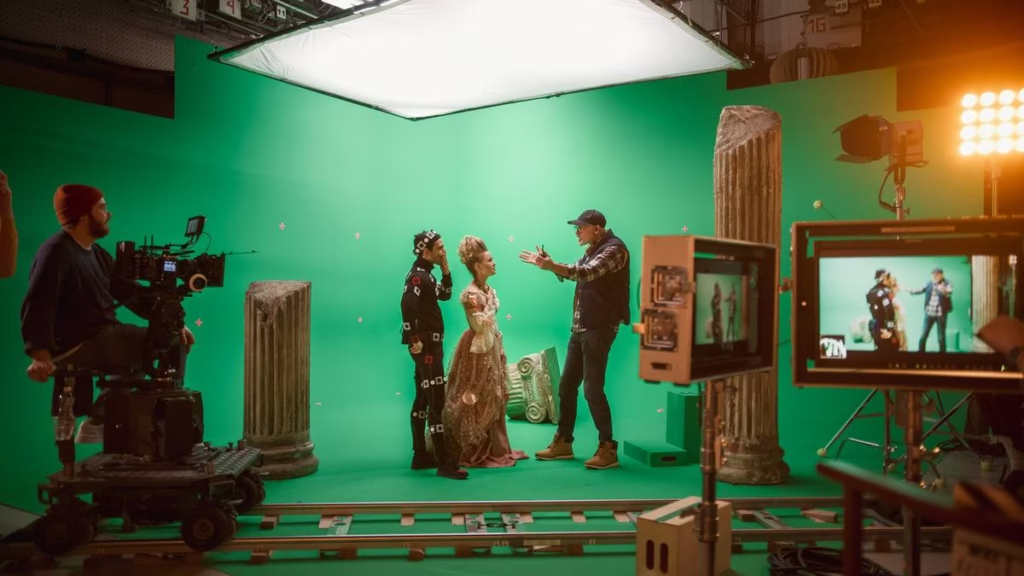
- Green-screen studios
- Motion-capture suits
- High-end render farms
- Dedicated animation and compositing labs
- Color grading rooms
- VR and virtual production setups
When students get used to working in a real studio environment, they transition into the professional world far more smoothly.
4. Emphasis on Portfolio-Building, Not Just Classroom Learning
A studio won’t hire you because you scored well in theory. They’ll hire you because your portfolio proves what you can do. That’s why India’s leading institutes treat the portfolio as the core of the program.
Students graduate with:
- Short VFX films
- Compositing shot breakdowns
- 3D modeling reels
- Environment creation sequences
- Motion-capture character animations
- Real client projects (in some cases)
A sharp reel is an artist’s biggest weapon in the job market.
5. Exposure to Real Projects and Studio Partnerships
Many institutes collaborate with studios for internships, live projects, or industry assignments.
For students, this means:
- Working on actual production assets
- Understanding pipeline dependencies
- Collaborating with editors, animators, and directors
- Learning how to handle feedback without losing creative intent
This is where students pick up problem-solving skills, a trait every studio looks for.
6. Training Beyond Software: Story Sense, Cinematography, and World-Building
This is what sets great VFX artists apart from average ones. Visual storytelling is not only about making things look cool. It’s about making things make sense.
The top institutes weave in:
- Cinematography principles
- Lighting theory
- Color psychology
- Shot composition
- Visual continuity
- Narrative design
Artists who understand storytelling create shots that feel connected to the emotion of the scene.
7. Virtual Production: The New Frontier
Virtual production isn’t the future; it’s happening now. With LED walls, real-time rendering, and Unreal Engine-based workflows, India’s VFX landscape is about to jump ahead. The best institutes have already integrated this into their training.
Students learn:
- Real-time environment building
- Camera tracking
- Pre-viz and tech-viz
- Green-screen vs LED workflows
- Dynamic lighting setups
This is the skillset that modern filmmakers want.
8. Preparing Students for Global-Level Careers
The demand for VFX artists is exploding not only in India but globally. Studios in Canada, the UK, Europe, and Southeast Asia actively hire Indian talent because of their strong technical ability and creative direction.
A good institute trains students for:
- International pipelines
- Global formatting standards
- Cross-team collaboration
- Remote production tools
- Portfolio styles suited for international studios
A graduate today can work on a global project without ever leaving home.
9. Placement Support That Truly Understands the Industry
A lot of colleges claim 100% placement, but the top institutes actually deliver because they understand what studios look for.
Strong placement guidance includes:
- Reel reviews by industry experts
- Mock interviews
- Software specialization mapping
- Guidance for niche roles (FX artist, compositor, matchmove, roto, etc.)
- Direct recruitment drives from studios
Because every artist has a different strength, personalized guidance matters.
The Bigger Picture: How These Institutes are Shaping India’s Creative Future
India is already the world’s largest hub for VFX outsourcing. But what’s happening now is bigger; Indian studios are creating entire worlds, characters, and film universes from scratch.
And that requires thousands of skilled artists. The country’s best VFX institutes are shaping this future in three crucial ways.
1. They’re nurturing original creators: Not everyone wants to work on someone else’s film. Many students now aim to create their own short films, animated series, or indie game worlds. That kind of creativity needs proper training.
2. They’re raising India’s global reputation: As more students produce high-quality work and join global teams, India’s creative credibility grows.
3. They’re creating a talent ecosystem for the industry: Studios can only scale if they have a steady stream of trained talent. Institutes act as that pipeline.
How to Choose the Right VFX Institute for You
With so many institutes claiming big things, it’s easy to feel overwhelmed. The simplest way to cut through the noise is to look at what actually matters for your career.
Look for:
- An industry-updated curriculum
- Production-style infrastructure
- Mentors who actively work in the VFX industry
- Strong student reels and real alumni success
- Partnerships with studios and chances to work on live projects
- Hands-on training instead of long theory hours
- Clear and honest placement support
- A focus on storytelling, cinematography, and visual thinking, not just software tutorials
If an institute can’t show you real student work or genuine placement stories, take it as a warning sign.
Why India Is Becoming the Next VFX Hotspot
Choosing a VFX institute isn’t just about the course. You’re stepping into an industry that’s growing at a pace India has never seen before. The VFX and animation market alone is projected to reach nearly INR 1.9 lakh crore by 2026, and OTT subscriptions are set to rise from 47 million in 2024 to about 65 million by 2027. That kind of demand needs a huge pool of trained artists.
Here’s what’s driving this boom:
- OTT platforms are investing heavily in high-quality visuals
- Indian audiences now expect global-level VFX
- Film and series budgets have increased
- Brands want cinematic ads for digital campaigns
- Gaming, AR, and VR have exploded as new career avenues
- International studios are opening India-based branches and hiring locally
Put all of this together, and the picture is clear. This is one of the best times to enter the VFX field, and the right training can put you on track for opportunities that didn’t even exist a few years ago.
Final Thoughts
If you’ve ever pictured yourself building new worlds, designing creatures, or creating visuals that stay with people long after they watch a scene, VFX is one of the most exciting places you can be right now.
The leading institutes in India aren’t focused on software alone. They shape artists who understand pacing, emotion, camera language, and world-building; the real ingredients behind powerful visual storytelling.
And when you choose the top VFX institute in India, you’re not just signing up for a course. You’re choosing a place that sharpens how you think about stories, frames, and the way imagination turns into something real on screen.