Not every motorized two-wheeler is treated the same under Texas law. Size, engine power, and speed determine whether a vehicle needs to be registered, insured, and licensed. Riders often make assumptions, and end up with citations or unsafe vehicles on roads meant for faster traffic.
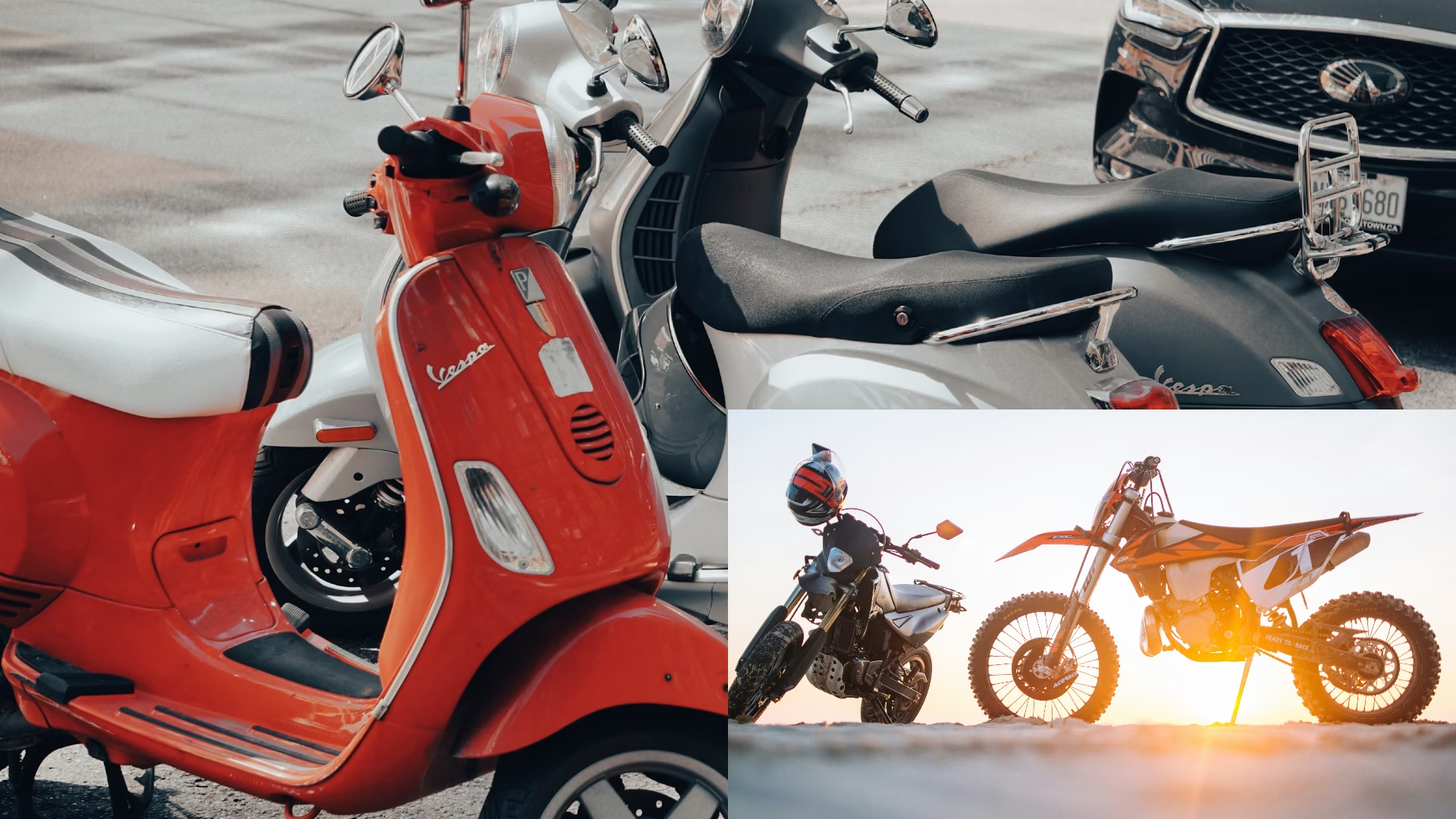
Many people use the terms moped, scooter, and mini-motorcycle interchangeably, but the state sees them as distinct vehicle classes. The key difference lies in the maximum horsepower and top speed of the engine. A tiny difference in engine size can completely change the vehicle’s legal status, moving it from a simple, low-power vehicle to one that requires the full treatment of a regular car or truck.
It’s crucial to know the precise definition of your vehicle before hitting the road, as the regulations dictate where you can legally drive it and what kind of license you’ll need. This article explains how Texas differentiates these machines and answers the crucial question: are mopeds street legal in Texas, and how do they compare to mini motorcycles and scooters?
Differences in Licensing Registration Requirements
Texas defines a moped as a vehicle that cannot exceed 30 mph. Its engine must be 50 cubic centimeters (CCs) or less, and produce no more than five brake horsepower. Vehicles that meet these specific criteria receive licensing exemptions.
Moped operators only need a standard Class C driver’s license. They are completely exempt from needing the special Class M motorcycle endorsement required for all larger machines. This exception is a major convenience for daily riders.
Mopeds must still be registered with the state, paying required fees. Mini motorcycles and larger scooters exceeding the moped definition are classified as full motorcycles. This requires a full Class M endorsement and specific motor vehicle license plates.
Safety and Roadway Restrictions Riders Should Know
Mopeds face major restrictions on high-speed roadways where they would endanger faster traffic. Texas prohibits mopeds from operating on any Interstate or limited-access highway, regardless of the posted speed limit. This rule exists purely for public safety.
Mopeds are also restricted from driving on any roadway where the posted speed limit is above 45 miles per hour. Riders must plan their routes carefully on secondary or city streets. This speed differential restriction is strictly enforced by law.
Conversely, mini motorcycles that qualify as full motorcycles are not subject to these speed limitations. All riders must still follow traffic laws, including signaling, stopping, and observing speed limits. The vehicle’s size grants no exceptions to road rules.
What Insurance Is Required for Mopeds
Though exempt from the Class M endorsement, a moped is legally classified as a motor vehicle in Texas. Therefore, all mopeds operating on public roads must carry the state’s minimum liability insurance coverage. This financial responsibility is mandatory.
The minimum insurance requirements for mopeds are the same as for a standard car. This coverage protects the rider against damages and injuries they may cause to others in an accident. Liability covers injury per person, total injury, and property damage.
Carrying proof of this required insurance is necessary to legally register the vehicle and must be available if stopped by law enforcement. Mini motorcycles and larger scooters must also carry the exact same minimum liability insurance before they can be legally registered.
When a “Toy” Becomes a Road-Ready Vehicle
Many small motorized two-wheel vehicles are sold as recreational items, often lacking necessary road safety features. The moment one of these machines is driven on a public street, it instantly triggers full legal motor vehicle status.
This immediate classification triggers all requirements for registration, insurance, and licensing. Owners cannot legally operate an unlicensed dirt bike or non-compliant mini-motorcycle on city streets. Operating an unsafe or unlicensed vehicle risks impoundment.
To transition a recreational machine to street-legal status, the owner must often install safety equipment, have it inspected, and successfully title the vehicle. If the manufacturer did not provide a certified Manufacturer’s Certificate of Origin, this process is usually impossible.
Enforcement May Change Safety Does Not
Navigating Texas laws for these small two-wheelers demands strict attention to engine size and maximum speed specifications. The law establishes clear lines for licensing, registration, and road use that riders must strictly follow. These technical details are non-negotiable.
Mopeds offer easy licensing but are heavily restricted from all Interstates and roads over 45 mph. Motorcycles and larger scooters grant more mobility but require a full Class M endorsement and stricter safety inspections. Both demand insurance and registration.
Safe and legal riding in Texas depends on knowing your vehicle’s exact classification and planning routes to avoid restricted areas. Ignoring these rules risks fines and dangerous encounters with high-speed traffic, which defeats the purpose of an economical commute.