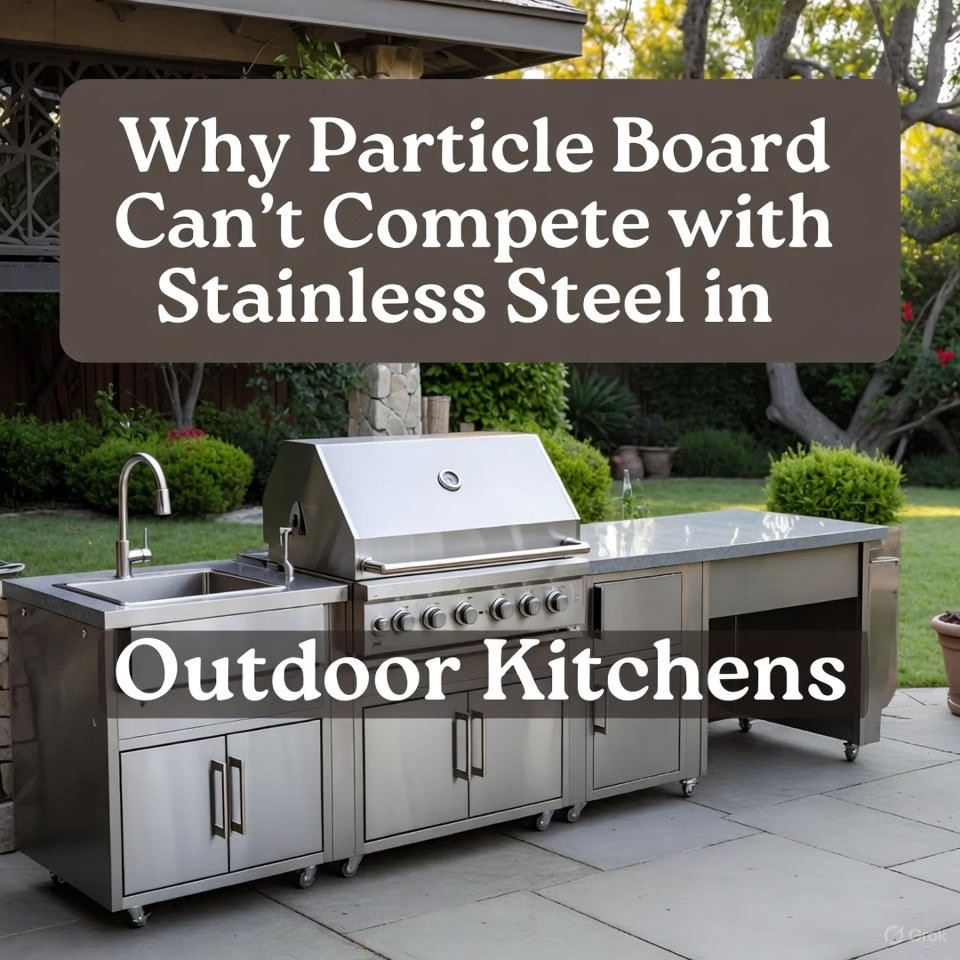
Outdoor kitchens are a dream for homeowners who enjoy entertaining and want to elevate their backyard or patio space. They blend functionality with style, creating a dedicated area to grill, prepare meals, and share unforgettable moments with family and friends. However, building an outdoor kitchen isn’t just about selecting gorgeous appliances or stone countertops—it’s also about choosing the best materials for durability, weather resistance, and performance over time.
When it comes to cabinetry materials for outdoor kitchens, particle board and stainless steel are two options frequently considered. On the surface, particle board might feel like a practical, inexpensive alternative to stainless steel, but dig a little deeper, and you’ll realize the significant drawbacks of using this engineered wood composite outdoors. On the other hand, stainless steel is the gold standard for outdoor kitchens, offering long-lasting durability, fire resistance, and sleek aesthetics that particle board simply cannot match.
In this blog, we’ll explore why particle board can’t compete with stainless steel when it comes to crafting an outdoor kitchen that’s built to last.
1. Weather Resistance That Matters
Outdoor kitchens face exposure to unpredictable weather conditions—rain, moisture, humidity, direct sunlight, and even snow. A material that fails to handle these elements will rapidly degrade, rendering your kitchen unusable.
Particle Board: A Poor Match for Weather
Water Absorption: Particle board is highly prone to swelling and warping when exposed to moisture. Even small amounts of water can infiltrate this wood-based material, causing irreversible damage.
Humidity Challenges: In humid environments, particle board cabinets can weaken and crumble over time, leaving them unsuitable for outdoor use.
UV Damage: The protective laminate or veneer on particle board fades, cracks, and peels when exposed to prolonged sunlight, ruining both its appearance and functionality.
Stainless Steel: Weatherproof and Reliable
Corrosion Resistant: Stainless steel, especially 304-grade and 316 marine-grade, is engineered to withstand moisture and humidity without rusting, making it ideal for outdoor kitchens in any climate.
UV Resistance: Stainless steel maintains its polished or brushed appearance even under constant sun exposure, ensuring decades of style and performance.
All-Weather Durability: Whether you live in a coastal environment with salty air or a region with extreme temperature fluctuations, stainless steel stands up to the elements better than any other material.
Verdict: Stainless steel offers unmatched weather resistance, while particle board quickly falls apart when exposed to outdoor conditions.
2. Fire and Heat Resistance: Essential for Safety
Outdoor kitchens often center around high-heat appliances like grills, smokers, pizza ovens, and cooktops. The materials used must withstand heat and fire hazards without compromising safety.
Particle Board: A Fire Hazard
Flammable Composition: Particle board is made of wood chips and resin, making it highly flammable and unsafe when placed near open flames or heat-generating appliances.
Low Heat Tolerance: Even indirect heat can cause particle board to weaken, warp, or char, posing both aesthetic and structural challenges.
Toxic Emissions: When exposed to high heat or flames, particle board releases harmful fumes including formaldehyde, which is hazardous to health.
Stainless Steel: Fireproof and Secure
Non-Flammable: Stainless steel is a fireproof material that doesn’t ignite or burn, giving you peace of mind in environments where fire hazards are common.
Heat Resistance: Stainless steel withholds its structural integrity near grills or stoves, ensuring your kitchen stays safe and functional no matter the temperature.
Safe and Reliable: You won’t have to worry about toxic fumes or materials breaking down under heat—the fire-resistant properties of stainless steel make it superior for outdoor kitchens.
Verdict: Stainless steel is the ultimate choice for fire and heat resistance, while particle board creates unnecessary risks in outdoor cooking areas.
3. Durability and Longevity
Outdoor kitchens are investments, and you want yours to stand the test of time. Durability plays a key role in ensuring your outdoor kitchen lasts for years without constant repairs or high replacement costs.
Particle Board: Easily Damaged
Low Structural Integrity: Particle board is brittle and lacks the strength to support heavy appliances or withstand everyday wear and tear. It can easily crack, chip, or break under pressure.
Susceptible to Splintering: The material can deteriorate quickly, especially in outdoor spaces where it’s exposed to the elements or heavy usage.
Short Lifespan: Due to its weakness against weather, heat, and daily wear, particle board cabinets deteriorate fast and require frequent replacements, making them a less reliable option.
Stainless Steel: A Lifetime Investment
Exceptional Strength: Stainless steel can effortlessly handle heavy loads, impacts, and daily usage without denting or cracking.
Corrosion and Damage Resistance: Its durability prevents splitting, breaking, or rusting, providing decades of reliable performance for your outdoor kitchen.
Low Maintenance Longevity: While particle board may last a few years, properly maintained stainless steel cabinets can survive for 20+ years, offering unbeatable value.
Verdict: Stainless steel offers unparalleled durability and long-term reliability, unlike particle board’s flimsy and short-lived nature.
4. Maintenance: Convenience Over Effort
Nobody wants an outdoor kitchen that requires constant upkeep. The best materials are easy to clean and maintain, letting you focus on enjoying your space rather than repairing it.
Particle Board: High Maintenance
Constant Repairs: Particle board becomes water-damaged or splintered easily, requiring constant touch-ups and resealing.
Hard-to-Clean Surfaces: The porous nature of particle board makes it prone to absorbing stains, grease, and moisture, leading to unsightly cabinets that are hard to clean.
Protective Layers That Don’t Last: Laminate surfaces and veneers wear down quickly, forcing homeowners to reapply coatings regularly, resulting in higher maintenance costs.
Stainless Steel: Effortless and Hygienic
Simple Cleaning Process: Stainless steel can be cleaned with just soap and water, keeping it looking pristine without much effort.
Non-Porous Surface: Its smooth, non-porous surface resists stains, grease, and bacteria, ensuring a unique level of hygiene that’s perfect for food prep environments.
No Protective Coatings Required: Unlike particle board, stainless steel retains its durability and beauty without needing sealers or laminates.
Verdict: Stainless steel is far more convenient and hygienic than particle board, which requires ongoing efforts to clean and repair.
5. Aesthetics and Style
An outdoor kitchen isn’t just functional—it’s also a space for entertainment and design. Materials should balance durability and beauty to create an inviting outdoor experience.
Particle Board: Style That Doesn’t Last
Customizable Appearances: Particle board can be laminated or painted in different colors, initially offering attractive designs.
Fading and Peeling: Over time, exposure to sunlight and weather causes laminates to peel, crack, or fade, leaving your outdoor kitchen looking worn and unattractive.
Stainless Steel: Timeless Elegance
Modern and Sleek Look: Stainless steel adds a high-end, professional aesthetic to any outdoor kitchen, complementing various design themes.
Lasting Style: Whether polished or brushed, stainless steel retains its sleek appearance for decades without fading or damage.
Versatile Design: Stainless steel pairs beautifully with materials like stone, wood, or glass, allowing you to customize your outdoor kitchen to suit your personal style.
Verdict: Stainless steel delivers style that lasts, while particle board’s aesthetic appeal diminishes after short-term usage.
Why Stainless Steel is the Superior Choice
When comparing particle board and stainless steel for your outdoor kitchen, stainless steel triumphs in every category:
Weather Resistance: Stainless steel is waterproof and corrosion-resistant, while particle board absorbs moisture and warps.
Fire Safety: Stainless steel’s fireproof nature provides unbeatable safety; particle board is highly flammable.
Durability: Stainless steel’s strength and longevity far exceed the fragile composition of particle board.
Low Maintenance: Stainless steel is effortless to clean, unlike the high-maintenance requirements of particle board.
Aesthetic Appeal: Stainless steel offers timeless beauty, whereas particle board’s design quickly deteriorates.
Although particle board may seem like a budget-friendly option, it isn’t built to handle the challenges of an outdoor kitchen environment. Choosing stainless steel outdoor kitchen cabinets ensures your kitchen is safe, durable, and visually stunning for decades to come.