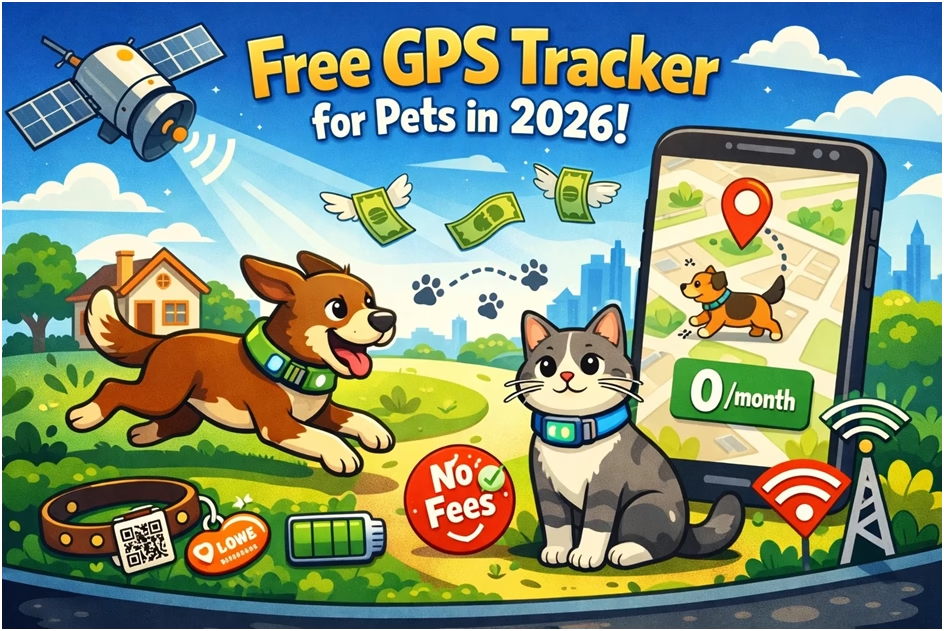
A free GPS tracker in 2026 for pets sounds easy. Buy the tracker, clip it on, pay nothing each month.
In practice, “free” can hide a few catches. Some brands charge more for the device. Some lock live tracking behind a plan. Some give you a short trial, then the monthly bill starts.
For a clear breakdown of what “0 per month” can mean, check this guide: Free GPS Tracker in 2026.
This article stays simple and practical. It shows you where the costs usually sit, and what to look for before you buy.
What “free” usually means in 2026
Most “free” tracker offers fit into a few patterns:
- No monthly fee, higher device price. You pay more upfront, then you keep using the app without a plan.
- Free basic mode, paid upgrades. The tracker works, but the best tools sit behind a plan.
- Free for a limited time. You get a few months included, then subscription billing starts.
- Not true GPS. Some products rely on Bluetooth or a nearby phone network, not GPS plus a data link.
So don’t stop at the word “free”. Look at what you get at 0 per month, and what the brand holds back.
GPS vs Bluetooth: they are not the same
A lot of people buy a tracker thinking it is GPS. Then they find out it needs a phone nearby.
Bluetooth trackers
- Good for: keys, indoor finding, short range
- Range: often tens of meters, sometimes more outdoors
- Works best when: your phone stays close, or many phones pass nearby
- Weak point: a pet can run far fast, and Bluetooth can’t keep up
GPS pet trackers
- Good for: escapes, parks, hikes, neighborhood roaming
- Range: anywhere the tracker can send data back to your phone
- Needs: GPS signal to get location, plus a network link to share it
- Weak point: dead zones, thick buildings, deep woods, fast battery loss in live mode
If your dog bolts, GPS tracking tends to fit the job better.
A quick hidden cost checklist
Before you buy, scan the product page and app notes for these items:
- Activation fee
- Required plan after setup
- Live tracking locked behind a plan
- Location refresh limits at 0 per month
- Geofence alerts locked behind a plan
- Battery replacement cost
- Charger cost
- Water damage rules and warranty limits
- Return policy rules after activation
When the listing stays vague, treat the “free” claim as marketing.
How pet GPS tracking works, in normal words
A GPS tracker uses satellites to figure out where it is. Your phone still needs that location inside an app. The tracker sends the location over a network link.
That network link is the part that often leads to a monthly plan.
So when a brand says “no monthly fee”, it usually means one of these things:
- The tracker limits updates to keep data use low
- The free tier blocks key tools like live tracking
- The brand covers the data cost, and charges more upfront
- The tracker uses a different network model
Common “0 per month” setups you will see
Higher upfront price, no plan
This one feels clean. You pay more once, then you keep using it.
Still check the small details:
- update rate limits
- travel or roaming limits
- how long the brand supports the app
Free mode with “check in” location
Some trackers let you request a location on demand. They do not run true live tracking without a plan.
This can help in slow situations. It can feel frustrating during a chase.
Crowd network style tracking
Some devices rely on nearby phones to relay location. This can work in busy areas. It can fail in quiet places.
Think about your real routes. City streets differ from open fields.
Free trial that rolls into a plan
This is common. You get a few months included. Then auto renewal starts.
Set a reminder the day you activate it. Cancel early if you do not want the plan.
Features that matter for safety
A long feature list looks nice. A few features do most of the work.
Live tracking that updates fast
Slow updates can feel useless when your dog runs. Look for:
- a true live mode
- clear update timing details
- a map that refreshes without lag
Geofence alerts that arrive quickly
A geofence helps when your pet leaves your yard. Good ones send alerts fast and keep alerting while the pet moves.
Sound or light finder tools
A beep or light helps at night, or in tall grass. It helps inside a house too.
Shared access
If two people walk the dog, shared access saves time during an escape event.
Comfort and fit matter more than app features
A tracker that annoys your pet won’t stay on.
Check:
- weight and bulk
- collar mount style, swinging units can snag
- rounded edges
- water rating
- secure mount that stays put
Cats need extra care here. Small size matters. Cats squeeze into tight places, and bulky gear can catch. Breakaway collars stay safer, but they can pop off and you lose the tracker. You pick the tradeoff.
Coverage beats box claims
A tracker can claim great performance. Coverage decides what happens on your street.
To judge coverage:
- check the supported carriers in your country
- think about basements, thick walls, elevators
- focus on your usual walks, not a perfect open field test
Travel plans matter too. Some “no monthly fee” deals limit use outside a home region.
Battery life and live mode
Battery claims often assume light use. Live tracking drains power fast.
A simple way to think about it:
- normal mode can last days
- heavy live tracking can cut that down a lot
Pick a tracker that matches your routine. Daily roaming means daily charging for many models.
Data and privacy, the quiet part
Pet trackers store location history. That can reveal routines.
Before you commit, look for:
- a clear delete option for location history
- strong account controls
- two step login support
- simple ways to close the account
When deletion feels hard, that’s a warning sign.
Make a “free” tracker work better
Even a limited free mode can help when you set it up right:
- charge it at the same time each day
- test it in your yard, then on a short walk
- run a geofence test and confirm alerts hit your phone
- share access with a second phone in your home
- use a collar tag with a phone number as backup
- microchip your pet, and keep registry details updated
A tracker helps with finding. A tag and chip help with getting your pet back.
Extra low cost backups that still help
“Free GPS” often comes with limits. These tools add safety layers:
- QR code ID tag that links to your contact page
- high visibility tag with a big phone number
- microchip for shelter and vet scanning
- Bluetooth tag for indoor finding and close range
They do not replace GPS during a long chase. They still help a lot in everyday situations.
Quick buying checklist
Use this as a final filter:
- coverage works in your area
- free tier limits still fit your needs
- battery life matches your routine
- tracker fits your pet’s size and collar type
- shared access is available
- return policy stays fair after activation
- total cost over 12 months stays inside your budget
Final take
A free GPS tracker in 2026 for pets can be real. “Free” rarely means zero cost everywhere. It usually means no monthly bill in a specific mode, with limits.
Read the fine print, test the tracker early, and plan for the real total cost. That’s the part that saves you headaches later.