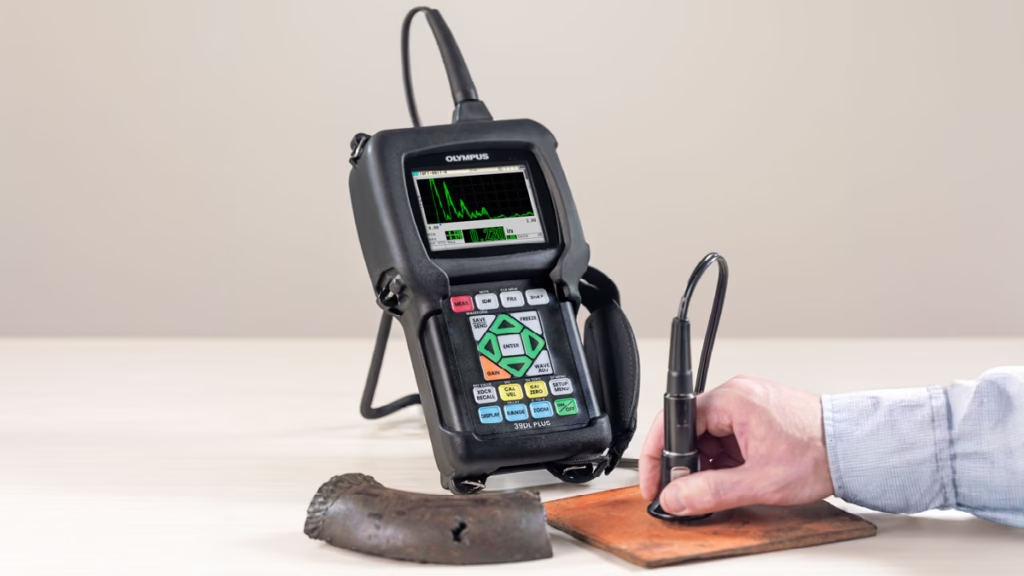
In the fast-paced world of manufacturing, precision is key to maintaining product quality, reducing waste, and ensuring operational efficiency. One essential tool that has become indispensable in many industries is the digital thickness gauges. These instruments allow manufacturers to measure the thickness of materials with high accuracy, enabling better control over production processes and improving the overall quality of finished products.
This article will explore the role of digital thickness gauges in improving efficiency in manufacturing and quality control, showing how they contribute to streamlined operations and better quality assurance practices.
Digital thickness gauges provide manufacturers with the precision and consistency needed to maintain high standards of quality while optimizing production time and costs.
1. Enhanced Precision and Accuracy
One of the main advantages of digital thickness gauges is their ability to provide highly accurate measurements. Unlike traditional mechanical gauges, which rely on manual readings and can be prone to human error, digital thickness gauges deliver precise, repeatable measurements at the push of a button. This accuracy is crucial in industries where even small variations in material thickness can impact product performance, safety, or compliance with regulations.
With digital technology, measurements are instantly displayed on a digital readout, often with fractional values, ensuring that manufacturers can make adjustments quickly and accurately. This level of precision allows for tighter tolerances, ensuring that products meet stringent quality standards.
Precision Benefits:
- Micrometer-level accuracy: Digital gauges provide highly accurate readings, often down to the micrometer level.
- Consistency: Digital systems eliminate human error, ensuring repeatable and consistent measurements every time.
- Quick adjustments: With instant feedback, manufacturers can make adjustments to the production process in real time, maintaining tight control over quality.
2. Improved Production Efficiency
In manufacturing, speed is often just as important as accuracy. Digital thickness gauges help improve production efficiency by providing rapid and automated measurements, reducing the need for manual checks and measurements. With digital gauges, measurements can be taken faster than with traditional methods, and they are easier to interpret, saving time for operators.
Digital gauges also integrate seamlessly with automated systems, enabling continuous monitoring without slowing down production. This increased speed allows manufacturers to meet production deadlines more effectively while maintaining high quality standards.
Efficiency Benefits:
- Faster measurements: Digital gauges offer quicker readings than traditional methods, speeding up the overall measurement process.
- Reduced downtime: Automated measurements eliminate the need for manual checking and recalibration, reducing production interruptions.
- Seamless integration: Digital gauges can be integrated into automated production lines, further enhancing throughput and efficiency.
3. Enhanced Quality Control and Product Consistency
Maintaining consistent product quality is essential for customer satisfaction and brand reliability. Digital thickness gauges play a vital role in quality control by providing real-time data on the thickness of materials throughout the production process. By using these gauges, manufacturers can monitor material thickness and make adjustments to prevent defects such as under-thickness or over-thickness, which can lead to product failure.
With digital gauges, manufacturers can set specific thickness tolerances, ensuring that the material used meets exact specifications. If a measurement falls outside the acceptable range, an alert can trigger, enabling operators to take corrective actions immediately, preventing defective products from moving further down the production line.
Quality Control Benefits:
- Real-time feedback: Digital gauges provide immediate data on material thickness, enabling quick intervention if any variations occur.
- Tolerance management: Manufacturers can set and monitor tolerances for material thickness, ensuring that products meet strict specifications.
- Defect prevention: By detecting variations early, digital gauges help prevent defective products, reducing waste and improving product quality.
4. Cost Savings Through Reduced Waste
By improving the accuracy of measurements and ensuring that materials are used efficiently, digital thickness gauges help manufacturers reduce waste. Accurate measurement ensures that the right amount of material is used, preventing overuse or underuse, both of which can lead to wasted resources and increased production costs.
Additionally, by catching defects early in the process, digital thickness gauges help reduce the need for costly rework or scrap. Manufacturers can identify issues with material thickness before products are fully produced, saving both time and money in the long run.
Cost Savings Benefits:
- Reduced material waste: Accurate measurements ensure that materials are used efficiently, minimizing waste and lowering costs.
- Fewer reworks and scrap: Digital gauges detect defects early, reducing the need for rework or the disposal of subpar products.
- Increased profitability: By improving efficiency and reducing waste, digital thickness gauges help manufacturers maximize their profit margins.
5. Easy Integration and User-Friendly Operation
Digital thickness gauges are easy to use and integrate into existing manufacturing workflows. Most models come with intuitive displays and simple controls, making it easy for operators to take measurements and analyze results quickly. Additionally, many digital gauges feature customizable settings, allowing them to adapt to various material types and production processes.
With user-friendly interfaces and the ability to store and track data, these gauges can streamline the workflow and reduce training time for operators. This ease of use also helps ensure that measurement processes remain consistent across different shifts and production runs.
User-Friendliness Benefits:
- Intuitive operation: Digital thickness gauges are designed for easy use, even by operators with limited training.
- Customizable settings: Many gauges offer adjustable settings, making them suitable for a wide range of materials and processes.
- Data tracking: Digital gauges store measurements, making it easy to track data over time and ensure consistent performance.
Closing Perspective: Why Digital Thickness Gauges Are Essential for Manufacturing Success
In an increasingly competitive manufacturing landscape, digital thickness gauges are proving to be essential tools for improving efficiency, ensuring product quality, and reducing waste. By offering high precision, faster measurements, and improved quality control, these gauges help manufacturers streamline their operations, improve their bottom line, and maintain high standards of quality.
Whether you’re looking to improve the efficiency of your production line or ensure that every product meets strict quality standards, investing in digital thickness gauges is a smart decision. These systems will continue to play a key role in the future of manufacturing, driving improvements in both cost-effectiveness and product excellence.