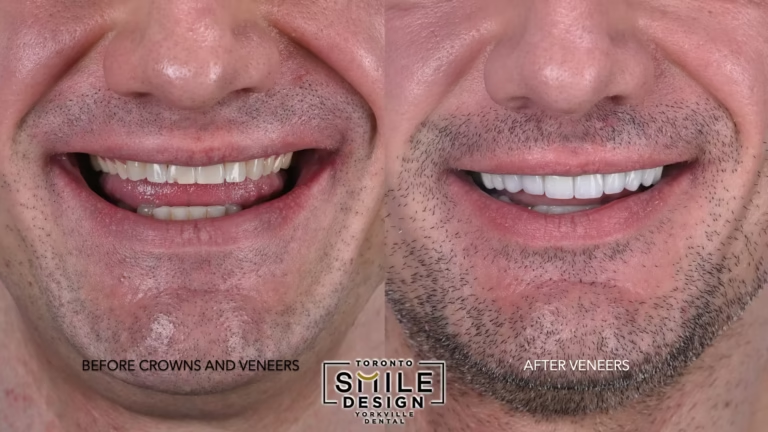
Most people think of dental care as something you deal with only when there’s a problem — a toothache, a broken filling, or a sudden sensitivity that won’t go away. But comprehensive dental care is about much more than fixing issues when they appear. It’s a long-term approach that supports not just your teeth and gums, but your overall wellbeing.
When dental care is consistent, preventive, and tailored to the individual, it quietly improves everyday comfort, confidence, and even general health. And the benefits often show up in ways people don’t expect.
More Than Teeth: How Oral Health Affects the Whole Body
Your mouth is closely connected to the rest of your body. Issues that start in the gums or teeth don’t always stay there.
For example:
- Gum disease has been linked to heart and metabolic conditions.
- Chronic oral infections can affect the immune system.
- Ongoing dental pain can disrupt sleep and concentration.
Think of oral health like the foundation of a building. If the foundation is unstable, problems eventually show up elsewhere. Comprehensive dental care focuses on keeping that foundation strong so small issues don’t grow into bigger ones.
This approach is similar to routine car maintenance. You don’t wait for the engine to fail before checking the oil or brakes. Preventive care keeps everything running smoothly — and dentistry works the same way.
Preventive Care Makes Everyday Life Easier
One of the biggest advantages of comprehensive dental care is its preventive benefits. Regular check-ups, professional cleaning, and early assessments help catch problems while they’re still small and manageable.
This leads to very real, everyday benefits:
- Less discomfort when eating or drinking
- Fewer unexpected dental emergencies
- Lower long-term treatment costs
- More confidence in daily interactions
For busy professionals, parents, and older adults alike, prevention saves time and stress. It’s much easier to schedule routine appointments than to deal with urgent dental pain that interrupts work, travel, or family life.
Across many industries, prevention is seen as best practice. In IT, systems are monitored before they crash. In healthcare, early screening improves outcomes. Dentistry follows the same principle — early attention leads to better results.
Restoring Function Improves Quality of Life
Comprehensive dental care also focuses on restoring function, not just appearance.
Teeth play a critical role in how we eat, speak, and even hold our facial structure. When teeth are damaged, missing, or misaligned, people often adapt without realizing how much they’re compensating.
Common examples include:
- Avoiding certain foods because they’re hard to chew
- Speaking less clearly due to discomfort or missing teeth
- Jaw tension or headaches caused by bite issues
Modern dental care aims to restore balance. When chewing feels natural again and discomfort disappears, daily life becomes noticeably easier. People often report feeling more relaxed, more comfortable eating in public, and less self-conscious when speaking.
These improvements are subtle but powerful — much like wearing properly fitted shoes instead of tolerating discomfort all day.
Confidence Grows When Health Is Supported
A healthy smile naturally supports confidence. When people feel good about their oral health, they tend to smile more, speak more freely, and engage more comfortably with others.
This can affect many areas of life:
- Professional interactions and presentations
- Social events and relationships
- Photos, celebrations, and milestones
Comprehensive dental care supports this confidence by combining preventive, restorative, and cosmetic considerations into one cohesive plan — rather than treating issues in isolation.
This integrated approach mirrors how wellness is handled in other areas. A fitness program that includes strength, flexibility, and recovery is more effective than focusing on a single element. Dentistry benefits from the same holistic thinking.
Long-Term Planning Creates Better Outcomes
One of the defining features of comprehensive dental care is long-term planning. Instead of reacting to problems as they arise, care is guided by an understanding of where things are heading.
This might include:
- Monitoring wear patterns over time
- Planning restorations to last longer
- Addressing alignment or bite issues before they worsen
- Adjusting care as needs change with age
For many people, learning more through a website helps clarify how modern dental care can be structured around prevention, comfort, and long-term wellbeing rather than short-term fixes.
This forward-thinking approach reduces surprises and helps people feel more in control of their health.
Dental Care and Mental Wellbeing
Oral health doesn’t just affect the body — it affects mental wellbeing too.
Ongoing dental discomfort, embarrassment about teeth, or anxiety around dental visits can quietly take a toll. Comprehensive care helps address these concerns by creating familiarity, trust, and consistency.
When people know what to expect and feel supported, anxiety often decreases. Over time, dental visits become routine rather than stressful — much like regular health check-ups.
Understanding the broader role of oral health helps explain why dentistry is increasingly seen as part of overall wellness rather than a separate concern.
Care That Adapts to Different Life Stages
Comprehensive dental care isn’t one-size-fits-all. It adapts as people move through different stages of life.
- Younger adults may focus on prevention and alignment.
- Families balance routine care with busy schedules.
- Older adults prioritise comfort, function, and maintenance.
This adaptability is what makes comprehensive care so effective. It meets people where they are, rather than applying the same solution to everyone.
Bringing It All Together
Comprehensive dental care improves oral health by taking a holistic approach — prevention, function, comfort, and long-term planning. But its impact goes far beyond teeth.
When oral health is supported consistently, people experience fewer disruptions, greater confidence, and improved overall wellbeing. Everyday activities like eating, speaking, smiling, and socialising become easier and more natural.
In the end, comprehensive dental care isn’t about perfection. It’s about creating a healthy foundation that supports comfort, confidence, and quality of life — quietly, consistently, and over the long term.