As the world shifts toward renewable energy, the question isn’t just about how we generate power, but how we keep it. The sun doesn’t always shine, and the wind doesn’t always blow. That’s where energy storage becomes critical. Whether you are a homeowner looking for a Solar Battery in Adelaide or an industry expert, understanding the battle between hydrogen and battery storage is essential for navigating the future of green energy.
Understanding Hydrogen Storage
Hydrogen storage is often hailed as the “holy grail” of clean energy for heavy industries. The process involves using surplus electricity (ideally from renewables) to split water into hydrogen and oxygen via electrolysis. The hydrogen is then stored in high-pressure tanks or underground caverns.
The Pros:
Hydrogen has an incredible energy density. A small amount can store a massive amount of power, making it ideal for long-duration storage—think weeks or even months. This is crucial for seasonal shifts when renewable generation might drop.
The Cons:
However, the technology faces hurdles. The “round-trip efficiency” is currently low; converting electricity to hydrogen and back to electricity results in significant energy loss. Additionally, the infrastructure required is expensive and complex to build compared to existing electrical grids.
The Power of Battery Storage
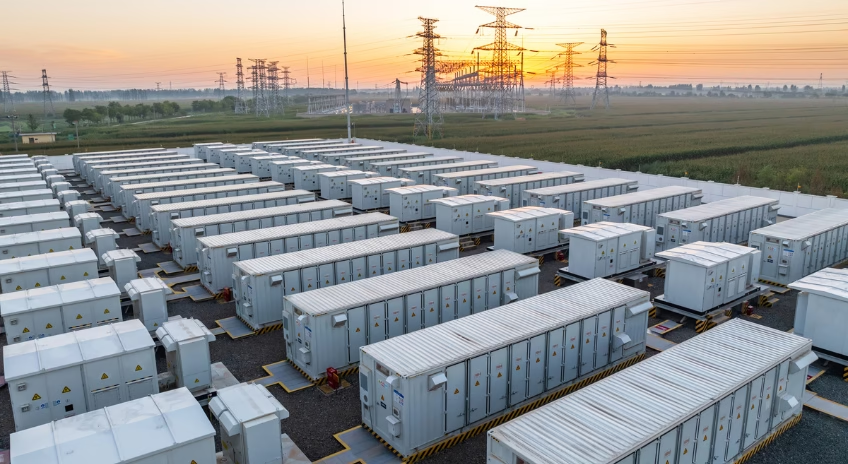
Battery storage, particularly Lithium-ion technology, is the current champion of the energy transition. If you have looked into a Solar Battery in Adelaide, you are likely looking at this technology. It works by storing electricity chemically and releasing it when needed.
The Pros:
Batteries are a mature, proven technology. They offer incredibly fast response times, stabilizing the grid in milliseconds. For daily cycling—charging during the day with solar and discharging at night—they are highly efficient and increasingly affordable.
The Cons:
Batteries struggle with long-duration storage. They are best suited for hours, not weeks. There are also valid concerns regarding the mining of materials like lithium and cobalt, as well as the end-of-life recycling processes.
Comparing the Contenders
When weighing these two options, context is key.
- Cost: Currently, batteries win on cost for short-term applications. For a typical household installing a Solar Battery in Adelaide, lithium-ion is the economically viable choice. Hydrogen remains too expensive for residential use but is becoming competitive for industrial-scale, long-term storage.
- Efficiency: Batteries boast a round-trip efficiency of around 85-90%, whereas hydrogen often sits below 40%.
- Environmental Impact: Both have footprints. Batteries require mining; hydrogen requires vast amounts of water and energy to produce green hydrogen.
Bright Earth Solar’s Role in the Future
Navigating these technologies requires expertise. Bright Earth Solar is at the forefront of this transition, helping South Australians make sense of their energy needs. While hydrogen holds promise for the heavy lifting of the future grid, Bright Earth Solar understands that for the immediate future, advanced battery systems are the most practical solution for homes and businesses.
They are constantly monitoring the landscape. As technology evolves, Bright Earth Solar ensures their clients have access to the most efficient, cost-effective, and sustainable storage solutions available, bridging the gap between today’s tech and tomorrow’s innovations.
Conclusion
The future likely isn’t “Hydrogen OR Batteries,” but rather a mix of both. Batteries will handle our daily cycles and home energy needs, while hydrogen may step in to keep the industrial grid running during the dark winter months.
For now, if you are looking to secure your energy independence, the technology is ready and waiting. Whether you need advice on the latest Solar Battery in Adelaide or want to understand how your home fits into the bigger energy picture, the experts at Bright Earth Solar can guide you toward a sustainable, efficient future.