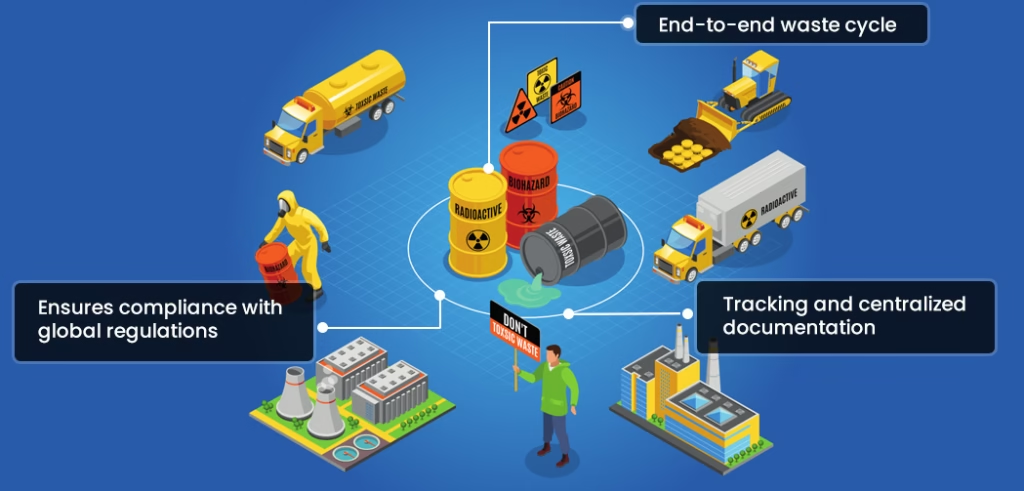
The waste management sector is undergoing a structural transformation. What was once a largely manual, paper-based sector is rapidly shifting toward integrated digital systems designed to improve efficiency, compliance and service delivery. Today, enterprise organisations in Australia and beyond increasingly view digital platforms for waste operations not as an add-on tool but as core operational infrastructure, essential for meeting regulatory demands, driving cost optimization, and scaling operations in competitive markets.
This trend reflects broader global movement toward smart industrial systems that integrate data analytics, operational tracking, and automation. Market research shows that the waste management software market was valued at USD 13.77 billion in 2024 and is projected to reach USD 14.98 billion in 2025, eventually exceeding USD 29.62 billion by 2033, with a compound annual growth rate (CAGR) of about 8.8%. (Market Growth Reports)
From Manual to Digital: Enterprise-Level Drivers
For large waste operators, whether in refuse collection, recycling, or industrial waste – traditional systems no longer scale. Paper manifests, disconnected accounting tools, and spreadsheet scheduling struggle to cope with:
- Complex routing logistics
- Regulatory reporting demands
- Multi-site visibility
- Fleet and asset management
As a result, commercial waste management software is being adopted to streamline workflows and reduce operational friction. Organisations are consolidating fragmented workflows into single, integrated platforms, supporting both waste disposal software and broader enterprise goals.
Real Business Impact: Cost, Efficiency, and Compliance
The business case for waste management software is increasingly driven by measurable return on investment (ROI). Industry research and enterprise case studies consistently indicate that enterprise-grade platforms often deliver payback within 12 to 18 months, largely through reductions in manual work, improved route optimisation, and automated administrative processes.
Municipalities, large contractors, and recycling firms that have implemented enterprise-grade systems commonly report:
- 20-35% lower operational costs through optimised routing, dispatch automation, and better resource utilisation
- Up to 70% reduction in administrative workload, freeing staff from repetitive documentation and manual paperwork
These gains typically result from replacing fragmented tools with unified waste management software solutions that integrate scheduling, billing, tracking, and reporting into a single operational environment.
Beyond cost and efficiency improvements, digital platforms also strengthen compliance with environmental and safety requirements. Automated reporting and built-in compliance workflows reduce the risk of penalties and simplify audit processes, a significant advantage for enterprises operating across multiple jurisdictions.
Supporting Multiple Waste Verticals
Today’s enterprise platforms support a range of waste categories, reflecting the diversity of modern Australian operations:
- Commercial waste management — including office buildings, retail centers, and industrial parks
- Construction waste management — where projects generate varying waste types and require flexible scheduling
- Skip bin hire software deployments in Australia — enabling operators to manage inventory, bookings, and customer interactions within local regulatory frameworks
By consolidating these disparate functions into a single platform, waste operators can reduce silos, improve data accuracy, and offer more transparent service levels to clients.
Market Scale and Future Growth
The broader digital waste solutions landscape underscores the strategic importance of software. The global digital waste management solution market is expected to grow robustly over the next decade, projected to expand from around USD 3 billion in 2025 to over USD 11 billion by 2035, with a CAGR of about 14.6%. (Business Research Insights)
This growth is driven by rising environmental regulation, sustainability goals, and the need for real-time operational insights. Asia-Pacific, including Australia, is among the fastest adoption regions due to urbanization, infrastructure investment, and stringent environmental standards.
For enterprise waste companies, this trend represents both a challenge and an opportunity. Long-standing players must modernise traditional operations to remain competitive, while new entrants can leverage digital platforms to differentiate on service quality and efficiency.
Why Software Is Critical in the Australian Waste Sector
Australian enterprises face unique pressures:
- Regulation and compliance: Operators must navigate federal, state, and local waste management requirements, including reporting and environmental performance standards.
- Sustainability commitments: Many organisations have formal sustainability targets tied to waste reduction and recycling. Digital systems help measure and report against these goals.
- Scale and geography: Efficient management of field crews, fleets, and assets spread over large urban and regional areas is essential to maintain service levels and cost control.
In this environment, waste management software Australia has evolved beyond pilot projects to become indispensable for organisations seeking scalable, data-driven operations.
Enterprise Platforms in Practice
As Australian operators scale, platforms such as WasteVantage from iHub Logistics illustrate how modern waste management software is evolving into operational infrastructure rather than a standalone tool.
By enabling real-time data visibility across the organisation, enterprise systems help stakeholders make informed decisions, improve responsiveness to customer requests, and monitor performance against internal and external benchmarks.
For large waste management companies delivering integrated waste management services across commercial and municipal contracts, enterprise software enables consistency, transparency, and operational control at scale.
The Strategic Role of Waste Management Software
For enterprise buyers, whether in commercial services, municipal contracts, or large-scale recycling, waste management software now plays the role of infrastructure:
- Centralised data and operations reduce redundancy and errors
- Automated workflows minimise labor costs and administrative burden
- Real-time visibility enhances operational control and client service
- Scalable architecture accommodates future growth and innovation
Organisations that continue to rely on legacy processes risk falling behind competitors that harness data and automation to drive performance.
Preparing for a Digital Future
The shift toward enterprise waste management software reflects a broader reality: digital platforms are no longer optional luxury tools but foundational systems that enable efficient, compliant, and competitive operations. For Australian enterprises and beyond, adopting integrated software isn’t just about technology, it’s about transforming how waste companies operate, collaborate and deliver value to clients.
In a market growing at double-digit rates and expanding in scope and capability, the businesses that invest wisely in waste technology today are those best positioned for long-term resilience and growth.