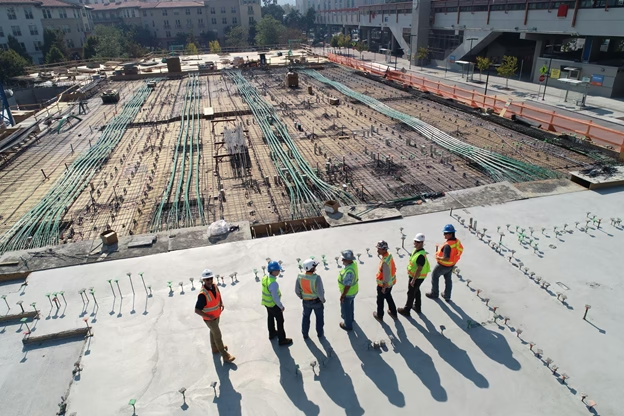
Concrete does not get much attention. It is not trendy, and it rarely makes headlines. But it remains one of the clearest indicators of construction activity and market health.
When concrete demand rises, building is happening. When it slows, projects are being delayed, scaled back, or cancelled. For developers, contractors, and investors, concrete quietly tells the story of where the market is going.
Why Concrete Is Hard to Replace
Concrete is used because it solves problems.
It supports weight, lasts decades, and performs well in different environments. That makes it essential for foundations, roads, parking structures, and large commercial buildings. While materials like steel and wood fluctuate in use, concrete remains constant.
Most construction projects are designed around concrete from the start. That means when concrete costs or availability change, projects feel it immediately.
Concrete Costs Affect Projects Early
Concrete is not a finishing touch. It comes early in the build.
That makes pricing changes especially important. If concrete costs rise, project budgets need to be adjusted quickly. Developers cannot wait until later stages to make up the difference.
Key factors that influence concrete pricing include:
- Cement production costs
- Fuel prices
- Transportation distance
- Labor availability
Because concrete is heavy and time-sensitive, even small changes in these areas can affect final pricing.
Timing Is a Bigger Issue Than Most People Realize
Concrete has a limited window once it is mixed.
If delivery is delayed or a site is not ready, the material can become unusable. That creates waste, added cost, and scheduling problems. One delay can push back multiple trades and extend timelines.
This is why coordination matters so much in concrete work. Reliable scheduling and communication are just as important as the mix itself.
Concrete Demand Reflects Market Activity
Concrete demand often mirrors construction trends more clearly than other materials.
When housing starts increase, concrete plants see it first. When infrastructure spending rises, concrete orders follow. When commercial development slows, concrete demand usually drops soon after.
Because of this, concrete volumes are often watched by industry professionals as an early signal of market movement.
Local Supply Plays a Major Role
Concrete does not travel well.
It must be delivered quickly, and transportation costs add up fast. This makes local suppliers essential to regional construction markets. Areas with strong local supply are better positioned to support growth.
In fast-growing regions, access to dependable concrete delivery can determine whether projects stay on schedule or fall behind.
Quality Still Matters More Than Speed
Speed matters in construction, but quality matters more.
Inconsistent concrete can lead to cracking, surface failure, or structural issues later on. These problems are expensive to fix and can damage reputations.
Contractors and engineers depend on consistent mixes that meet specifications every time. Reliable suppliers reduce risk and help keep projects on track.
Specialized Concrete Is Becoming More Common
Concrete is no longer just about basic slabs and foundations.
Many projects now require specialized mixes for strength, durability, or appearance. Decorative concrete, reinforced applications, and high-performance mixes are increasingly used in commercial and industrial builds.
These applications require experience and technical knowledge. Not every supplier is equipped to support them, which makes specialization a competitive advantage.
Logistics Is Where Margins Are Won or Lost
Concrete delivery is a logistics challenge.
Routes, traffic, site readiness, and weather all affect whether a delivery succeeds. Poor planning leads to wasted material and higher costs. Strong logistics reduce delays and improve efficiency.
Suppliers that invest in scheduling systems and experienced teams tend to perform better under pressure.
A Market That Stays Relevant in Uncertain Times
Construction markets fluctuate, but concrete demand rarely disappears.
Even when new development slows, repair and maintenance continue. Roads need resurfacing. Buildings need reinforcement. Municipal projects move forward.
This gives concrete a level of stability that many other materials lack. It may not grow quickly, but it remains essential.
What Industry Professionals Watch
For those tracking construction markets, concrete offers practical signals:
- Volume of deliveries
- Plant capacity usage
- Regional permit activity
- Infrastructure spending plans
- Cement and fuel price trends
Changes in these areas often appear before broader market data is released.
A Practical Example From the Field
Local providers play a key role in keeping construction moving. Companies like Elite Concrete support residential, commercial, and industrial projects by managing mix quality, delivery timing, and coordination with job sites.
For contractors, dependable concrete supply reduces delays. For developers, it protects timelines. For municipalities, it supports infrastructure planning.
That reliability has direct economic value.
The Bigger Picture
Concrete may not be exciting, but it is informative.
It reflects demand, exposes bottlenecks, and highlights regional growth patterns. In many ways, it acts as a quiet indicator of construction health.
For anyone watching development trends, concrete is worth paying attention to. Not because it stands out, but because so much depends on it.