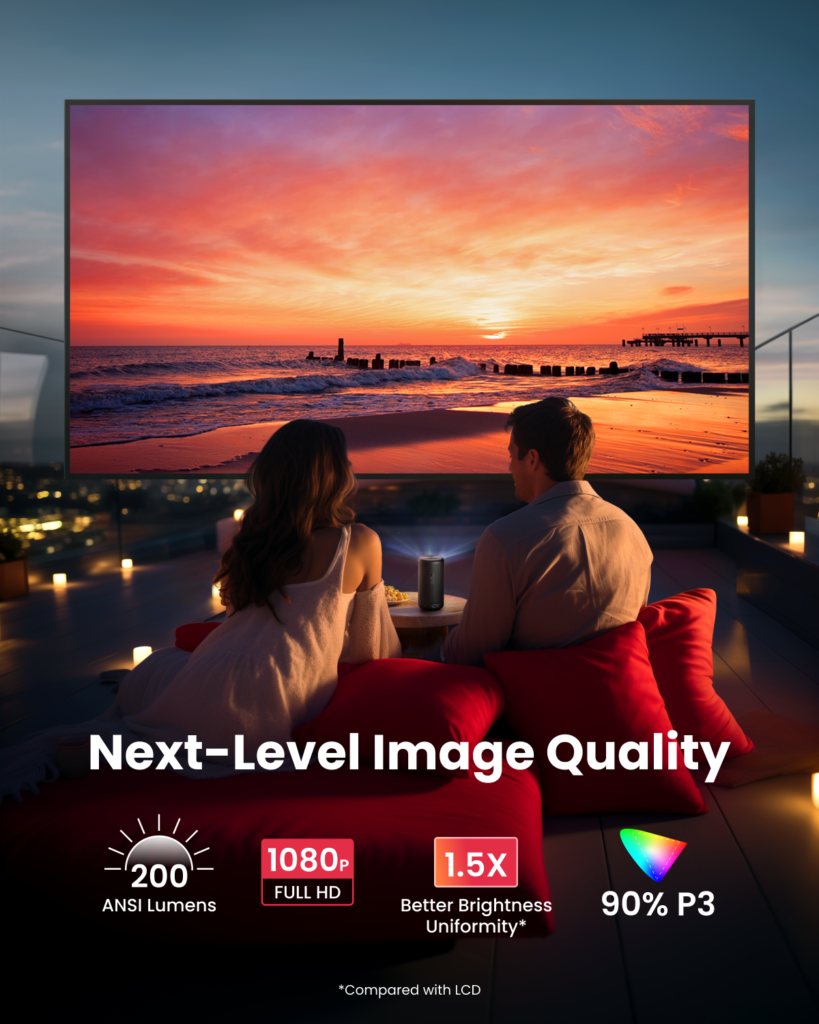
It is something extraordinary to watch a movie in the open air. The open air, the lack of stress and the experience of common euphoria make one reminiscent of the otherwise ordinary movie. By getting the correct portable projector, then you can turn your backyard, rooftop or garden into a personal outdoor movie theater. Nonetheless, to have clear images and balanced sounds in the outdoors environment one needs more than a projector on a table.
This is a comprehensive tutorial that will show how to make a portable projector outdoor movie night including the brightness, screen choice, audio, power, and hints that would enable a fun and easy experience.
How to Select the Portable Projector for Outdoor Use
Each portable projector is not meant to work outside. The first consideration is brightness. Outside conditions typically possess some ambient light either of the street lamps, surrounding houses, or the moon. A projector with a minimum of 2000 lumens is optimum to have enhanced image brightness after sunset.
Resolution is also important. A native 1080p portable projector provides high quality pictures especially in large screen projections of 100 inches and above. A higher resolution is even more crucial in case your audience is closer to the screen and wants to have a clear image.
Battery powered models are flexible. However, outdoor movie nights can take two to three hours. Make sure that your projector has a long battery life or that it can be plugged into another reliable power supply that will not run down.
How to Choose the Right Outdoor Screen
The projection surface has a big impact on the quality of the image. A plain white wall may be sufficient, but a dedicated projector screen enhances brightness, contrast and color precision.
Inflatable outdoor screens are popular for backyard events since many people find them easy to set up and store. A wrinkle free white sheet stretched tightly across a frame can also be used as a low budget option.
The size of the screen should match your space. A 100 inch display is normally adequate for smaller backyards. Larger open spaces can support a screen size of 150 inches or even more, as long as your portable projector has sufficient brightness.
Learning Throw Distance and Placement
Calculate the throw distance of your projector before the event. Throw ratio is the distance between the device and the screen that is required to generate a particular image size. Testing this arrangement a day before helps eliminate last minute changes.
Place the projector on a stable table or tripod stand. The center of the lens should be aligned with the center of the screen to minimize keystone correction, which can slightly reduce image sharpness.
Ambient Light Control to Improve Visibility
Outdoor movie nights should preferably start after dark. Even a bright portable projector cannot perform well in daylight. Select a place where there is no direct street lighting or strong porch lights.
If possible, place the screen against a darker background such as trees or fences. This improves contrast perception and makes colors appear richer.
I have personally discovered that waiting an additional half hour after sunset in my own backyard setups greatly improves image quality without changing projector settings.
Tips for Building an Immersive Audio Experience
When organizing outdoor screenings, sound is often overlooked. Most portable projectors are fitted with built in speakers which are not powerful enough for open spaces.
External Bluetooth speakers or a portable sound system make a significant difference. To keep dialogue aligned with visuals, position speakers close to the screen instead of next to the audience.
Check audio delay settings when using wireless connections. A slight delay between sound and image can be distracting, particularly in dialogue heavy scenes.
Cable Management and Power Solutions
Reliable power ensures continuous viewing. If your outdoor space has convenient access to an outlet, use a high quality extension cord designed for outdoor use. Protect cables from moisture and foot traffic to avoid accidents.
Where direct power supply is not available, a portable power station can be used. Many modern battery generators can power a portable projector and external speakers for several hours.
Keep cables organized and taped down when necessary. Good cable management improves safety and gives the setup a professional appearance.
Internet and Streaming Considerations
If you plan to stream movies, make sure that the WiFi signal reaches your outdoor location. Weak connectivity may result in buffering interruptions.
As an alternative, download content in advance onto a streaming device or laptop. An HDMI connection often provides more reliable playback than wireless casting.
It is always better to test the complete setup before guests arrive to avoid technical surprises.
Weather and Environmental Safety
Weather conditions must be observed in outdoor arrangements. Even light wind can affect tripods and screens. Secure lightweight equipment properly and avoid installing it on uneven ground.
Electronic devices can be affected by changes in humidity and temperature. Allow your portable projector to adjust to outdoor conditions before powering it on, especially when moving from air conditioning to a warm evening environment.
It is helpful to have a simple backup strategy, such as moving the equipment indoors in case of sudden weather changes.
Conclusion
Setting up a portable projector for outdoor movie nights involves more than simply projecting onto a wall. By selecting the right projector, optimizing brightness and resolution, controlling ambient light, and ensuring proper audio and power support, you can create a true cinema experience in your own backyard.
Careful planning transforms an ordinary outdoor gathering into a memorable event with vivid imagery and immersive sound. With the right portable projector and thoughtful preparation, your next movie night under the stars can be both impressive and comfortable.
FAQs
Which brightness is suitable for an outdoor portable projector?
For nighttime outdoor use, a portable projector with at least 2000 lumens is recommended to ensure good visibility after sunset.
Is it possible to use a portable projector outside during the day?
Most portable projectors struggle in daylight. Optimal results are achieved after sunset or in a shaded area with limited ambient light.
Should I have a special screen for outdoor movies?
A dedicated projector screen improves image quality, but a tightly stretched white sheet can serve as a budget friendly alternative.