Why coastal research rarely follows the plan
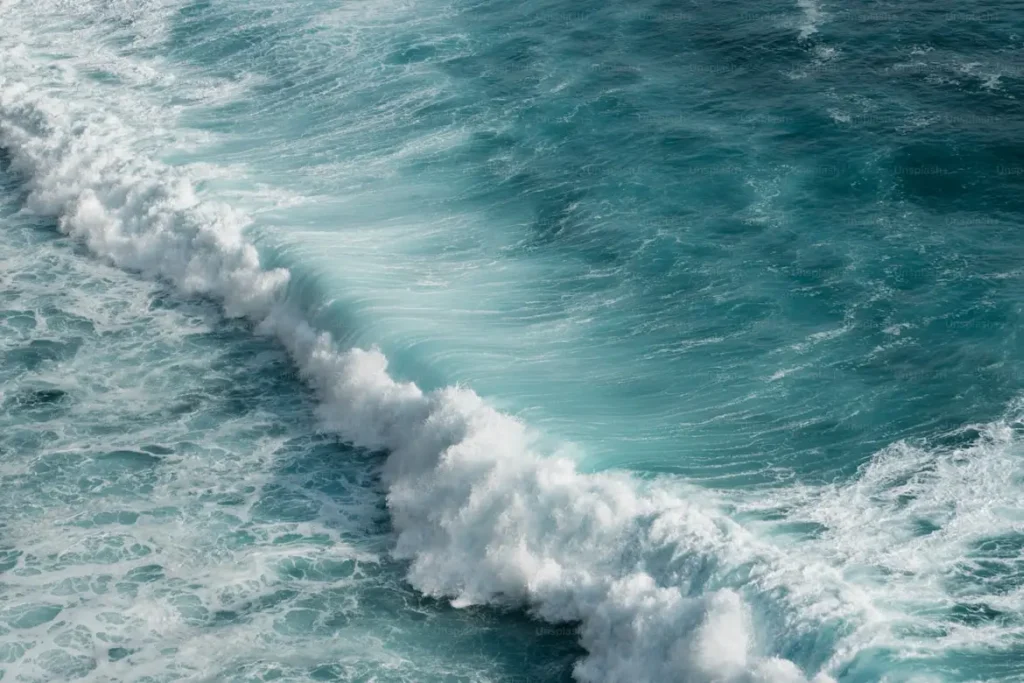
In coastal research, the ocean is an uncooperative collaborator. It doesn’t care about your academic schedule or your deadlines. You can have a perfect plan, a calibrated kit, and a ready crew, but a single overnight weather shift can make the entire project a wash. That unpredictability is exactly what makes the field so punishing and why staying on schedule becomes difficult to sustain.
For universities, this is more than an inconvenience. Research projects run on fixed timelines. Students have submission deadlines. Funding milestones do not move just because the sea is rough or unusually calm.
This mismatch between academic planning and ocean behaviour is one of the main reasons universities started relying more heavily on an ocean wave simulator.
The shift from open water to controlled environments
While field studies remain the gold standard, they’re rarely the first step anymore. Universities have learned the hard way that throwing a prototype (and a grad student) into the open ocean on day one is a recipe for wasted funding and lost equipment. It’s just too unpredictable for early-stage testing. Now, the heavy lifting starts in the lab. By plugging real-world coastal data into an ocean wave simulator, researchers can dial in specific conditions and tweak variables without leaving the building. This shift reflects a change in research philosophy: we’ve stopped waiting for the perfect tide to get to work.
What an ocean wave simulator actually allows researchers to do
In simple terms, an ocean wave simulator lets researchers generate waves on demand. But the value goes beyond that description.
Wave height, period, direction, and irregularity can be adjusted repeatedly. A condition tested in the morning can be tested again in the afternoon, unchanged. This matters more than it first appears.
When results differ, researchers know the cause is experimental, not environmental. That clarity is difficult to achieve in open water, regardless of experience or instrumentation.
For universities focused on methodical research, this reliability is hard to replace.
Coastal engineering studies that benefit the most
Coastal engineering programs were some of the first to really lean into an ocean wave simulator. There’s no substitute for watching how a shoreline or a breakwater actually handles a swell, even at a smaller scale. What usually catches students off guard isn’t the big stuff, but the nuances—how a tiny tweak to a slope or a slight change in geometry completely flips the wave behavior. You’ll see reflection patterns shift or energy dissipate in ways you didn’t see coming. That’s where the real education starts: when the data on your screen clashes with what you’re seeing in the tank, forcing you to rethink your entire approach. These observations often challenge assumptions made during numerical modelling. That tension between expectation and observation is where meaningful learning happens.
Testing wave energy ideas without risking equipment
Wave energy research presents a different set of challenges. While the energy potential is significant, the environment is unforgiving. Universities cannot afford to lose prototypes repeatedly during early testing.
Using an ocean wave simulator, researchers test scaled wave energy devices under controlled conditions. They observe motion response, mechanical stresses, and power generation behaviour without exposing equipment to harsh marine forces.
Failures still happen. Designs still underperform. But they do so safely, inside the lab. This allows rapid iteration, which is critical in academic research settings.
Teaching students what equations cannot show
Many students struggle with wave-related subjects because mathematics feels detached from reality. Equations describe motion precisely, but they do not always explain behaviour clearly.
Wave simulators change this dynamic. When students see waves diffract around structures or amplify under certain conditions, theory becomes easier to grasp. The learning process becomes visual and experiential rather than abstract.
In many programs, students only fully understand wave mechanics after observing it physically, not after solving another problem set.
Why validation matters more than prediction
In the lab, numerical models are treated as starting points. They’re great starting points, but they’re rarely right on the first pass. There’s almost always a disconnect between the software’s “perfect” world and what happens in the tank. Instead of ignoring that drift, students dive into it. Trying to figure out why the experiment defied the model is usually more insightful than the simulation itself. It’s that friction between theory and reality that actually makes the research feel authentic.
Studying extreme conditions without real-world risk
With the climate changing, the push to understand “rogue” or extreme waves has become a massive priority for coastal resilience. Obviously, you can’t just park a research vessel in the middle of a once-in-a-century storm to see what happens—it’s dangerous and frankly impossible. This is where simulators become life-savers. They let us recreate those violent conditions in a controlled tank to see exactly how a seawall fails or a structure buckles. For institutions focused on disaster planning, being able to study these “breaking points” safely isn’t just a convenience; it’s the only way to build for the future.
Industry involvement and practical exposure
Universities with ocean wave simulation facilities often attract industry attention. Coastal infrastructure firms and marine energy developers prefer collaborating with institutions that can test ideas physically before offshore deployment.
For students, this exposure matters. Industry-driven research introduces constraints that academic exercises rarely include. Budget limits, design trade-offs, and performance targets become part of the learning process.
Graduates with this experience tend to adapt faster when they enter professional roles.
Conclusion
Ocean Wave simulators used to be a luxury in university labs, not a necessity. Even now, the debate over their value persists. But the real game-changer has been the pressure of research deadlines. You can’t always wait for the right tides or permit sign-offs when a project is on a clock. While a simulator can’t solve every variable, it prevents research from hitting a standstill. Many departments didn’t adopt this technology because they believed it was “better” than the field—they did it because it was practical. That pragmatism now defines how coastal research is organized.