Creating a safe and stable concert stage is one of the most critical responsibilities in live event production. Whether the venue is a school auditorium, a community park, or a large outdoor festival ground, the structure supporting performers, instruments, and technical equipment must be reliable. In recent years, the rise of the portable stage has transformed how organizers approach event infrastructure, offering flexibility without the permanence of traditional built-in platforms.
Designing such a system, however, involves more than simply assembling platforms. It requires a careful evaluation of structural integrity, load capacity, environmental factors, audience interaction, and logistical efficiency. Balancing these elements involves trade-offs that directly affect safety, performance quality, and long-term costs. An objective understanding of these factors helps event planners, venue managers, and production teams make informed decisions that protect performers and audiences alike.
Understanding Structural Stability in Live Events
At its core, stage safety depends on structural engineering principles. Any Performance stage must distribute weight evenly across its support points while resisting lateral movement, vibration, and shifting. Stability is especially important in live music settings where dynamic movement—dancing performers, heavy amplifiers, drum kits, and lighting rigs—adds variable stress.
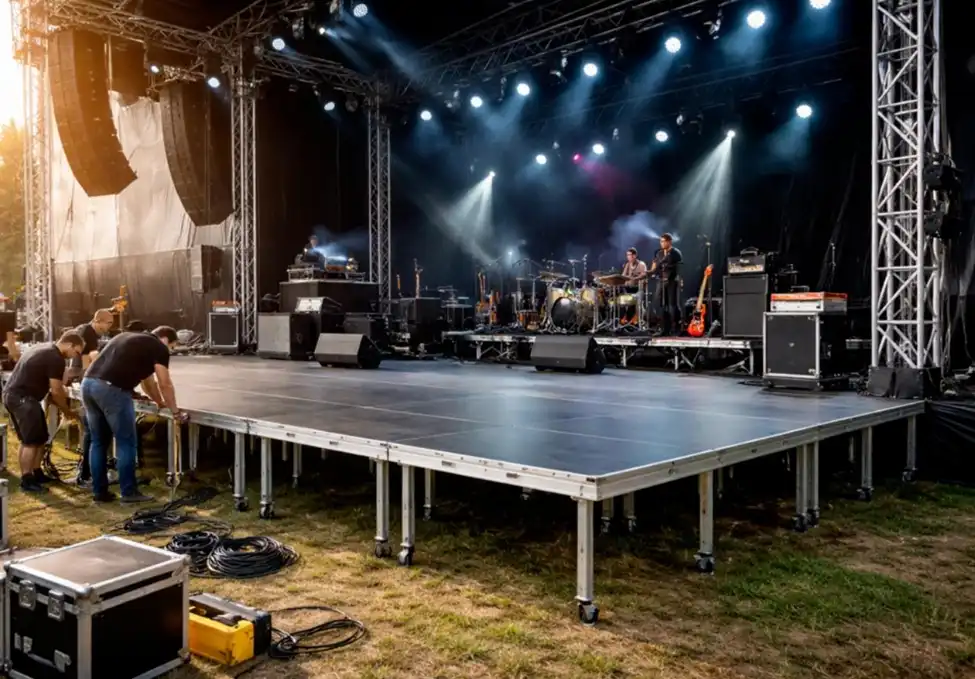
A Mobile stage typically uses interlocking deck panels supported by adjustable legs or frames. The modular nature allows organizers to configure different heights and dimensions. However, with flexibility comes complexity. Each connection point between panels must be secure, as even minor misalignment can create uneven surfaces or weak spots.
Load capacity is another crucial factor. Organizers must calculate the combined weight of performers, backline equipment, speakers, and stage décor. Underestimating load requirements can compromise safety. Overestimating, on the other hand, may lead to investing in heavier-duty systems that are more expensive and harder to transport. The key is finding a balance between anticipated usage and structural resilience.
Material Choices and Durability
The materials used in a Modular stage system directly impact both stability and portability. Common deck materials include plywood with anti-slip coatings, aluminum frames, and steel reinforcement. Each option presents advantages and trade-offs.
Aluminum is lightweight and corrosion-resistant, making it ideal for frequent transport and outdoor use. However, it can be more expensive than steel. Steel offers superior strength and may provide greater load-bearing capacity, but it increases overall system weight and transportation costs.
Surface finishing also matters. Anti-slip coatings enhance performer safety, particularly during outdoor events where moisture may accumulate. However, thicker coatings can add weight and maintenance considerations. Designers must weigh durability against portability and ease of storage.
Long-term usage should also influence material decisions. A system that will be assembled and disassembled frequently requires durable locking mechanisms and reinforced joints. Investing in higher-quality materials may raise initial costs but reduce maintenance and replacement expenses over time.
Height, Elevation, and Audience Visibility
One of the primary purposes of an Event stage is to improve visibility and audience engagement. Elevation ensures that performers are clearly seen from different viewing angles. However, increasing height introduces additional structural challenges.
Higher platforms demand stronger leg supports, bracing systems, and guardrails. The higher the elevation, the more susceptible the structure becomes to sway or instability, especially outdoors. Wind loads can exert significant lateral pressure, particularly when lighting trusses or banners are attached.
There is a trade-off between maximizing visibility and minimizing risk. Lower configurations are inherently more stable but may limit sightlines in large crowds. Elevated setups improve the viewing experience but require additional safety measures such as reinforced frames and secure anchoring systems.
Designers must assess the expected audience size, venue layout, and environmental conditions before determining optimal height.
Environmental Considerations
Indoor and outdoor environments present distinct challenges. In controlled indoor settings, flooring is typically even, and exposure to wind and moisture is limited. Outdoor environments, however, introduce uneven ground, weather variability, and wind resistance.
Adjustable leg systems are essential when setting up on grass, gravel, or pavement. Proper leveling prevents rocking or tilting, which can compromise performer safety. Some systems include integrated leveling feet to accommodate minor ground inconsistencies.
Wind is a critical factor in outdoor setups. While the platform itself may remain stable, attached structures such as lighting rigs or backdrops can act as sails. Anchoring systems, ballast weights, and wind load calculations are essential for maintaining safety.
Rain introduces slip hazards and potential material degradation. Anti-slip surfaces and water-resistant materials mitigate risks, but regular inspections during events are equally important. Balancing weather preparedness with cost efficiency requires careful planning, especially for seasonal event organizers.
Modular Design and Flexibility
One of the defining features of a Modular stage system is its adaptability. Sections can be combined to create various shapes and sizes, allowing event planners to tailor layouts to specific venues. This flexibility supports creative stage designs and accommodates different performance types.
However, flexibility introduces operational complexity. Each additional connection increases assembly time and potential points of failure. Organizers must ensure that staff are properly trained in assembly procedures to maintain structural integrity.
There is also a balance between customization and simplicity. Highly configurable systems offer versatility but may require detailed planning and technical expertise. Simpler systems are easier to assemble but may limit creative layout options. Choosing the right system depends on the frequency and variety of events hosted.
Safety Features and Compliance
Safety standards for live events vary by region but generally include requirements for guardrails, stair units, weight ratings, and non-slip surfaces. Compliance is not merely a regulatory concern; it directly affects the well-being of performers and crew members.
Guardrails and handrails become necessary for elevated platforms beyond certain heights. While they enhance safety, they may obstruct sightlines or restrict performer movement. Designers must find ways to integrate protective features without compromising aesthetics or functionality.
Stair units should be securely attached and include non-slip treads. Loose or improperly fitted stairs are a common source of accidents. Investing in integrated stair modules ensures stability but increases overall system cost.
Routine inspection and maintenance are also essential. Even the most robust system can become unsafe if locking mechanisms wear down or panels become damaged. Establishing a maintenance schedule ensures continued reliability.
Transportation and Logistics
The mobility of a Mobile stage is a major advantage for touring productions and rental companies. Compact storage and manageable weight reduce transportation costs and labor requirements. However, lighter systems may sacrifice some load capacity compared to permanent installations.
Transportation logistics involve more than weight considerations. Panel dimensions must fit within vehicles, and protective cases may be necessary to prevent damage. Storage conditions also matter; exposure to moisture or extreme temperatures can affect material longevity.
The trade-off between portability and durability is central to system selection. A heavier-duty system may require more effort to transport but offer greater stability. A lighter system enhances convenience but may demand stricter load management.
Impact on Performers and Audience Experience
Design decisions affect not only safety but also the overall performance experience. A stable Performance stage minimizes vibration, allowing musicians to focus on their craft. Excessive bounce or movement can disrupt timing and create discomfort.
Audience perception is equally important. Visible instability, even if structurally safe, can reduce confidence and enjoyment. Conversely, a well-designed Event stage enhances professionalism and visual appeal.
Lighting, sound equipment placement, and backdrop integration all interact with stage design. Stability must support not only physical loads but also technical integration. Ensuring seamless coordination between structural and production elements improves overall event quality.
Cost Considerations and Long-Term Value
Budget constraints often shape decision-making. Modular systems generally require a higher upfront investment than renting temporary platforms. However, ownership may reduce recurring rental fees for organizations hosting frequent events.
Cost evaluation should include assembly labor, transportation, storage, and maintenance. A cheaper system may incur higher long-term expenses if components wear out quickly. Conversely, a premium system may offer durability and lower lifecycle costs.
Decision-makers must consider event frequency, scale, and available storage space. Calculating return on investment helps determine whether purchasing a system aligns with organizational goals.
Training and Operational Planning
Even the most advanced system can become unsafe without proper assembly. Clear instructions, trained staff, and pre-event inspections are essential components of safe design. Establishing standardized assembly protocols reduces the risk of human error.
Emergency planning is equally important. Organizers should prepare contingency measures for extreme weather or unexpected structural issues. Clear communication channels among crew members ensure rapid response if adjustments are needed.
Investing in staff training improves both safety and efficiency. Well-trained crews assemble systems more quickly and accurately, reducing setup time and minimizing stress before events.
Balancing Flexibility, Safety, and Efficiency
Designing a reliable staging system involves balancing competing priorities. Greater flexibility enhances creative possibilities but may increase complexity. Higher elevation improves visibility but introduces structural challenges. Lightweight materials ease transport but may require stricter load management.
An objective approach considers the specific needs of each event. Small indoor performances may prioritize portability and quick setup. Large outdoor festivals may emphasize load capacity and environmental resistance.
There is no universal solution. The optimal design depends on venue type, performance style, audience size, and available resources. Conducting thorough risk assessments and planning ahead reduces the likelihood of safety incidents.
Final Thoughts
Designing a safe and stable staging system for live events requires careful evaluation of structural engineering, material durability, environmental conditions, and logistical considerations. Modular solutions offer significant advantages in flexibility and transportability, but they demand thoughtful planning and adherence to safety standards.
Balancing cost, portability, and stability is an ongoing challenge for event organizers. By understanding the trade-offs involved and prioritizing safety at every stage of the design process, planners can create reliable platforms that enhance both performer confidence and audience experience. Thoughtful decision-making ensures that live events remain engaging, professional, and secure—no matter the venue or scale.