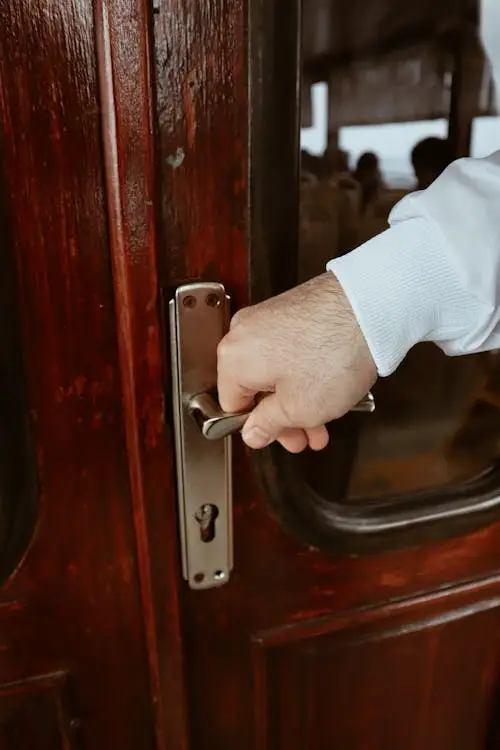
It starts with a key that won’t turn. Then a handle that won’t budge. Then — if you’re particularly unlucky — a growing realization that you’re standing on the wrong side of your own front door.
A door that refuses to open is one of those problems that feels bigger than it is. Usually, it isn’t. Most causes are mechanical, fixable, and cheaper to sort out than people expect.
This guide walks through exactly what’s going wrong and what to do about it — before frustration turns into a full-blown emergency.
Why Doors Stop Opening — The Most Common Culprits
Doors don’t just stop working out of spite. There’s always a reason.
Temperature swings are one of the most overlooked causes. Humid air causes wood to bloat, while dry conditions cause it to draw inward. A door that swings freely in winter can jam solid by August. The hardware is innocent here — the frame has simply moved out of position.
Mechanical wear is another common story. Internal components age, corrode, and gradually lose their tolerance. A cylinder that’s been turning thousands of times a year will eventually start to protest. That resistance you feel isn’t character. It’s wearing.
Misalignment is the third culprit. If a home settles — which all homes do over time — the door frame can shift just enough to throw the latch out of alignment with the strike plate. The door closes. It just doesn’t open easily anymore.
How to Tell If the Problem Is the Lock, the Key, or the Door Itself
Before throwing money at a solution, narrow down the source.
Test the key in a different entry point, if possible. If it operates smoothly elsewhere, the cylinder itself is probably fine — and the issue lies with the door or frame. If the key sticks in every entry point it’s used in, the key is the problem. A worn or bent key is one of the most commonly misdiagnosed issues in the business.
Try operating the handle without the key. If the latch moves freely but the door still won’t shift, you’re dealing with a frame or swelling issue. If the mechanism itself feels stiff or grinds, the internal components need attention.
One simple test saves a lot of guesswork.
Simple DIY Fixes for a Door That Won’t Open
A surprising number of stuck door problems respond to basic fixes that cost almost nothing.
Graphite powder or a dry PTFE lubricant applied directly into the keyhole can free up a stiff cylinder in minutes. Avoid WD-40 — it attracts dust over time and makes things worse. For swollen wooden doors, a dehumidifier running in the room overnight can reduce enough moisture to free the frame by morning.
If the latch isn’t catching the strike plate correctly, look at where the wear marks fall on the plate. A mark that sits too high or too low tells you exactly which direction the door has shifted. Repositioning the strike plate by a few millimeters often solves it entirely — two screws, ten minutes, done.
Hinges are worth checking, too. Give those hinge screws enough slack, and the door starts to sag, pulling the latch somewhere it was never meant to be. Tightening them is a 60-second job that fixes what looks like a complex problem.
When a Stuck Door Is Actually a Bigger Structural or Security Issue
Not every jammed door is a minor inconvenience. Sometimes it’s a sign of a larger structural or security concern.
A door that suddenly becomes difficult to open or close — especially when there hasn’t been any change in weather — may indicate foundation movement or gradual structural settling. If you’re also noticing new cracks forming around the door frame, it’s wise to get a structural assessment before attempting quick fixes.
From a security standpoint, a door that doesn’t close or latch properly creates a clear vulnerability. Even the strongest hardware won’t do much good if the frame can’t support it. If you’re near San Francisco and dealing with this kind of issue, professional locksmith services in San Francisco can help determine whether the problem is purely mechanical or if the frame and hardware require a more comprehensive repair.
Don’t patch what really needs replacing.
What a Locksmith Does to Fix a Door That Won’t Open — And What It Costs
A qualified technician approaches a stuck door systematically. They assess the cylinder, the frame alignment, the strike plate position, and the condition of the hardware — in that order. No guessing. No unnecessary parts replacement.
For a standard service call involving cylinder work or realignment, expect to pay between $75 and $150. Frame repairs or hardware replacement sit higher — $150 to $300, depending on the complexity and parts required.
Emergency call-outs attract a premium. If you can schedule the visit during normal hours, you’ll pay considerably less. Most reputable technicians quote upfront, so there are no awkward conversations on the doorstep.
The Best Ways to Prevent a Stuck or Jammed Door From Happening Again
Prevention here is genuinely simple. Most people just don’t follow through on it.
Lubricate moving parts twice a year — spring and autumn. Check hinge screws every six months and tighten anything that’s worked loose. For wooden doors, a weatherproof sealant on the top and bottom edges reduces moisture absorption and significantly cuts down seasonal swelling.
If your home is older, consider upgrading to a steel or composite door. They don’t warp, they don’t swell, and they hold alignment far better over time. The upfront cost is higher. The long-term maintenance cost is dramatically lower.
A door that gets regular attention rarely causes problems. One that gets ignored eventually picks the worst possible moment to give up.
Stuck Door, Solved — Your Fast-Action Summary
A door that won’t open is almost always fixable. The cause is usually one of three things: a mechanical issue with the hardware, a frame alignment problem, or seasonal swelling. Each has a clear solution.
Start with the simple checks — key, latch, hinges, frame. Work through them before calling anyone. If the problem goes beyond basic troubleshooting, get a professional in sooner rather than later. Waiting makes most door problems worse and more expensive.
Lubricate twice a year. Check the hinges. Seal wooden doors properly. Small habits now save a larger headache later.
Frequently Asked Questions
Why does my door stick more in summer than in winter?
Wood absorbs humidity and swells like it’s training for a bodybuilding competition. Seal the edges, run a dehumidifier, and your door will stop auditioning for a gym membership.
Can I fix a misaligned door latch myself?
Absolutely. Check the strike plate wear marks, shift it a few millimeters, and tighten the hinges. Ten minutes, two screws, zero locksmith bill. Your wallet will thank you personally.
How do I know if my door problem is structural rather than mechanical?
Sudden sticking plus new wall cracks equals your house quietly having a meltdown. Stop fiddling with the hardware and call a structural inspector before the door becomes the least of your problems.
What lubricant should I use on a stiff door cylinder?
Graphite powder or dry PTFE spray. Not WD-40 — that’s the equivalent of fixing a headache with a foghorn. Oil-based lubricants attract grime and quietly destroy internal components over time.
How much does it cost to fix a door that won’t open?
Standard repairs run $75–$150. Framework pushes $300. Emergency call-outs cost more — basically a premium for panicking after hours. Book during business hours, describe the problem clearly, and avoid the surcharge.