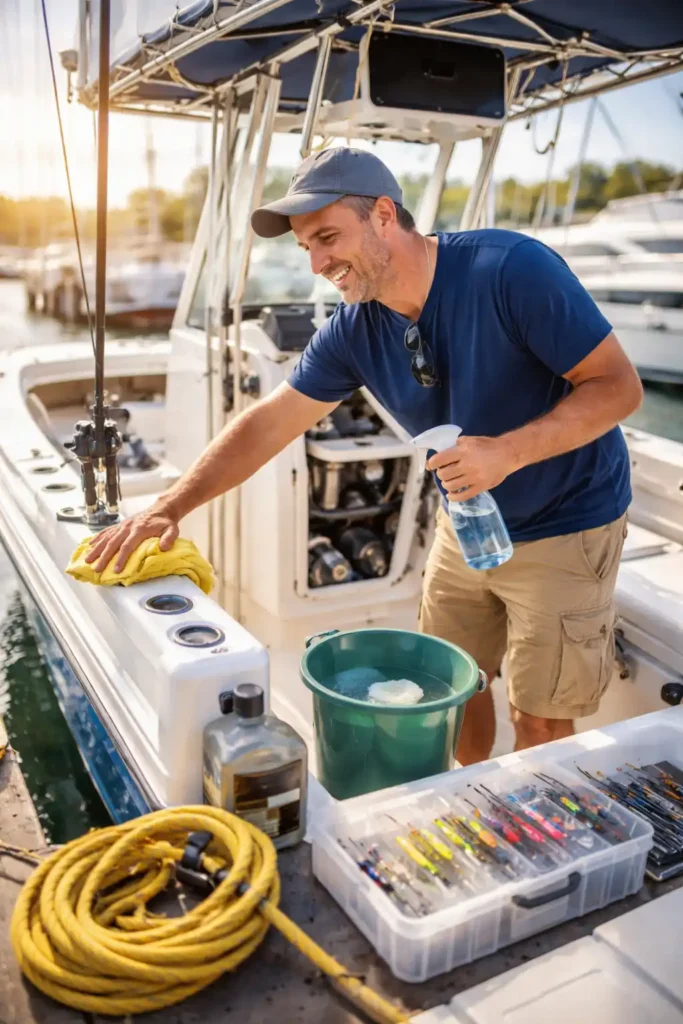
For many Aussie anglers, the weekend ritual is sacred. It starts with a 4:00 am alarm, a thermos of lukewarm coffee, and the quiet satisfaction of reversing the trailer down a glassed-out boat ramp. Although, as any seasoned salt-crusted boater will tell you, the day doesn’t end when you pull the boat out of the water.
The longevity of fishing boats is won or lost at the wash-down bay or in the driveway at home.. In Australia, we deal with some of the harshest marine environments on the planet. From the corrosive humidity of the Top End to the relentless swell and salt-spray of the Southern Ocean, our vessels are constantly under siege.
However, maintenance doesn’t have to be a back-breaking chore that takes longer than the fishing trip itself. If you’ve invested in a high-performance plate aluminium boat,, you’re already ahead of the game. Here is how to keep your rig in “showroom” condition with a few clever, low-effort habits.
1. The 15-Minute Post-Trip Ritual
The most important maintenance happens the moment you leave the saltwater. Salt is a silent predator; it finds every nook, cranny, and electrical terminal.
- The Flush: This is non-negotiable. Most modern outboards have a built-in flush port. Hook up the garden hose and let it run for 10–15 minutes while you clean the rest of the boat. This washes away salt and sand from the internal cooling passages.
- The “Salty” Scrub: A quick hose-down isn’t enough. Salt has a “sticky” quality. Use a dedicated marine wash with a soft-bristle brush to physically break the bond between the salt and your hull.
- The Engine Cowling: Take a second to wipe down the engine cowl and the tilt-trim rams. A light spray of a lanolin-based corrosion inhibitor on the powerhead (under the cowl) every few trips acts as a “liquid shield” against the salty air.
2. Hull Integrity: The “Silver Lining” of Plate Alloy
One of the primary reasons Australians have been moving toward plate alloy boats for nearly 20 years is the sheer ease of hull maintenance. Unlike fibreglass, which can suffer from osmosis (water absorption) or UV-related gelcoat cracking, a high-quality plate hull is remarkably resilient.
However, you must be mindful of electrolysis. When two different metals (like a stainless steel bolt and an aluminium hull) meet in saltwater, a tiny electrical current is created that “eats” the softer metal.
- Check Your Anodes: These are the “sacrificial” blocks of zinc, generally attached to your engine. Their job is to corrode so your boat doesn’t.
- Maintenance Tip: Replace your anodes when they are 50% gone. If they aren’t wearing away at all, they aren’t working so check that they have a clean, metal-to-metal connection with the boat.
Why Material Choice Matters for Maintenance
According to a 2025 industry analysis, the long-term maintenance profile of aluminium vastly outperforms traditional composites.
3. The Skeleton Check Below the Floor
Many mass-produced fishing boats hide their secrets under a carpeted plywood floor. With time, timbers rot and retain water against the hull.
This has been abandoned in contemporary Australian plate boat designs. Look for a boat with a completely welded and sealed deck with a strong sub-floor frame (rigid inner frame).
- Maintenance Tip: Check your bilge pump at least once a month, even when a boat is self-drying. If your boat doesn’t have a fully-welled and sealed deck, and has an inspection hatch to access the bilge; lift it, and make sure that there is no debris (old fishing line, sinkers, or fish scale) that is jamming the intake of the pump.
4. The Trailer: The Unsung Hero
Storms at sea are less fatal to boats than loss by trailer failure on the highway. The trailer leads a rough life, being submerged in saltwater and then dried in the Australian sun.
- Wheel Bearings: These are the most widespread points of failure. When you observe grease that appears milky in colour, or when the seals fail, you will notice a clicking sound appears as the wheel spins.
- Brakes: You have to wash the brake callipers and brakes with water and clean them completely after each use. The primary cause of frozen brakes is saltwater in the brake assembly.
- Lights: By 2026, there can be no justification for old bulb-like lights. Replace them with high-quality, fully sealed LED units, capable of complete submergence without shorting out.
5. Annual Servicing: 100 hours Milestone
Every day cleaning is your business, but certain things should have a professional eye. Most manufacturers of larger outboards suggest that a full service be performed after 100 hours of use or annually, whichever is first.
Market Environment: The Boating Industry Association (BIA) 2024-25 Report notes that over 970,000 vessels are currently registered in Australia, with 85% of those being under 6 metres. This massive fleet puts a premium on professional service technicians, so book your “Pre-Christmas” service early to avoid the rush.
A standard annual service should include:
- Changing engine oil and the lower-unit gear oil.
- Replacing fuel filters and water separators.
- Inspecting the water pump impeller (the small rubber part that keeps your engine cool).
- Checking steering cables and hydraulic fluid levels.
The Final Verdict
Owning one of the premier fishing boats on the water is a privilege, but it comes with the responsibility of stewardship. By choosing a boat with a high-tensile plate alloy hull and a clever water-ballast system for stability, you’ve already reduced your maintenance load significantly compared to older-style builds.
The “silver” look of a plate boat isn’t just about aesthetics; it’s about a material that doesn’t fear the sun or the salt. Treat it with a bit of respect, a freshwater rinse, and a yearly service, and it will be taking you to your favourite secret reefs for many, many years.