Cord-cutting in the UK has become a slow grumble. You cancel Sky, try Now TV for a month, grab Virgin for the Champions League, and still end up with a stack of apps and a direct debit you don’t remember signing. Anyone who has looked at IPTV providers in the Netherlands for an escape route already knows the next problem: the second you start searching, you hit a wall of “best of 2026” listicles that all suspiciously recommend whoever paid for the slot.
- The Dutch IPTV Market Looks Nothing Like the UK’s
- Is IPTV Legal in the Netherlands in 2026?
- Which Dutch Channels Actually Matter?
- The Real Cost of IPTV Providers in the Netherlands
- Devices, Setup, and the Friction Most People Don’t Expect
- What Makes the Best IPTV Providers Different
- FAQ
- Is IPTV legal in the Netherlands?
- Which IPTV providers in the Netherlands carry the real Dutch channels?
- How much should an honest Dutch IPTV subscription cost?
- Do I need a VPN to watch IPTV in the Netherlands?
- Will IPTV work on my Firestick or Samsung Smart TV?
- What happens if my subscription stops working after I pay?
- Final Thoughts
The Dutch market moves faster than the UK’s, pays less for cable, and has quietly built one of Europe’s most competitive IPTV scenes over the past decade. It should be easy to pick a provider. It isn’t. Headlines about BREIN raids and €80,000 fines sit next to reviews, and any sensible reader stops to wonder whether the whole category is a scam or just badly covered.
This guide does what those listicles won’t. It names what actually matters, explains the legal reality without the fear-mongering, and gives you a clear way to pick a Dutch IPTV service that won’t vanish next month.
The Dutch IPTV Market Looks Nothing Like the UK’s
The Netherlands is, in a quiet way, an IPTV-first country. Broadband penetration is near-universal, fibre is the default in most cities, and the major incumbents (Ziggo and KPN) already deliver their television packages over IP rather than satellite or aerial.
Streaming TV isn’t a novelty here. It’s the baseline.
That has two consequences. Dutch households are more comfortable ditching bundled cable than their British counterparts, because paying €50 to €70 a month for a big Ziggo or KPN package while you only watch NPO news, a few RTL shows, and Eredivisie highlights has become hard to justify. The replacement market has also matured: decent IPTV services compete on price, stability, and channel depth, not on whether they work at all.
What you are actually buying is straightforward. A Dutch IPTV subscription streams live TV and on-demand content over your internet connection through a player app on your Smart TV, Firestick, Apple TV, or phone. No dish, no aerial, no ISP contract. Serious IPTV services deliver Dutch, Belgian, and international channels through a single M3U link or Xtream Codes login, and a good one activates within minutes of payment.
Is IPTV Legal in the Netherlands in 2026?
Short answer: it depends on the provider, not the technology. IPTV itself is completely legal. Your ISP uses it. Broadcasters use it. The only legal question is whether the service you pay has the rights to carry the channels it promises.
Licensed IPTV is fine. Unlicensed “grey market” IPTV is where the enforcement risk sits, and Dutch rights-holder group BREIN has spent several years making that risk real. Publicly reported cases paint a clear picture. A man in Almere was ordered in 2023 to pay around €82,000 in damages for selling illegal IPTV subscriptions. Dutch households that used TV boxes pre-loaded with pirate apps received €500 warning-letter fines in 2022. A Rotterdam student was fined €1,800 in 2024 for sharing an illegal account.
Read those cases carefully. The €82,000 ruling was for a reseller. The smaller fines were for end users who were obviously on piracy services. Enforcement still skews heavily towards sellers, not casual viewers, but the “viewers are untouchable” line that floated around a few years ago no longer holds.
The practical consequence for picking a provider is simple. Look for an operator with a multi-year track record, transparent ownership, and a refund policy you can actually find. IPTV Mate, for example, has been running since 2011. In a market where most grey-zone resellers disappear inside twelve months, that kind of longevity is a signal on its own.
Which Dutch Channels Actually Matter?
Ask any Dutch viewer what they want from an IPTV subscription and the first reply is a short list of names. NPO 1, NPO 2, and NPO 3. The RTL family (4, 5, 7, 8). Belgian channels if the household is mixed. Dutch subtitles on the big international series, because streaming platforms still rotate those in and out at random.
Everything else is negotiable. The NPO trio carries the public broadcaster output that Dutch households plan their evenings around, from the eight o’clock news to documentaries to cultural programming. RTL does the heavy lifting on entertainment and reality. Miss either group and the subscription is dead on arrival, no matter how many international channels the provider advertises.
Sport is a reality check. Eredivisie rights and Formula 1 coverage get renegotiated almost every season, and any provider advertising “every match in 4K, forever” is overselling. A properly built IPTV Nederland service will carry all major Dutch and Belgian channels plus sport and entertainment from 150-plus countries, but treat live sport as a moving target rather than a guarantee.
The quiet feature that separates real Dutch IPTV from generic international streams is subtitling. A provider building for the Netherlands should have solid Dutch subtitles across its VOD library, not just a translated menu bar on the app.
The Real Cost of IPTV Providers in the Netherlands
Here is the uncomfortable maths nobody in those “best of” listicles wants to work through. Running a real IPTV service means paying for content rights (or at least middleware licenses), CDN bandwidth, redundant servers, refund processing, and enough staff to answer tickets at nine o’clock on a Sunday. Those costs don’t scale down to nothing.
The honest floor for a Dutch IPTV subscription sits somewhere between €5 and €15 a month. That is the range where an operator can plausibly keep the servers up, support multiple devices, keep the M3U links alive, and still refund you when something breaks.
Anything under €4 a month is almost certainly a reseller chain. You aren’t beating the system. You are paying a middleman who bought wholesale access from another middleman, and you will find out the hard way when the domain quietly disappears and your payment card starts showing odd charges from Singapore.
The other trap is auto-renewal. Plenty of “cheap” providers lock you into a recurring card charge and make cancellation physically impossible. The cleaner alternative is a one-time payment model: you pay for the window you actually want (one, three, six, or twelve months), no card stored, no surprise renewal next year. IPTV Mate’s entry pricing starts at €7.99 a month, with a three-month plan at €119.99 and a twelve-month plan at €179.98. Paying €8 isn’t expensive. Getting burned for €3 is.
Devices, Setup, and the Friction Most People Don’t Expect
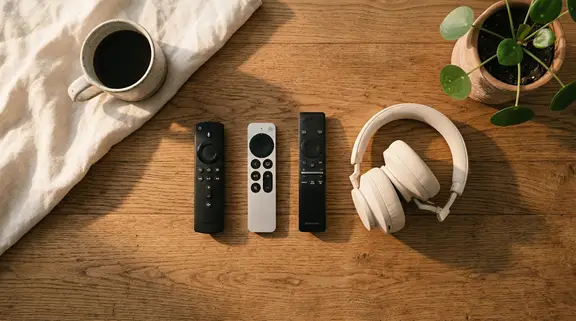
Good IPTV is app-agnostic. If you already own a Samsung, LG, Sony, or Hisense Smart TV, you’re covered. Same for a Firestick, an Apple TV, a Chromecast with Google TV, an Android TV box, or an iOS or Android phone. Laptops work too.
The delivery format is usually an M3U link plus Xtream Codes credentials, dropped into a standard player like IPTV Smarters Pro or TiviMate. Five minutes of setup, maybe ten if you’ve never touched those apps before. A reputable provider emails the credentials within minutes of payment, not the next day.
Watch for the signs of a badly run operation. “Manual activation within 24 hours” is a bottleneck flag. Telegram-only customer support is a bottleneck flag. Forced sideloading of obscure APKs that only the provider distributes is a bottleneck flag, and sometimes a malware flag. Legitimate Dutch IPTV works with mainstream apps on mainstream devices and doesn’t ask you to learn a new ecosystem.
What Makes the Best IPTV Providers Different
Strip the marketing language away and the difference between a provider worth using and one worth avoiding comes down to six quiet checks. Track record under the same domain, measured in years, not months. A transparent channel list instead of a “25,000+” marketing figure. A refund policy you can find without emailing support. Mainstream device and app coverage. Activation measured in minutes. One-time payment plans that don’t lock a card on file.
Use that filter and most of the listicle entries collapse immediately. If you want a Beste IPTV setup that sidesteps the reseller chaos, the hidden-renewal traps, and the “manual activation” bottlenecks, work from that checklist rather than someone else’s ranked table.
IPTV Mate fits the filter fairly neatly. The operation has been running since 2011 and claims over 100,000 customers served. The library lists 30,500+ live channels and 150,000+ VOD titles, streaming in 4K and FHD. Dutch subtitles come as standard across the VOD side. Setup runs through IPTV Smarters Pro or TiviMate on Samsung, LG, Sony, Hisense, Firestick, Apple TV, Chromecast, and the usual phones. Credentials arrive by email within minutes. Provider-side outages over 48 hours get you a refund or a time extension.
The company is also upfront about the one awkward bit most vendors bury: the one-month plan is treated as a trial period and is non-refundable. Saying that out loud, instead of hiding it in fine print, is the kind of plain disclosure you’re actually paying for.
FAQ
Is IPTV legal in the Netherlands?
Licensed IPTV is completely legal, and it’s how your ISP already delivers Ziggo or KPN packages. Unlicensed services sit in a grey zone, and BREIN has pursued resellers hard, with one 2023 ruling landing at roughly €82,000 in damages. Individual viewers aren’t usually the target, but picking a long-running, licensed provider keeps your risk profile near zero.
Which IPTV providers in the Netherlands carry the real Dutch channels?
The benchmark is NPO 1, 2, and 3, the RTL family (4, 5, 7, 8), the major Belgian channels, and Dutch subtitles across the VOD library. Any service that can’t list these specifically is routing you through a generic international feed, and walking away is the right move.
How much should an honest Dutch IPTV subscription cost?
Between €5 and €15 a month is the realistic range for a service that actually holds together. IPTV Mate starts at €7.99. Anything priced under €4 is almost certainly a short-lived reseller chain, not a bargain.
Do I need a VPN to watch IPTV in the Netherlands?
Not for a licensed provider. Some users run a VPN out of general privacy preference, but a legitimate IPTV service works fine without one and doesn’t require obscure tunnels to reach its servers.
Will IPTV work on my Firestick or Samsung Smart TV?
Yes. Any competent Dutch IPTV provider supports Samsung, LG, Sony, and Hisense Smart TVs, plus the Firestick, Apple TV, Chromecast with Google TV, Android TV boxes, iOS, Android phones, and laptops through IPTV Smarters Pro or TiviMate.
What happens if my subscription stops working after I pay?
Read the refund policy before you subscribe. A reputable operator (IPTV Mate’s policy is a fair reference point) will refund or extend your subscription if a provider-side outage runs longer than 48 hours.
Final Thoughts
Picking IPTV providers in the Netherlands isn’t really about finding the cheapest listicle entry on page one of Google. It’s about finding the operator who’ll still be there in March, whose refund policy isn’t hidden behind a support ticket, and whose channel list includes the Dutch broadcasters you actually watch. Treat the €8 price floor as a feature, not a bug. On those terms, IPTV Mate is worth a look long before you trust a “top 10” table that mostly sells its number one slot.