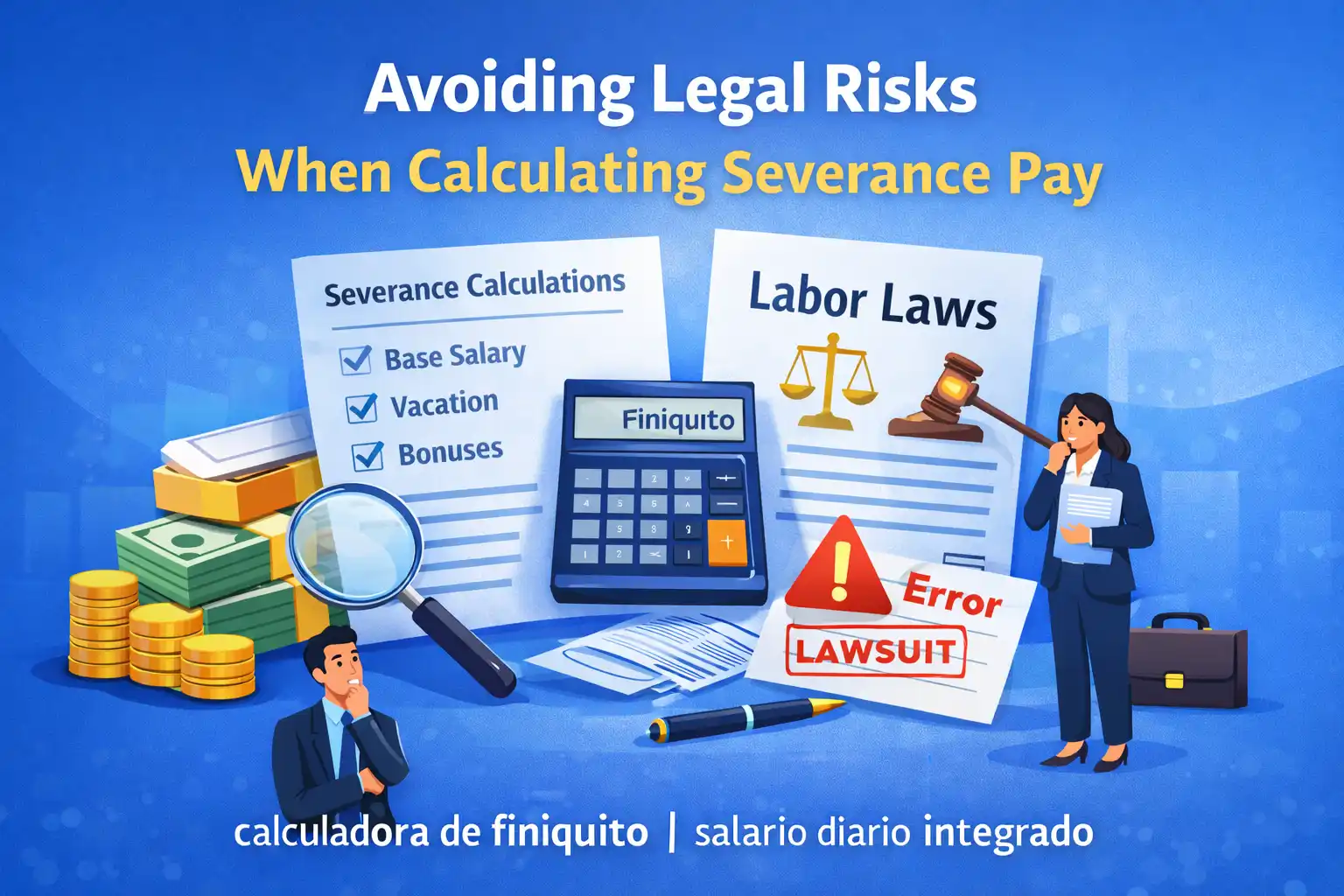
Calculating severance pay is one of the most sensitive steps when ending an employment relationship. It may seem like a simple financial process, but even minor errors can create serious legal complications. Many people rely on a calculadora de finiquito to estimate their final payment, but using a tool alone is not enough to ensure accuracy or legal compliance.
Employers must follow labor laws carefully, and employees should understand their rights to avoid being underpaid. A clear and accurate calculation not only prevents disputes but also builds trust between both parties during what can already be a stressful transition.
Understanding the Importance of Accurate Calculations
Severance pay is more than just a final paycheck. It is a legal obligation that reflects the employee’s time, effort, and rights under the law. Any mistake in the calculation can lead to disputes, penalties, or even legal action.
For employers, incorrect payments can result in financial losses and damage to reputation. For employees, miscalculations can mean losing money they are rightfully entitled to receive.
Accuracy is essential because severance pay often includes multiple components. These can vary depending on contracts, company policies, and local labor regulations. Missing even one element can significantly affect the final amount.
Key Components of Severance Pay
To avoid legal risks, it is important to understand what goes into severance pay. Each component must be calculated carefully and included in the final amount.
Some of the most common elements include:
- Base salary
- Length of employment
- Unused vacation or leave days
- Bonuses or commissions
- Additional legal entitlements
One of the most important factors in many legal systems is the salario diario integrado. This value represents the employee’s daily wage plus additional benefits and compensation. It plays a key role in determining the correct severance amount.
If this figure is calculated incorrectly, the entire severance payment may be inaccurate. That is why understanding how it works is essential for both employers and employees.
Common Legal Risks and Mistakes
Even when intentions are good, mistakes can happen. Unfortunately, these mistakes can lead to serious consequences.
Ignoring Labor Laws
Each country has specific laws that govern severance pay. Failing to follow these rules can result in legal penalties.
Miscalculating Salary Components
Not including bonuses, benefits, or allowances can lead to underpayment.
Using Incorrect Data
Outdated or incomplete salary information can distort calculations.
Lack of Documentation
Failing to keep records of how the severance was calculated can make it difficult to resolve disputes.
Over-Reliance on Tools
While tools are helpful, they should not replace a proper review. A calculadora de finiquito provides estimates, but it cannot account for every legal detail or unique situation.
The Role of Salario Diario Integrado
The salario diario integrado is a crucial concept that directly impacts severance calculations. It includes not only the base salary but also additional benefits such as bonuses, allowances, and other forms of compensation.
Because it combines multiple elements, calculating it incorrectly is a common source of legal disputes. Many employers underestimate its importance, while employees may not fully understand how it affects their final payment.
Ensuring that this value is accurate is one of the most effective ways to reduce legal risks. It provides a more complete picture of the employee’s earnings and ensures that the severance calculation reflects the true value of their work.
How to Calculate Severance Pay Safely
Avoiding legal risks requires a careful and structured approach. It is not enough to rely on assumptions or rough estimates.
Here are some practical steps to ensure accuracy:
- Use reliable tools as a starting point
A calculadora de finiquito can help you get an initial estimate, but it should always be verified. - Check all salary components
Make sure that all elements, including the salario diario integrado, are correctly calculated. - Follow current labor laws
Stay updated on regulations to ensure compliance. - Review calculations more than once
Double-checking helps catch errors before they become problems. - Keep detailed records
Document every step of the calculation process for transparency.
Why Accuracy Protects Both Parties
Accurate severance calculations benefit everyone involved. For employers, it reduces the risk of legal claims, fines, and reputational damage. For employees, it ensures fair compensation and peace of mind.
When both parties understand how the final amount is calculated, it creates a smoother and more transparent process. This can prevent misunderstandings and help maintain a positive relationship even after employment ends.
Accuracy also builds confidence. When calculations are clear and well-documented, there is less room for doubt or conflict.
Practical Tips to Avoid Legal Problems
Taking a few extra steps can make a big difference in avoiding legal risks.
Communicate clearly
Ensure that both parties understand the breakdown of the severance payment.
Do not rush the process
Take the time to review all details carefully.
Consult professionals when needed
Legal or financial experts can help verify complex cases.
Stay organized
Keep all documents and calculations in one place for easy reference.
Be transparent
Openness reduces the chances of disputes and builds trust.
Final Thoughts
Avoiding legal risks when calculating severance pay requires more than just basic math. It involves understanding legal requirements, including all relevant components, and ensuring that every detail is accurate.
While tools like a calculadora de finiquito can simplify the process, they should be used as a guide rather than a final answer. Paying close attention to key factors such as the salario diario integrado can make a significant difference in the accuracy of the final calculation.
By taking a careful and informed approach, both employers and employees can avoid unnecessary disputes and ensure a fair and smooth transition.