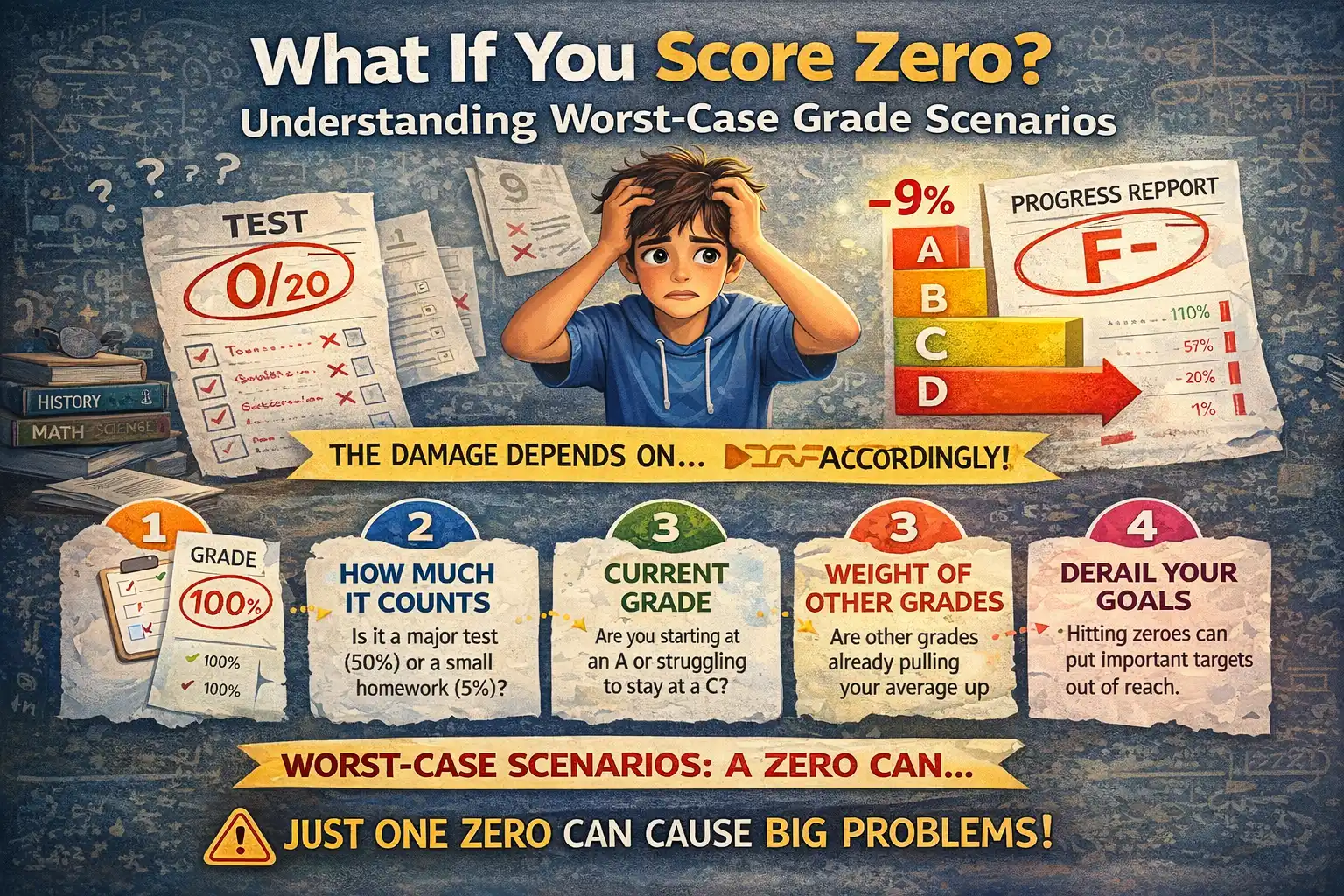
A situation many students fear but rarely plan for is scoring zero on an assignment, test, or exam. Whether it happens due to a missed deadline, unexpected difficulty, or personal reasons, the immediate reaction is often panic.
The real question is not just what happened, but what it actually means for your overall performance. Instead of assuming the worst, using a grade calculator can help you understand the real impact of a zero score and what you can still recover.
Why a Zero Score Feels More Serious Than It Often Is
A zero feels extreme because it represents complete loss of marks in one component. It creates the impression that your entire grade is ruined.
However, academic grading is usually based on multiple components. Assignments, quizzes, participation, and exams all contribute to the final result. This means a single zero does not automatically determine your overall outcome.
The real impact depends on how much weight that specific component carries.
Understanding the Actual Impact of a Zero
The effect of scoring zero is not the same in every situation. It depends on the structure of your grading system.
If the zero comes from a small assignment, the overall impact may be limited. But if it is from a major exam or heavily weighted component, the effect will be more significant.
This is where most students make mistakes. They assume the worst without calculating the actual numbers.
Using a grade average calculator allows you to see how a zero affects your overall average in a realistic way. It replaces fear with clarity.
Why Worst-Case Thinking Can Be Misleading
When students imagine worst-case scenarios, they often overestimate the damage.
They assume:
- Their final grade will drop drastically
- Recovery is not possible
- The semester is already lost
In reality, academic systems are designed to measure overall performance, not a single moment. Even after a poor result, there is often room to recover through consistent improvement in other areas.
How to Respond Strategically After a Zero
The most important step is not emotional reaction, but analysis.
Instead of focusing on the mistake itself, focus on what remains under your control. Your future assessments still carry weight, and improving performance there can offset earlier losses.
This is where clarity becomes important. When you calculate your current standing, you can determine exactly what scores are needed moving forward.
This turns a setback into a manageable situation.
Turning a Worst-Case Scenario Into a Recovery Plan
A zero score can actually create a strong turning point if handled correctly.
It forces you to:
- Reevaluate your study approach
- Pay closer attention to grading structure
- Focus on consistency in remaining work
Students who recover well from setbacks often become more disciplined because they gain a clearer understanding of how grading works.
Why Tracking Matters More After a Setback
After a zero, guessing your progress becomes even more risky. You need accurate information to guide your next steps.
When you track your performance regularly, you can:
- Measure how much you have recovered
- Adjust your effort based on real data
- Stay aligned with your target grade
This level of awareness prevents further mistakes and keeps your performance stable.
The Bigger Academic Perspective
A single zero does not define your academic ability. It is one data point in a larger system.
What matters more is how you respond:
- Do you adjust your strategy
- Do you improve consistency
- Do you stay focused on long-term performance
Academic success is built over time, and even strong students face setbacks.
Final Thoughts
Scoring zero is not the end of your academic progress. It is a situation that needs to be understood, not feared.
When you replace assumptions with actual calculations, you gain control over your results. Tools like a grade calculator and a grade average calculator help you move from panic to clarity.
The key is not to focus on what went wrong, but on what you can still improve. Because even in a worst-case scenario, there is usually a path forward.