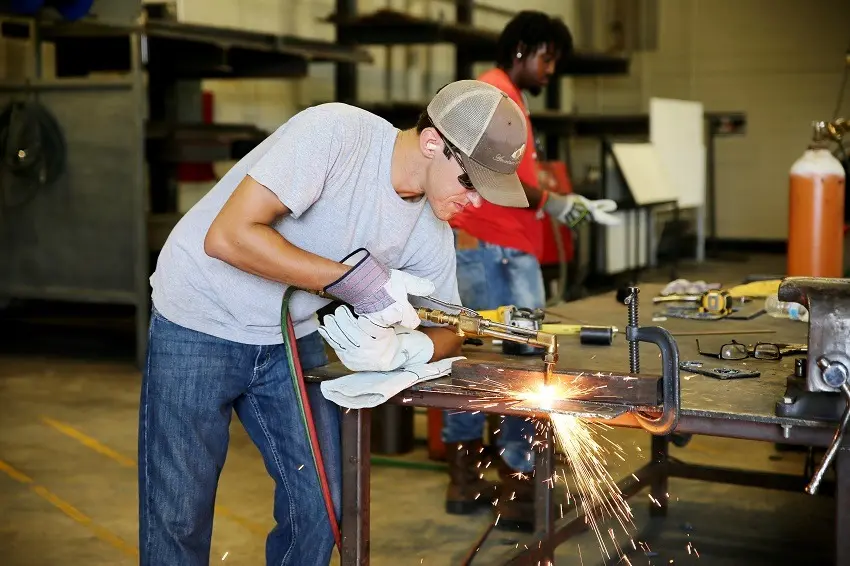
Welding is a highly skilled trade that plays a crucial role in construction, manufacturing, automotive work, and infrastructure development. As industries continue to grow, the demand for trained welders remains strong, making it a stable and practical career choice. Welding programs are designed to provide students with the technical knowledge and hands-on experience needed to enter the workforce with confidence and competence. These programs focus on real-world training, preparing students for a wide range of career opportunities in skilled trades.
What You Learn in Welding Programs
Welding programs combine classroom instruction with extensive hands-on training. Students typically begin by learning the fundamentals of welding safety, equipment handling, and metal properties. Understanding safety procedures is especially important, as welding involves high temperatures, electrical equipment, and industrial tools.
As training progresses, students learn different welding techniques such as MIG (Metal Inert Gas), TIG (Tungsten Inert Gas), and stick welding. Each method is used in different industries and materials, so mastering multiple techniques is essential for career flexibility.
Students also study blueprint reading and technical drawing interpretation. These skills help welders understand project specifications and ensure accuracy in their work. Many programs also include training in fabrication, metal cutting, and joining processes, giving students a well-rounded understanding of the trade.
A major part of welding education is lab-based practice. Students spend significant time in workshops applying what they have learned in real-world scenarios, helping them build confidence and technical precision.
Skills Developed Through Hands-On Welding Training
One of the key benefits of welding programs is the development of practical, job-ready skills. Technical proficiency is at the core, including the ability to operate welding equipment safely and effectively across different techniques and materials.
Attention to detail is another essential skill. Welders must ensure precision in every joint and seam, as even small mistakes can affect structural integrity. Problem-solving skills are also important, as welders often need to adjust techniques based on materials, conditions, or project requirements.
Physical coordination and stamina are developed through hands-on practice, as welding requires steady hand control and the ability to work in various positions. Safety awareness is also heavily emphasized, ensuring that students understand how to prevent accidents and maintain safe working environments.
Teamwork and communication skills are important as well, especially in large construction or manufacturing projects where welders collaborate with engineers, supervisors, and other tradespeople.
Career Opportunities in Welding
Graduates of welding programs can pursue a wide range of career opportunities across multiple industries. Common job roles include construction welder, industrial welder, fabrication technician, pipeline welder, and maintenance welder. These positions are found in sectors such as construction, shipbuilding, automotive manufacturing, aerospace, and energy production.
With experience, welders can specialize in high-demand areas such as underwater welding, structural welding, or advanced fabrication. Some may also move into supervisory roles, welding inspection, or even start their own welding businesses.
The demand for skilled welders remains strong due to ongoing infrastructure development and industrial growth, creating stable employment opportunities and competitive wages.
Conclusion
Welding programs provide a hands-on and practical pathway into a skilled trade career. By combining technical instruction with real-world training, they prepare students for a wide range of job opportunities in multiple industries. For individuals who enjoy working with their hands and want a stable, in-demand career, welding offers a strong foundation for long-term professional success and growth.