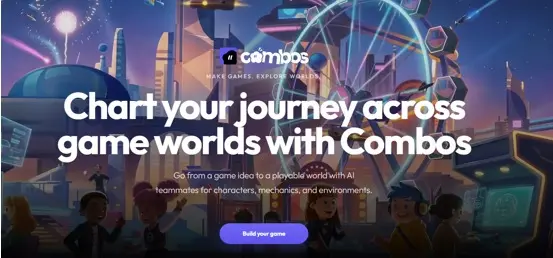
Most people who want to make a game never make one. This is not because they lack ideas — it is because the gap between having an idea and producing something playable has historically been enormous. Closing that gap required months of learning, a team of specialists, or both. For most people, the idea stayed an idea.
That gap has narrowed dramatically. The combination of AI-generated assets, no-code editing, and natural language game logic has made it genuinely possible to hold a playable version of your idea within minutes of typing it out. This is not a slight exaggeration for marketing purposes. It is a real change in what is available, and using an AI Game Maker and creating a complete game takes mere minutes.
Ideal Use Cases with AI Game Maker
- Create casual puzzle, card and simulation games for personal fun and social sharing.
- Design custom interactive mini-games for streamers and content creators to boost community engagement and live event interaction.
- Build educational quizzes and learning games for teachers to make classroom teaching more vivid and interactive.
- Help indie developers and small studios quickly prototype game concepts and verify gameplay ideas without heavy upfront investment.
- Develop lightweight web mini-games for brand marketing, campaign activities and audience entertainment.
What Happens When You Type Your First Prompt
When you describe a game idea to an AI game maker, the system does not simply search a database for the closest match. It interprets your intent, identifies the genre and core mechanic, and begins structuring a design around what you are trying to achieve. Boo, the AI game agent inside Combos Fun, runs a pre-communication stage before building anything — asking clarifying questions to align on theme, gameplay style, and visual direction.
This stage is worth taking seriously. The more clearly you communicate what you actually want — the feeling you are going for, the type of challenge you want players to face — the closer the output will be to your original vision. Treating the prompt like a conversation rather than a search query produces significantly better results.
Key Benefits That Make Combos Fun Stand Out
- Zero technical threshold: Create games with plain natural language, no coding, no engine expertise required.
- Rapid one-click generation: Turn a raw game idea into a fully playable prototype in minutes, cutting development time from months to minutes.
- AI intelligent assistance: Built-in AI agents sort out game design documents, generate ready-to-use assets and completes game logic automatically.
- Flexible natural iteration: Polish gameplay, difficulty and visuals simply by text description, no need to modify code manually.
- Instant sharing & publishing: One-click release generates a shareable link, easy for display, sharing and online launch.
Turning Your Idea Into a Playable Game With Combos
Here is how the process runs from the first prompt to the published game on Combos Fun.
Open combos.fun and type your game idea in plain language. You do not need technical vocabulary. Boo reads intent, not just keywords — “a game where you manage a small café and keep customers happy” is a perfectly valid starting point.
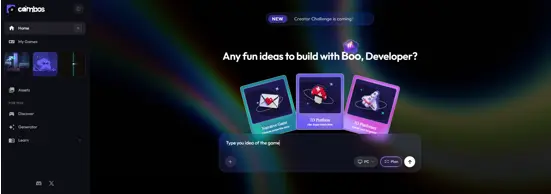
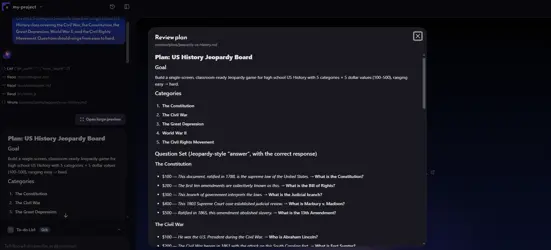
Confirm the Game Design Document Boo produces, or edit any part in natural language, before committing. The GDD is your blueprint. Changing something here is far easier than changing it after the game is built.
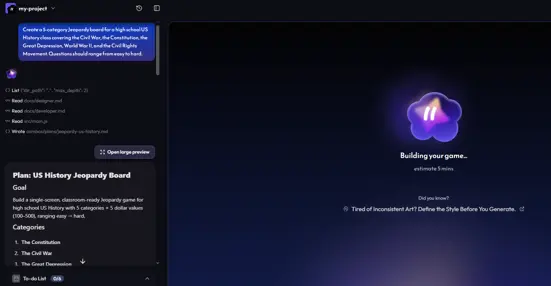
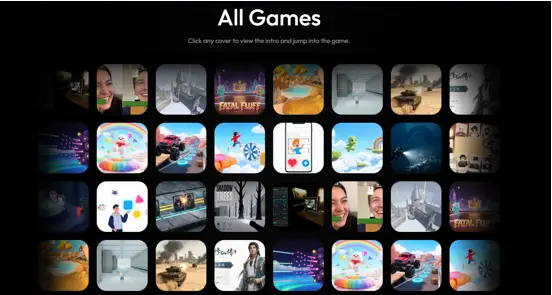
Combos generates all assets and builds a playable prototype. You can preview it in real time as it comes together. This step usually takes minutes rather than hours.
Refine anything that feels off using the no-code editor, then publish with one click. Your game gets a shareable link immediately.
From Concept to Controls: How the Pieces Come Together
A finished game is not just a visual — it is a system of rules, feedback responses, and player controls that all need to work together consistently. When you build manually, assembling those pieces takes a significant amount of time, even before you start worrying about how they look. An AI game maker handles the assembly automatically, generating game logic that fits the mechanic you described rather than requiring you to code each interaction from scratch.
This does not mean the output is always perfect on the first pass. It means you get a working version of your concept to react to, rather than spending your creative energy trying to imagine what it might feel like.
The Kinds of Ideas That Work Best With This Workflow
Not every game concept suits a rapid AI-assisted workflow equally well. Ideas that work best are those with a clear core mechanic — something you can describe in a sentence or two. “A tower defence game set in a medieval village” or “a side-scrolling platformer where the character ages as the levels progress” both have an obvious centre of gravity that the AI can build around.
More abstract concepts — games that are deeply systemic, heavily narrative, or built around an extremely specific feeling — benefit from spending more time in the GDD review stage. The AI is building toward a target, and the clearer that target is, the closer the output lands.
When Minutes Turn Into Hours: Going Beyond the First Draft
The first playable version of your game is a starting point, not a finished product. Most creators spend their real time in the iteration phase — adjusting what the prototype reveals rather than building from scratch. This is actually the healthiest way to develop a game. You are responding to something real rather than planning for something imaginary.
Combos supports this iteration loop through natural language editing. Rather than digging into code or rebuilding assets from scratch, you describe the change you want — “enemies need to move a bit slower” or “the jump height feels too low” — and the system applies it. The minutes to first playable become hours to something genuinely polished.
The gap between idea and playable game is no longer measured in months. For most concepts, it is measured in minutes. That change has real implications for who makes games and what gets made. If you have an idea sitting in a notebook or the back of your mind, there is no longer a meaningful technical reason not to try it. Combos gives you a working version to test within the time it takes to describe it.