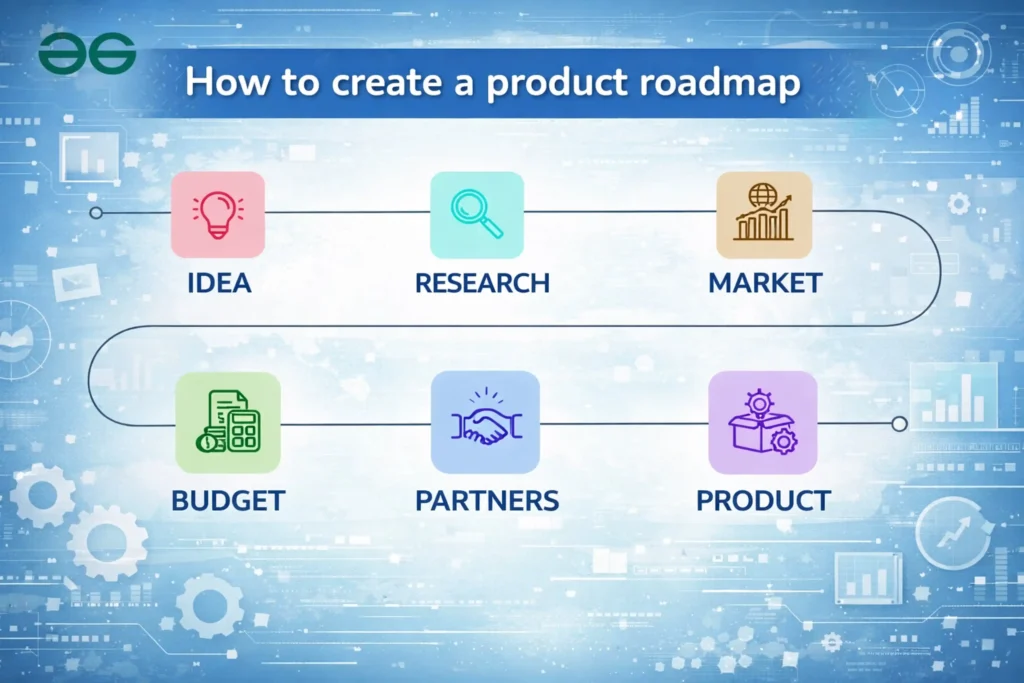
Bringing a new product to market is not just about having a good idea. A product team must turn that idea into a real part, test it, improve it, and prepare it for repeatable production. This process can be difficult because design, material, cost, tooling, quality, and delivery all affect the final result.
Many product launches fail or become delayed because teams move too quickly from concept to production. A better approach is to treat prototyping and manufacturing as connected stages. Each stage should answer a specific question before the team moves forward.
Why Prototyping Comes Before Production
A prototype helps a team check whether a product can work in the real world. It may be used to test size, shape, strength, assembly, appearance, or user experience. Without a prototype, many problems stay hidden until production begins.
That is risky. Once tooling is made or materials are ordered, changes become more expensive. A small design issue may lead to mold modification, production delays, rejected parts, or customer complaints.
Prototyping gives the team time to find those problems earlier. It does not remove every risk, but it reduces avoidable mistakes.
Step 1: Define the Product Requirements
Before making the first prototype, the team should define the basic product requirements. This step sounds simple, but it is often skipped.
The team should be clear about:
What the product must do
What material may be needed
What size and tolerance are required
Whether the product is mainly functional or cosmetic
How strong or flexible the part needs to be
What surface finish is expected
How many units may be produced later
What budget and timeline are realistic
These answers help decide the correct prototyping method. A visual display model does not need the same process as a functional plastic part used in a mechanical assembly.
Step 2: Build the First Prototype
The first prototype is usually not the final product. Its purpose is to make the concept visible and testable.
For early-stage products, 3D printing is often useful because it is fast and flexible. Designers can check form, size, and basic assembly without spending money on tooling. If the design changes, a new version can be printed quickly.
CNC machining may be better when the part needs better accuracy, stronger material, or real functional testing. It is often used for metal parts, engineering plastics, or parts that need tighter dimensional control.
At this stage, the goal is not to make a perfect product. The goal is to learn what needs to change.
Step 3: Review the Design for Manufacturing
A design that works as a prototype may not be ready for production. This is especially true for plastic parts, molded components, and assemblies.
Design for manufacturing, often called DFM, checks whether a part can be produced efficiently and consistently. For injection molded parts, this may include wall thickness, draft angle, ribs, bosses, undercuts, gate location, shrinkage, parting line, and ejection.
For machined parts, DFM may involve internal corners, tool access, tolerance, material choice, and surface finish. For assembled products, it may include fasteners, snap fits, alignment features, and clearance.
This review should happen before tooling. If DFM problems are found after the mold is built, the cost of correction can be much higher.
Step 4: Test the Prototype in Real Conditions
A prototype should be tested against real use conditions, not just reviewed on a desk. The type of testing depends on the product.
A consumer product may need drop testing, assembly testing, surface inspection, and user handling feedback. A mechanical part may need strength, fit, heat, wear, or tolerance testing. An enclosure may need checks for snap-fit strength, screw boss durability, cable clearance, and surface appearance.
Testing should also include assembly. Many products fail not because a single part is wrong, but because several parts do not fit together properly.
The results should be used to adjust the CAD model, material choice, or production plan.
Step 5: Choose the Right Manufacturing Method
Once the design is more stable, the team needs to choose the manufacturing method. This decision should be based on quantity, material, accuracy, surface finish, budget, and future demand.
3D printing is useful for early prototypes, complex shapes, and small quantities. It is not always suitable for final production if the part needs high strength, smooth surfaces, or consistent material behavior.
CNC machining is suitable for accurate prototypes, metal parts, and functional testing. It can also support small-batch production, but the unit cost may remain high for larger quantities.
Injection molding is usually the right choice when plastic parts need repeatable quality and lower unit cost at higher volumes. However, it requires tooling, so the design should be stable before this stage.
For teams that need both development support and production options, a manufacturing partner such as EzraMade can help compare prototyping, tooling, injection molding, CNC machining, and finishing based on the actual part requirements.
Step 6: Start with Low-Volume Production
Moving directly from prototype to large-scale production can be risky. Low-volume production gives teams a safer middle step.
This stage allows the team to produce a limited number of parts for real users, early sales, field testing, certification preparation, or market validation. It also helps confirm whether the manufacturing process is stable.
Low-volume production is useful when the team is not ready to commit to a large order. It can reduce inventory risk, support product iteration, and provide more realistic feedback than a single prototype.
For plastic parts, low-volume injection molding can be a practical option when teams need production-grade parts without immediately moving into very large production quantities.
Step 7: Prepare for Mass Production
After the design, material, tooling, and process are confirmed, the team can move toward mass production. This stage needs more control than prototyping.
The team should confirm:
Final drawings and CAD files
Material specifications
Surface finish standards
Tolerance requirements
Inspection methods
Packaging requirements
Production quantity
Lead time
Quality approval process
For injection molded parts, T1 samples are usually reviewed before full production. These samples help check the mold, part dimensions, surface appearance, fit, and functional performance. If issues are found, the mold or process may need adjustment.
Mass production should only begin when the part meets agreed requirements.
Common Mistakes to Avoid
One common mistake is starting tooling too early. If the design is still changing, mold changes may become expensive and delay the project.
Another mistake is choosing the cheapest prototype method without considering the test purpose. A low-cost visual prototype may not be useful for strength or fit testing.
Some teams also underestimate production lead time. Tooling, sample approval, material preparation, quality inspection, packaging, and shipping all take time. A schedule that looks fine on paper may fail if it does not include revision time.
Another issue is unclear requirements. If the team does not define material, tolerance, finish, and inspection standards early, the supplier may make assumptions that do not match the final product expectation.
Conclusion
The path from prototype to production should be planned step by step. A product team should first define the requirements, build and test prototypes, review the design for manufacturing, choose the right production method, and then move through low-volume production before scaling up.
This approach helps reduce cost, avoid late design changes, and improve production stability. It also gives the team more evidence before making large manufacturing decisions.
A successful product is not only designed well. It must also be manufacturable, testable, and repeatable. That is why a clear roadmap from prototype to production is important for any new product team.