For decades, the blueprint of the modern city was defined by gray. Steel, glass, and concrete dominated the skyline, creating efficient hubs for commerce and industry. However, as urban populations swell and the climate changes, the limitations of this “gray” approach are becoming painfully obvious. We are seeing rising temperatures, increased flooding, and a growing sense of disconnection from the natural world.
The solution is not to abandon our cities, but to reimagine them. A new movement in urban planning is replacing sterile surfaces with “green infrastructure.” This approach integrates biological systems directly into the built environment, turning skyscrapers into vertical forests and parking lots into rain gardens.
The Growing Pressure on Our Cities
As cities grow denser, the environmental footprint of urban living expands. The traditional way we build—using non-porous materials like asphalt and concrete—creates a series of cascading problems that affect both the planet and the people living within city limits.
The Heat Island Effect
One of the most pressing issues is the Urban Heat Island (UHI) effect. Concrete and asphalt are excellent at absorbing and retaining heat. During the day, these surfaces soak up solar radiation, and at night, they slowly release it back into the atmosphere. This prevents cities from cooling down after sunset.
In many metropolitan areas, the temperature in the city center can be several degrees higher than in the surrounding rural areas. This leads to higher energy consumption as residents rely more heavily on air conditioning, which in turn releases more waste heat into the streets, creating a self-sustaining cycle of warming.
The Mental Health Crisis in Urban Environments
Beyond the physical temperature, there is a psychological cost to living in a purely industrial landscape. Humans have an innate biological connection to nature, a concept known as biophilia. When our daily environments are stripped of greenery, trees, and water, our stress levels tend to rise.
Studies have shown that long-term exposure to “gray” environments is linked to higher levels of cortisol, the body’s primary stress hormone. The lack of visual variety and the absence of natural rhythms—such as the movement of leaves or the sound of birds—can contribute to feelings of isolation and mental fatigue.
Redefining Urban Surfaces
Green infrastructure is not just about planting a few trees along a sidewalk. It is a structural overhaul of how we treat every surface in a city. By treating buildings and roads as living components of an ecosystem, we can mitigate many of the issues mentioned above.
Vertical Forests and Living Walls
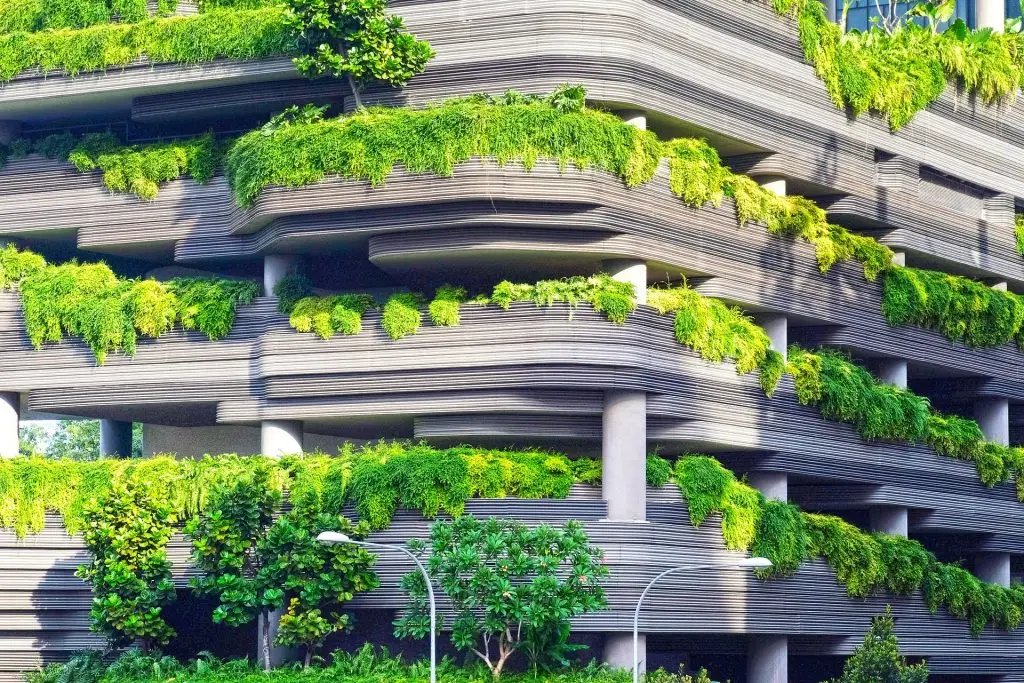
One of the most visually striking developments in modern architecture is the rise of the vertical forest. These are high-rise buildings covered in thousands of shrubs, trees, and climbing plants. These living skins do much more than look beautiful; they act as natural filters for air pollution and provide insulation for the building.
Living walls can be retrofitted onto existing structures, turning a blank concrete facade into a carbon-absorbing lung. These installations help to trap particulate matter from vehicle exhausts and provide a habitat for urban biodiversity, such as bees and butterflies.
Permeable Surfaces and Rain Gardens
Traditional urban drainage relies on pipes and sewers to whisk rainwater away as quickly as possible. However, during heavy storms, these systems often become overwhelmed, leading to flash flooding and polluted runoff entering our waterways.
Permeable pavements and rain gardens offer a more resilient alternative. Permeable surfaces allow water to seep through the ground, recharging local groundwater levels rather than flooding the streets. Rain gardens—depressions planted with native vegetation—act as natural sponges, capturing and filtering runoff before it ever reaches the sewer system.
The Rise of Permeable Landscapes
Integrating these elements requires a high level of coordination between engineers, ecologists, and designers. It is no longer enough to simply place a plant in a pot; the plant must be part of a functional, structural system. This is why the role of specialists is so vital, as architects St George and other design professionals are increasingly tasked with blending biological needs with structural integrity.
The Economic and Social Value of Greenery
While the environmental benefits are clear, the shift toward green infrastructure is also driven by economic reality. Making a city “green” is not just a way to save the planet; it is a way to save money and create value.
Boosting Property Values and Local Business
There is a measurable “green premium” in real estate. Buildings that feature accessible greenery, such as rooftop gardens or courtyard parks, often command higher rents and see higher occupancy rates. For residents, the proximity to well-maintained green spaces is a major selling point.
Furthermore, greening streets can revitalize local commerce. Pedestrian-friendly, tree-lined corridors encourage people to linger, walk, and explore. This increased foot traffic is a significant boon for local cafes, boutiques, and small businesses, turning transit corridors into destinations.
Reducing Energy Costs through Natural Cooling
The energy savings provided by green infrastructure are substantial. A rooftop garden acts as a layer of thermal mass, protecting the building below from the sun’s direct heat in the summer. Conversely, in the winter, the extra layer of soil and vegetation can provide an additional buffer against the cold.
By reducing the “peak load” on electrical grids during heatwaves, green infrastructure helps stabilize energy prices and reduces the need for expensive, large-scale power plant expansions.
Overcoming the Challenges of Implementation
Transitioning to a green city is not without its hurdles. It requires a departure from decades of established building codes and construction habits.
Structural and Engineering Constraints
Adding weight to a building is a serious engineering challenge. A rooftop garden filled with soil and mature trees is significantly heavier than a standard gravel roof. Engineers must calculate the load-bearing capacity of existing structures to ensure they can support these new biological layers. This often involves complex retrofitting and the use of lightweight, engineered growing mediums.
Maintenance and Long-Term Sustainability
A living building is a living organism, and like any organism, it requires care. Unlike concrete, which is largely “set and forget,” green infrastructure requires irrigation, pruning, and pest management. If a vertical forest is not properly maintained, it can become a liability, potentially causing structural damage or attracting unwanted pests.
To be truly sustainable, these systems must be designed to be self-sufficient. This includes integrating smart irrigation systems that use harvested rainwater and selecting plant species that are native to the local climate and require minimal intervention.
Lessons from Global Leaders in Urbanism
We do not have to guess whether these strategies work; we can look to cities that have already embraced them.
- Singapore: Often cited as the gold standard, Singapore has transitioned from a “Garden City” to a “City in a Garden.” Their policies mandate that developers replace any greenery lost during construction with new, integrated greenery within the building itself.
- New York City: The High Line transformed an abandoned elevated railway into a world-class linear park. This project not only created a new public space but also acted as a catalyst for massive economic redevelopment in the surrounding Chelsea neighborhood.
- Copenhagen: This city is a leader in managing water through design. Their “cloudburst” management plan uses parks and boulevards designed to act as temporary reservoirs during heavy rains, preventing the city’s sewer systems from failing.
A Vision for the Cities of Tomorrow
The future of urban living does not have to be a choice between density and nature. We do not have to choose between the efficiency of the skyscraper and the tranquility of the forest. The most successful cities of the next century will be those that treat these two elements as a single, integrated system.
As we continue to refine our architectural techniques and our understanding of urban ecology, the gray lines of our cities will begin to soften. The concrete jungle will become a living, breathing landscape—one that supports not just our economies, but our health, our resilience, and our well-being.