The custom apparel industry has grown rapidly over the last few years. Small businesses, online creators, and clothing brands are now using advanced printing technology to create high-quality custom products with lower startup costs. One of the most popular technologies driving this growth is DTF printing.
Many beginners entering the apparel business ask the same question: what exactly is a DTF printer, and why is it becoming so popular?
A what is a dtf printer search usually leads to discussions about vibrant prints, flexible fabric compatibility, and affordable apparel production. DTF stands for Direct-to-Film printing, a process where designs are printed onto special film and then transferred onto garments using heat and adhesive powder.
Recent industry guides describe DTF printing as one of the most versatile apparel decoration methods because it works on cotton, polyester, blends, nylon, and dark fabrics without complicated pretreatment processes.
This guide explains how DTF printers work, why they are becoming popular in 2026, and how tools like heat presses and cutting machines improve production quality.
What Is a DTF Printer?
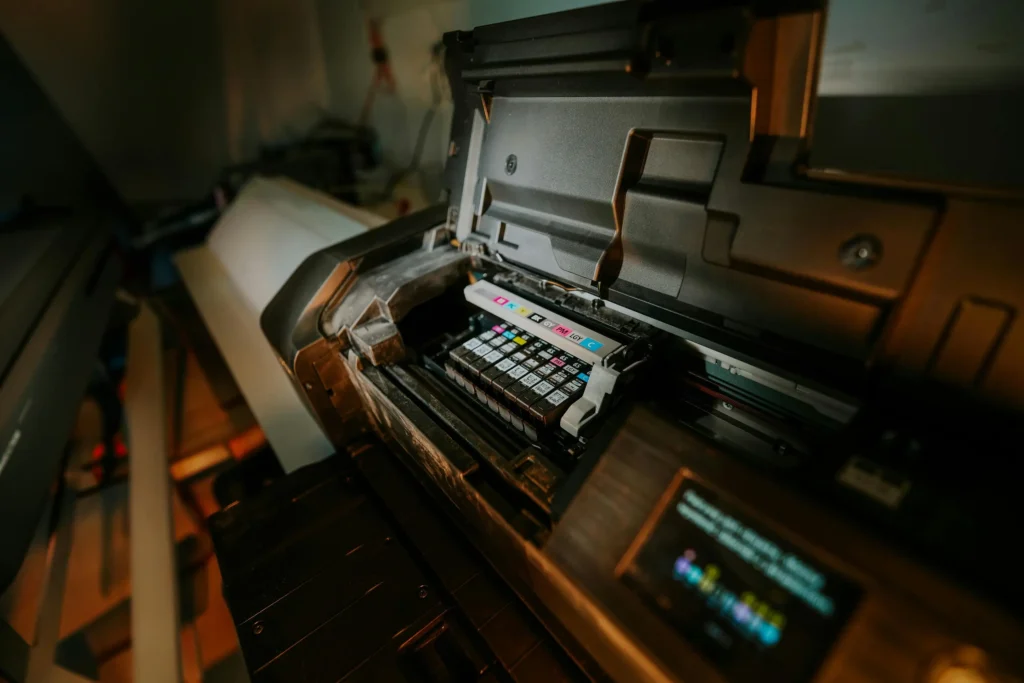
A DTF printer is a digital printing machine that prints artwork onto PET transfer film instead of directly onto fabric. After printing, adhesive powder is applied to the design, cured with heat, and transferred onto garments using a heat press.
Unlike traditional screen printing, DTF printing does not require separate screens for every color. Unlike DTG printing, DTF works on more fabric types and performs better on polyester and dark garments.
The DTF workflow usually includes these steps:
- Create a digital design
- Print the artwork onto transfer film
- Apply adhesive powder
- Cure the powder using heat
- Press the design onto fabric
- Peel the film and finish the garment
This process allows creators to produce colorful and durable prints quickly and efficiently.
Modern DTF systems are especially popular with small businesses because they support low-volume production and personalized apparel orders.
Why DTF Printing Became So Popular
The demand for custom apparel continues growing across platforms like Etsy, TikTok, Instagram, and Shopify. Customers want personalized shirts, hoodies, sportswear, and promotional products with fast delivery times.
DTF printing became popular because it solves many common printing problems.
Multi-Fabric Compatibility
DTF works on cotton, polyester, blends, nylon, canvas, and several other materials.
Vibrant Colors
DTF printing produces bright colors with excellent opacity on both light and dark garments.
Small Order Flexibility
Businesses can profitably produce one-off designs and small custom batches.
Lower Setup Costs
Unlike screen printing, DTF does not require expensive setup processes for every design.
Better Durability
Properly applied DTF prints can survive many wash cycles without significant fading or cracking.
Because of these advantages, many startups and side hustles are now entering the apparel market using DTF technology.
Equipment Needed for DTF Printing
Starting a DTF printing business requires more than just a printer. A complete setup usually includes several important tools.
DTF Printer
The printer creates the design on transfer film using specialized DTF inks.
PET Transfer Film
Special film designed for DTF transfers.
Adhesive Powder
Hot melt powder helps the design bond to the garment.
Heat Press
Used to transfer the design onto fabric.
RIP Software
Controls color management and printing settings.
Curing Equipment
Used to melt and cure adhesive powder before pressing.
Industry guides explain that beginners often start with compact A3 systems before upgrading to larger production setups.
Why Heat Press Machines Matter
A reliable heat press is one of the most important parts of the DTF workflow. Even high-quality prints can fail if the wrong temperature or pressure is applied.
Many apparel businesses use a professional sublimation heat press because it ensures even heat distribution and strong adhesion between the transfer and the garment.
A good heat press improves:
- Print durability
- Transfer consistency
- Production speed
- Fabric protection
- Workflow efficiency
Features to Look for in a Heat Press
| Feature | Why It Matters |
| Accurate Temperature Control | Prevents damaged garments |
| Adjustable Pressure | Supports different fabrics |
| Even Heat Distribution | Improves transfer quality |
| Digital Controls | Simplifies workflow |
| Large Workspace | Handles oversized apparel |
Modern heat press machines also support sublimation printing, HTV applications, and DTF transfers, making them versatile tools for custom apparel businesses.
How Cutting Machines Improve Apparel Production
Cutting machines are another important tool for apparel creators, especially those working with vinyl and custom graphics.
A professional cutting machine helps businesses cut vinyl, stickers, labels, logos, and specialty materials with precision.
Cutting machines are commonly used for:
- Heat transfer vinyl projects
- Custom decals
- Personalized names and numbers
- Logo cutting
- Sticker businesses
- Crafting projects
Many apparel brands combine DTF printing with vinyl cutting to create layered and specialty designs.
For example, a business may print a full-color graphic using DTF technology while adding reflective vinyl details using a cutting machine.
This combination creates more premium and visually unique apparel products.
DTF Printing vs Other Printing Methods
Businesses often compare DTF printing with other popular printing techniques before investing in equipment.
| Printing Method | Advantages | Limitations |
| DTF Printing | Multi-fabric support, vibrant colors | Requires transfer film and powder |
| Screen Printing | Great for bulk orders | Expensive setup for small runs |
| DTG Printing | Soft feel on cotton | Limited fabric compatibility |
| Sublimation | Bright polyester prints | Works mainly on polyester |
| Vinyl Cutting | Great for personalization | Slower for large artwork |
Recent comparisons explain that DTF printing stands out because it combines versatility, durability, and lower startup costs.
Common Challenges Beginners Face
Although DTF printing is beginner-friendly, there are still technical details new users must learn.
Printer Maintenance
White ink systems require regular cleaning to prevent clogging.
Humidity Control
Environmental humidity can affect print quality and powder performance.
Artwork Preparation
Low-resolution images create blurry and unprofessional prints.
Incorrect Heat Settings
Improper pressure or temperature can weaken transfers.
Cheap Consumables
Low-quality film, ink, and powder often reduce durability.
Experienced print shop owners frequently mention maintenance and environmental control as important parts of successful DTF production.
Is DTF Printing Good for Small Businesses?
DTF printing is considered one of the best options for startups because it supports on-demand production and lower startup costs.
Many entrepreneurs use DTF printing for:
- Etsy stores
- Shopify apparel brands
- Sportswear businesses
- Influencer merchandise
- Event apparel
- Corporate branding
Small businesses also benefit from the ability to produce low-volume custom orders profitably.
Many creators successfully transition from print-on-demand services to in-house DTF production for better profit margins and faster turnaround times.
The Future of DTF Printing in 2026
DTF printing technology continues improving rapidly. Modern systems are becoming:
- Faster
- More automated
- Easier to maintain
- More color accurate
- More beginner friendly
Industry reports describe DTF printing as one of the fastest-growing segments in apparel decoration because it supports flexible and scalable production.
As personalized fashion continues growing, more businesses are expected to adopt DTF technology over the next few years.
Tips for Starting a DTF Printing Business
Start With Quality Equipment
Reliable machines reduce long-term production problems.
Learn Proper Maintenance
Daily maintenance improves printer lifespan.
Use High-Resolution Artwork
Professional designs improve customer satisfaction.
Build a Strong Online Presence
Social media helps attract custom apparel customers.
Test Different Fabrics
Understanding fabric compatibility improves production quality.
Focus on Branding
Unique designs help businesses stand out in competitive markets.
Businesses that combine strong branding with consistent production quality usually experience better long-term success.
Conclusion
DTF printing has transformed the custom apparel industry by making high-quality garment printing more accessible for beginners and small businesses.
Understanding what is a dtf printer technology helps creators choose the right setup for their apparel goals. DTF printing offers vibrant colors, multi-fabric compatibility, and flexible production options that traditional methods often cannot provide.
A reliable sublimation heat press ensures proper transfer application and durable results, while a professional cutting machine adds creative flexibility for vinyl designs and custom apparel projects.
As demand for personalized fashion continues growing in 2026, businesses that invest in quality equipment and consistent production processes will be positioned for long-term success.
Frequently Asked Questions
What does DTF stand for?
DTF stands for Direct-to-Film printing.
Can DTF printing work on cotton?
Yes, DTF printing works on cotton, polyester, blends, nylon, and several other fabrics.
Do I need a heat press for DTF printing?
Yes, a heat press is necessary to transfer the design onto garments properly.
What is a cutting machine used for?
Cutting machines are used for cutting vinyl, decals, labels, and custom graphics.
Is DTF printing beginner friendly?
Yes, many beginners successfully start apparel businesses using DTF printing because the process is relatively easy to learn.