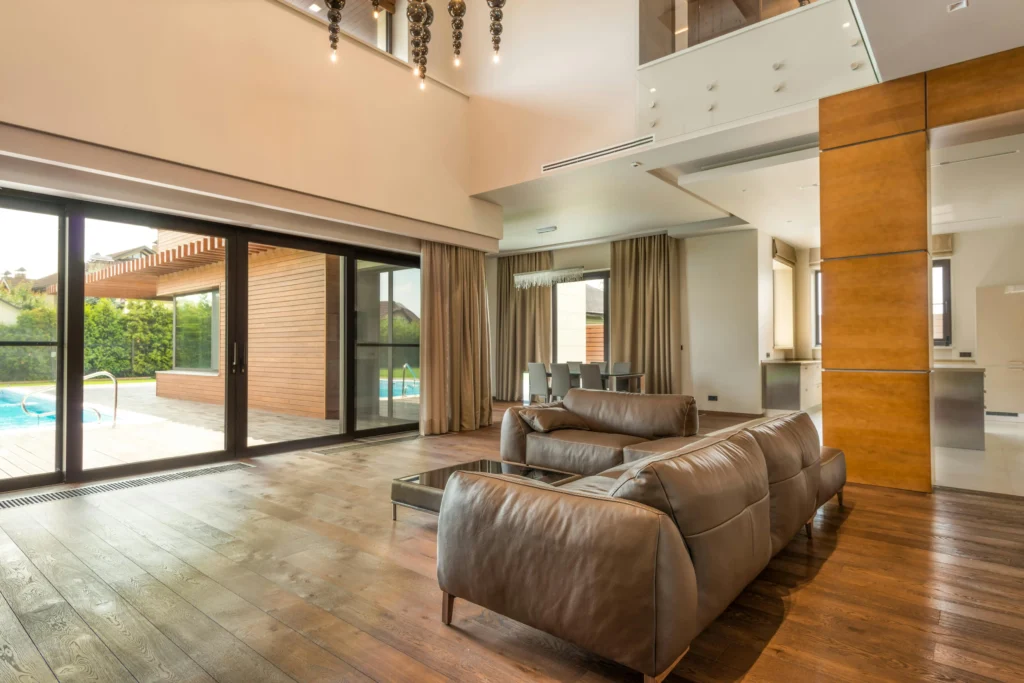
Modern homes are changing fast. Walls are becoming lighter, rooms feel more open, and the line between indoors and outdoors is getting softer. One feature quietly leading this shift is the sliding door system that stacks neatly to one side, creating wide, unobstructed openings.
It’s the kind of design choice you might not think much about at first, but once you experience it, it changes how you move through a space. Whether it’s a small city apartment or a large suburban home, people are choosing flexible layouts that make rooms feel bigger without actually increasing square footage.
What makes this idea so appealing isn’t just aesthetics—it’s practicality. In a world where space is expensive and multifunctional living is becoming the norm, having doors that “disappear” when opened is more than a design trend. It’s a response to real everyday needs.
Why These Doors Work So Well in Everyday Living
At the heart of this design is simplicity. Instead of swinging open like traditional doors, these panels slide along a track and stack neatly against each other. That means no wasted floor space for door clearance, and no awkward furniture rearrangement just to let a door open fully.
Think about a small condo living room. With standard hinged doors leading to a balcony, you often have to plan your sofa placement carefully. But with a sliding system, that wall becomes flexible. Open it up on a breezy afternoon, and suddenly the living room extends into the balcony without any physical barrier.
The same idea works beautifully in kitchens and dining areas. Homeowners often use this style to separate cooking spaces from entertaining areas. When hosting friends, the doors can be pushed aside to create one large social zone. After dinner, they can be closed again to keep cooking smells contained.
In office settings, the concept is just as useful. Meeting rooms can expand or contract depending on group size. A small brainstorming session stays cozy, while a larger presentation can spill into adjacent space simply by opening up the panels.
This adaptability is why so many architects and designers now treat it as a core planning feature rather than an optional upgrade.
How They Change the Feel of Modern Spaces
There’s something psychological about opening up a wall. Light floods in differently. Air flows more freely. Even noise feels less contained. That’s part of why this design has become so popular in residential renovations and new builds alike.
In homes with gardens, for example, these doors blur the boundary between inside and outside living. A morning coffee can be enjoyed with the garden fully visible and accessible, making even a weekday feel calmer and more connected to nature.
In hospitality, hotels often use this system in lobbies or restaurant spaces. Imagine a beachfront resort where the dining area opens entirely to the sea. Guests aren’t just looking at the view—they’re part of it. The same principle is used in cafés and boutique restaurants that want to maximize natural light and create an inviting, open atmosphere.
Retail spaces also benefit. Shops with wide, open entrances feel more welcoming. Customers are more likely to step inside when the boundary between street and store is softened. It’s a subtle psychological cue that says, “come in, take your time.”
This is where stacking sliding doors really shine. They allow large openings without the structural heaviness of traditional folding systems or the limitations of single-panel sliders. Instead of compromising between openness and functionality, you get both.
Even in educational or community buildings, these systems are being used to create flexible learning environments. A classroom can expand into a shared activity space, or a hall can be divided into smaller sections depending on need. It’s a simple mechanical solution that supports very human needs—adaptability and flow.
Real-World Examples You See More Than You Think
Once you start noticing them, you realize how widespread these systems have become. A family home might use them to connect a kitchen to a backyard patio, turning weekend gatherings into indoor-outdoor events. Kids run in and out freely, while adults stay connected to both spaces without feeling separated.
In apartment living, especially in dense cities, they help compensate for limited square footage. A studio unit can feel like a one-bedroom simply by sliding panels to create temporary zones for sleeping, working, or relaxing.
In the fitness industry, boutique gyms use them to open training areas during group classes and close them for private sessions. It’s a cost-effective way to make one space serve multiple purposes throughout the day.
Even event venues rely on this flexibility. A wedding hall might open fully for a large reception, then be divided into smaller rooms for conferences the next day. Instead of building multiple permanent walls, the space adapts in real time.
And in residential design, the appeal often comes down to lifestyle. People want homes that adjust to their day rather than forcing them to adjust to fixed rooms. Morning routines feel more open, evenings feel more contained, and entertaining becomes effortless.
Across all these examples, the common thread is adaptability. Spaces are no longer defined strictly by walls—they’re defined by how people want to use them at any given moment.
Bringing Flexibility and Comfort Together
At its core, this design approach is about making life feel less rigid. Instead of living in fixed boxes of space, homeowners and designers are embracing layouts that shift with daily routines.
There’s also a long-term value aspect. Flexible spaces tend to age better because they can adapt to changing family needs. A young couple might use an open layout for entertaining, then later close sections off for privacy as children arrive. The structure stays the same, but the function evolves.
And while the mechanics behind these systems are surprisingly straightforward, the impact they have on a space is anything but small. They influence how people gather, how light moves through a room, and how connected different areas feel.
In the end, design is really about experience. When a home or building feels easy to move through, it naturally feels more comfortable to live or work in. That’s why so many designers continue to integrate solutions like these into modern projects—not as a luxury, but as a practical tool for better living.
As architecture continues to shift toward openness and flexibility, it’s clear that ideas like stacking sliding doors are not just a trend. They’re part of a broader rethink of how we want our spaces to behave—less static, more responsive, and ultimately more human.