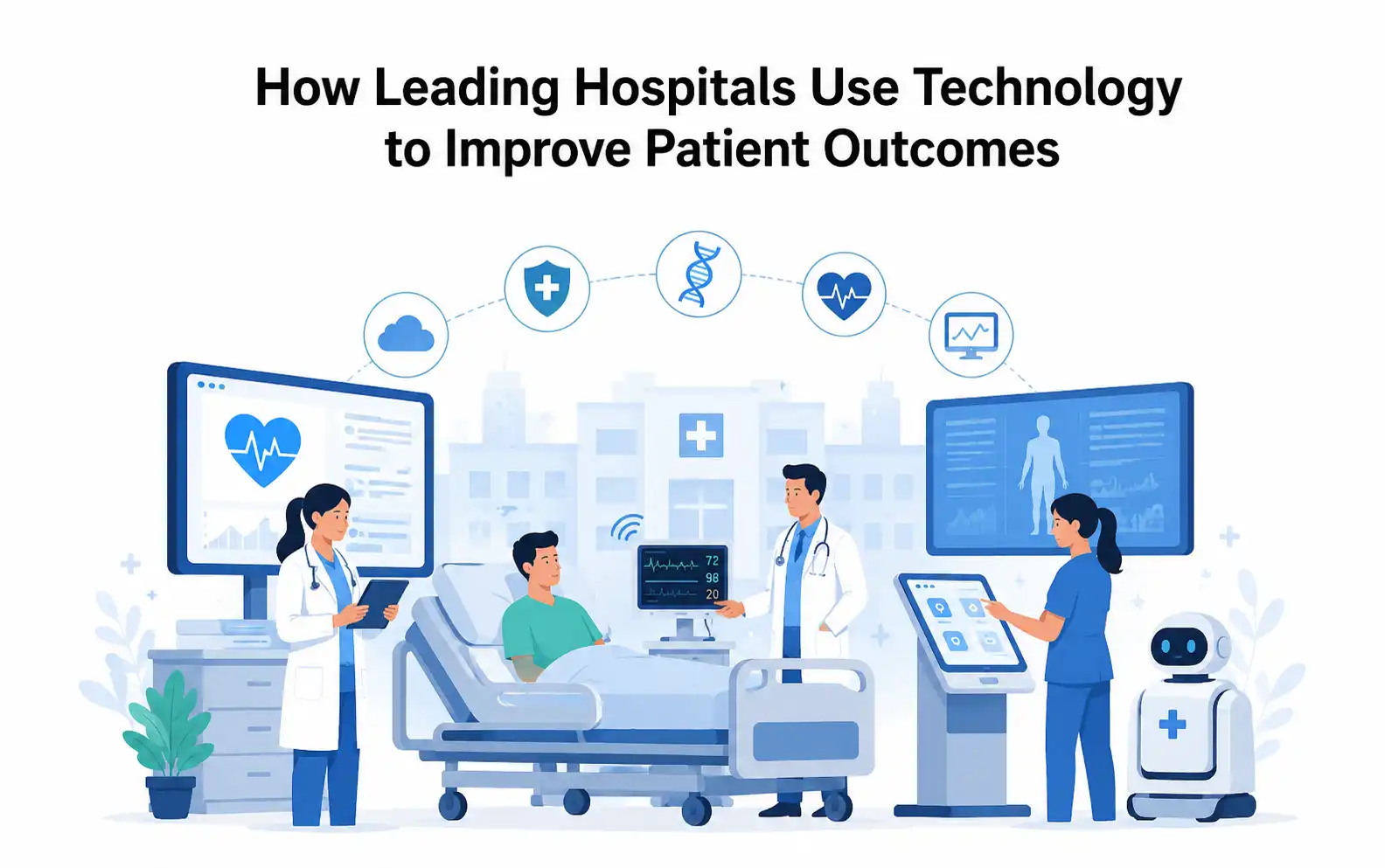
Leading hospitals are now leaning into advanced healthcare technology, to kind of nudge patient outcomes in a better direction and deliver improved patient care. Modern hospital management systems help smooth out day to day operations, lower the chance of errors, and make it quicker to reach reliable medical information. Stuff like electronic health records, data analytics , and remote monitoring lets clinicians and healthcare professionals make better choices in the moment, and also respond with timely treatment. On top of that, stronger communication, smarter resource management, and improved patient engagement help create care that is safer and more effective. Since healthcare technology keeps evolving, hospitals can reach higher efficiency, better treatment results and even more patient satisfaction.
Digital Transformation in Modern Hospitals
Digital transformation is kind of reshaping modern hospitals, not just in a nice clean way, but really by pushing efficiency, accuracy, and overall patient care forward. As healthcare orgs face more and more pressure, adopting advanced technology is becoming non optional for delivering high-quality services, and also better patient outcomes. Between automated workflows and real-time data access, digital solutions allow hospitals to speed things up and strengthen clinical performance, in a practical sense.
One of the main causes behind this shift is hospital management software, it kinda pulls together administrative, financial, and clinical tasks onto one single platform. When manual work is reduced, and common mistakes are kept low, healthcare professionals can spend more time on patients, rather than paperwork. Solutions like Healthray help hospitals handle appointments, medical records, billing, and day to day communication with less friction.
At the same time, AI-driven Cloud based systems are speeding up innovation in healthcare. These intelligent platforms give secure access to patient information, they help teams make decisions based on data, and they also improve how clinicians coordinate with each other. With AI powered analytics, risks can be spotted early, so providers can deliver prompt steps and more tailored treatment plans.
Also, digital transformation supports patient involvement through online scheduling, digital records, and remote monitoring. These upgrades build a more connected healthcare environment, and that tends to boost both operational efficiency and patient satisfaction. And as tech keeps evolving, hospitals that actually embrace digital transformation will be better placed to provide exceptional care and stay successful long term.
Electronic Health Records (EHRs)
Electronic Health Records (EHRs) sort of changed how healthcare providers deal with, and find patient information. Instead of the old paper based stuff, EHR systems keep medical histories, diagnoses, prescriptions, lab results , and treatment plans in a safe digital space. That means clinicians can pull up the right information fast, which tends to make care run smoother, and it helps with more solid clinical choices.
One of the main strong points of Electronic Medical Records Software is that it can streamline workflows, and also cut down the day to day admin weight. When you ditch manual note taking, and you reduce mistakes, the whole healthcare crew gets more time to focus on actual patient care. EHR platforms also make cross department communication easier, so important patient details are ready whenever they are needed, with less searching around.
Healthray’s best Electronic Health Records Software is built to help healthcare organizations keep patient records neat, easy to reach, and still boost operational efficiency at the same time. Features like automated documentation, live updates, and secure data sharing help support better patient outcomes and a generally higher level of care, even when things move quickly.
Also, EHR solutions back regulatory compliance, data security, and long term record keeping. Since healthcare keeps evolving, Electronic Medical Records Software remains a key technology for delivering healthcare services that are efficient, accurate, and more patient centered.
Telemedicine and Virtual Care
Telemedicine and virtual care kind of changed healthcare, in a way that makes it feel more accessible, more convenient, and also faster. Now patients can talk to healthcare professionals remotely, so they don’t always need to show up for in-person visits, and it helps people get quality care even when they are far from a clinic. This digital approach also saves time, it reduces travel expenses, and usually makes sure medical attention happens on time.
Modern telemedicine software supports secure video consultations, digital prescriptions, appointment scheduling, and smooth communication between patients and providers. When they combine a bunch of healthcare functions into one single platform, it feels like an all-in-one experience. That can really make care delivery easier and it often boosts operational efficiency too.
Virtual care is especially helpful for chronic conditions, follow-up appointments, and the usual routine check-ins. Patients can get continued support and medical guidance right from home, and that tends to improve adherence to treatment and overall health results. Healthcare providers also benefit because they can view real-time patient information, which makes it easier to decide on care steps and deliver more tailored support.
Since the demand for remote healthcare keeps rising, more organizations are putting resources into the best telehealth services, to increase patient satisfaction and extend their coverage area. Telemedicine and virtual care are turning into core parts of modern healthcare, and they help drive better outcomes while creating a more connected healthcare experience, for everyone involved.
Artificial Intelligence in Patient Care
Artificial Intelligence (AI) is kinda transforming patient care by helping healthcare providers deliver faster, more accurate, and personalized treatments. It does this by looking through huge amounts of medical data and, in a way, spotting hidden patterns then predicting potential health risks. From there it can support clinical decision-making and help clinicians catch diseases earlier. With that, they’re able to shape more effective treatment plans for patients, not just “generic” ones.
AI-powered tools are already used pretty commonly in diagnostics, medical imaging, patient monitoring, and predictive analytics. These technologies help lower human error, raise accuracy levels, and improve the overall quality of care. For instance, AI can help physicians notice abnormalities in medical scans which can mean quicker diagnoses. Then the interventions happen in time, instead of waiting.
And yeah, beyond the clinical side, AI also matters a lot for how hospitals run day to day. Intelligent systems can automate administrative tasks, optimize resource allocation, manage patient flow, and improve scheduling processes. That boosts operational efficiency while medical staff can spend more time on actual patient care instead of paperwork
Also, AI-driven insights back personalized healthcare by evaluating patient histories, lifestyle factors, and how someone responds to treatments. So healthcare providers can offer customized care plans, and that tends to improve outcomes. It also supports patient satisfaction. As AI keeps evolving it will stay a major engine of innovation in modern healthcare, including patient care delivery.
Conclusion
Technology is kinda playing a vital role in helping leading hospitals improve patient outcomes and deliver higher-quality care services. You know, from Electronic Health Records and telemedicine to AI driven solutions , and advanced hospital management systems, digital innovation sort of boosts efficiency, accuracy, and patient support. These tools help hospitals with swifter decision-making, smoother communication, and more tailored treatment plans. And as healthcare keeps evolving, facilities that adopt modern technology will be better set to handle patient needs, improve day to day operations, and reach long- term success.