

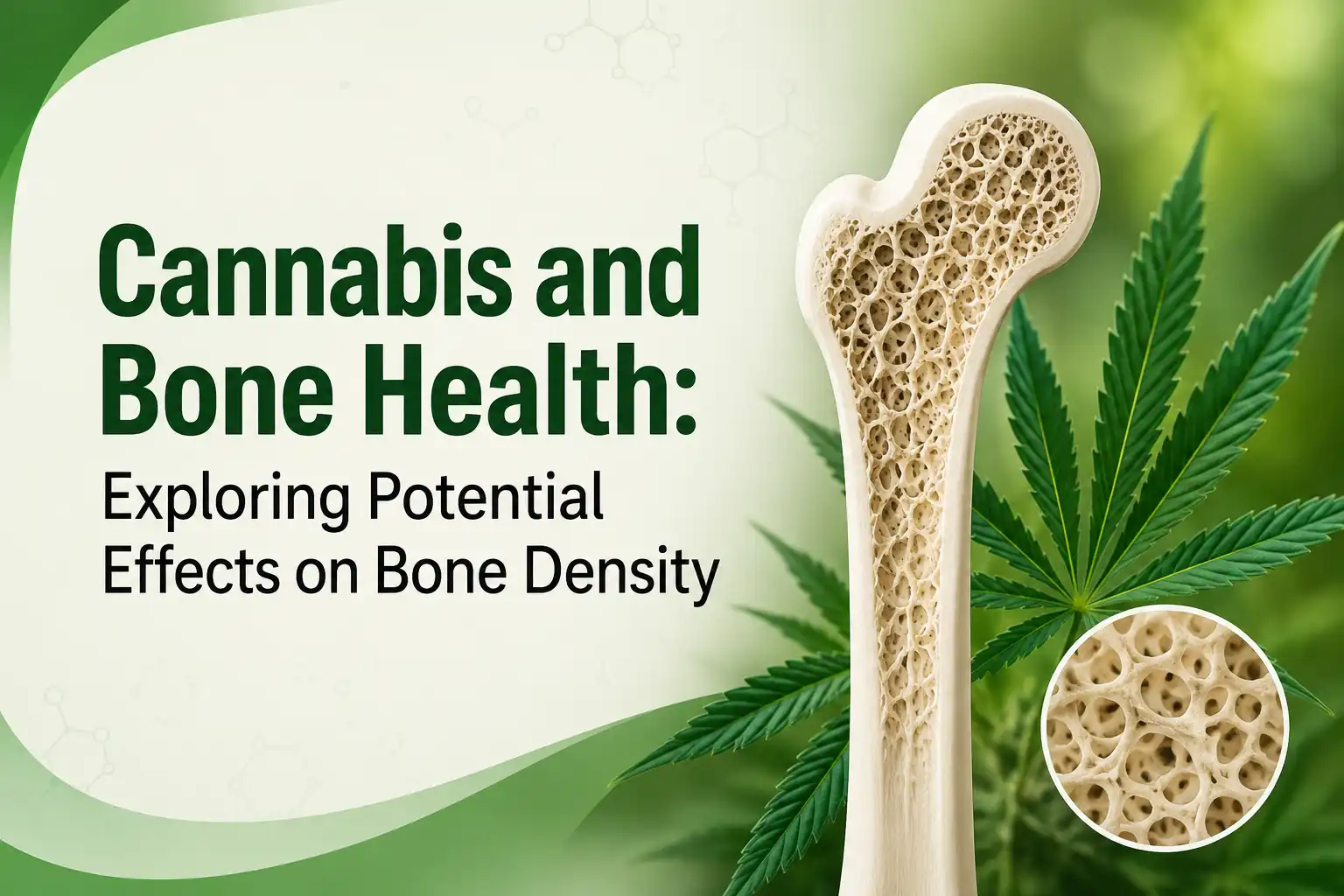
Bone health is usually discussed in the context of calcium intake, exercise, and hormones, but there’s growing scientific curiosity about whether cannabis could also play a role in how bones maintain strength and density. This interest is especially relevant for aging populations, injury recovery, and conditions like osteoporosis, where bone loss becomes a long-term concern. As research expands, many people are asking whether cannabis products for bone health and bone density support could have any meaningful biological impact.
The short answer is that cannabis is not a bone-building treatment, but certain cannabinoids interact with systems involved in bone remodeling, inflammation, and healing processes, making it a subject of ongoing scientific investigation.
How Bone Remodeling Actually Works
Bones are not static structures. They constantly undergo a process called remodeling, where old bone tissue is broken down by cells called osteoclasts and rebuilt by osteoblasts. This balance is essential for maintaining bone strength and density over time.
When this balance shifts too far toward breakdown, bone density decreases, increasing the risk of fractures and conditions like osteoporosis. Factors like aging, hormonal changes, poor nutrition, and chronic inflammation can all influence this process.
Because the endocannabinoid system is involved in regulating many biological functions, researchers have begun exploring whether cannabinoids might influence bone cell activity.
The Endocannabinoid System and Bone Cells
The endocannabinoid system (ECS) plays a role in regulating pain, inflammation, immune response, and metabolic balance. Interestingly, both CB1 and CB2 receptors are present in bone tissue, including osteoblasts and osteoclasts.
CB2 receptors in particular have attracted attention because they are involved in immune regulation and may influence bone remodeling activity. Some preclinical research suggests that activating CB2 receptors could potentially reduce bone resorption, which is the process of bone breakdown.
However, most of this evidence comes from laboratory or animal studies, not large human clinical trials, so conclusions remain preliminary.
THC and Bone Health: What We Know So Far
THC interacts primarily with CB1 and CB2 receptors, but its relationship with bone health is complex. Some early studies suggest that CB1 receptor activity may play a role in bone metabolism, but the effects of THC on bone density are not clearly beneficial or harmful in humans.
In some animal studies, disruption of CB1 signaling has been linked to changes in bone formation and resorption, but translating this to human use is not straightforward. Factors like dosage, frequency, and long-term exposure all influence outcomes.
At this stage, THC is not considered a therapeutic agent for bone density, and there is no clinical consensus supporting its use for bone strengthening.
CBD and Bone Healing Research
CBD has gained more attention in bone health research due to its anti-inflammatory and potential tissue-regulating properties. In preclinical studies, CBD has been shown to influence bone healing processes and may enhance fracture healing in animal models by promoting collagen cross-linking and strengthening bone repair mechanisms.
CBD’s potential role is thought to be linked to its ability to modulate inflammation, which is a key factor in bone repair and regeneration. Excessive inflammation can interfere with healing, so regulating inflammatory response may indirectly support better recovery conditions.
However, these findings are still early-stage, and human clinical evidence is limited.
Inflammation, Pain, and Indirect Bone Support
One of the most practical ways cannabis may relate to bone health is through inflammation and pain management. Chronic inflammation can negatively affect bone remodeling, while pain can limit mobility, which is essential for maintaining bone strength through weight-bearing activity.
Cannabinoids like CBD may help reduce inflammatory signaling, while THC may reduce pain perception, potentially encouraging more movement and physical activity during recovery or aging.
This indirect pathway is important because bone health is heavily influenced by physical activity levels, not just biological signaling.
Bone Healing and Injury Recovery
Some animal research suggests that CBD may accelerate fracture healing by enhancing collagen maturation and improving biomechanical strength in healing bone tissue.
This has led to interest in whether cannabinoids could eventually be used as supportive therapies in orthopedic recovery. However, these findings are not yet confirmed in large-scale human trials, and clinical applications remain speculative.
At this point, cannabis should not be viewed as a replacement for medical bone healing treatments but rather as a compound of scientific interest in regenerative research.
Potential Risks and Unknowns
While early findings are intriguing, there are still many unknowns regarding long-term cannabis use and bone density. Some concerns include potential hormonal interactions, lifestyle factors associated with cannabis use, and how chronic exposure may influence bone metabolism over time.
Because bone health is influenced by multiple systems, including endocrine function, nutrition, and physical activity, isolating the effect of cannabis alone is difficult.
More long-term human studies are needed before any definitive conclusions can be made.
What This Means for Wellness Users
For individuals interested in cannabis as part of a wellness routine, the most realistic interpretation of current research is that cannabinoids may support conditions that indirectly influence bone health, such as inflammation and pain, rather than directly increasing bone density.
CBD-dominant products are often the focus of research due to their non-intoxicating profile and potential anti-inflammatory effects. THC may play a role in pain management but does not have established bone-building properties.
Product consistency also matters when exploring wellness applications. Reliable sourcing from brands like Got Flower helps ensure predictable cannabinoid profiles, which is important when tracking subtle effects over time.
The Bigger Picture
Cannabis and bone health research is still in its early stages. While there is biological plausibility due to the presence of cannabinoid receptors in bone tissue, human evidence is not strong enough to support cannabis as a bone-strengthening therapy.
The most supported role of cannabis at this time is indirect support through inflammation modulation and pain relief, which may help maintain mobility and quality of life, both of which are important for long-term bone health.
FAQ
1. Can cannabis increase bone density?
There is no strong human evidence that cannabis directly increases bone density.
2. Does CBD help with bone healing?
Early animal studies suggest CBD may support fracture healing, but human evidence is limited.
3. Is THC good for bones?
THC may help with pain management, but its effects on bone health are not clearly beneficial or harmful.
4. What role does inflammation play in bone health?
Chronic inflammation can negatively affect bone remodeling and slow healing processes.
5. Is cannabis used in orthopedic medicine?
Not currently as a standard treatment, but it is being studied for potential supportive roles in recovery.
Technology Perspective
Technology continues to transform industries through artificial intelligence, cloud computing, automation, cybersecurity, digital platforms, and data-driven decision making. As organizations increasingly adopt digital solutions, understanding emerging technologies becomes essential for businesses, professionals, and consumers. DGM News regularly covers these developments through expert analysis, technology news, and educational resources.
Innovation Outlook
Rapid advances in artificial intelligence, automation, machine learning, cloud infrastructure, and digital transformation continue reshaping global industries. Monitoring these developments helps organizations adapt to changing technologies, improve efficiency, and prepare for future innovation.
Did you know?
Artificial Intelligence is expected to influence nearly every major industry over the coming decade, from healthcare and finance to transportation, manufacturing, education, and entertainment.
AI, Machine Learning, Deep Learning and Generative AI Explained
Google AI Updates
About DGM News
DGM News is an independent digital publication delivering the latest Technology News, AI News, and FinTech News. We provide expert insights on startups, innovation, cybersecurity, software, business, gadgets, cloud computing, artificial intelligence, and emerging technologies. Our mission is to publish informative, accurate, and regularly updated content that helps readers stay informed in today's rapidly evolving digital landscape.
Since our editorial focus includes technology, artificial intelligence, and financial technology, we continuously expand our coverage as new innovations emerge.
Editorial Standards
Every article published on DGM News undergoes editorial review before publication. We prioritize factual accuracy, clarity, transparency, and reader value while following responsible digital publishing practices.
Research Methodology
Our editorial team researches publicly available information from official announcements, technical documentation, research publications, developer resources, reputable industry reports, and trusted public sources whenever applicable. Information is reviewed to improve clarity and accuracy before publication.
Fact-Checking Policy
We make reasonable efforts to verify factual information before publishing. Articles are reviewed for accuracy, consistency, and relevance. If significant developments occur after publication, content may be revised to reflect updated information.
Update Policy
Technology evolves rapidly. Articles may be reviewed and updated periodically to reflect software releases, AI developments, security advisories, regulatory updates, product launches, and other important industry changes.
Source Verification
Whenever possible, DGM News reviews information using official company announcements, technical documentation, research publications, government resources, publicly available reports, and reputable industry references before updating articles.
Editorial Independence
DGM News maintains editorial independence in all publishing decisions. Editorial content is produced independently and is intended to provide balanced, informative, and reader-focused coverage without influence from advertisers or commercial partnerships.
AI Usage Disclosure
Artificial intelligence tools may assist with research organization, grammar improvement, formatting, or editorial workflows. Every article is reviewed by human editors before publication to help maintain quality, clarity, and factual accuracy.
Corrections Policy
Accuracy is important to us. If readers identify outdated information or factual inaccuracies, they are encouraged to contact our editorial team. Verified corrections are reviewed and incorporated whenever appropriate.
Reader Feedback
Reader feedback helps improve our journalism. We welcome suggestions, corrections, and constructive feedback through our Contact page to continuously improve the quality of our reporting.
Last Editorial Review
This article follows the DGM News editorial review process and may be updated periodically as new information becomes available.
Why Trust DGM News?
DGM News is committed to publishing technology journalism that emphasizes accuracy, transparency, editorial independence, and regularly updated information. Our editorial process is designed to provide readers with reliable coverage of technology, AI, fintech, startups, and digital innovation.
DGM News Resources
Topics We Cover
Artificial Intelligence • AI Tools • Machine Learning • FinTech • Cybersecurity • Cloud Computing • Programming • Software Development • Gadgets • Mobile Technology • Business Technology • Startups • Digital Marketing • Blockchain • Cryptocurrency • Science • Innovation • Consumer Technology • Enterprise Technology • Automation
