

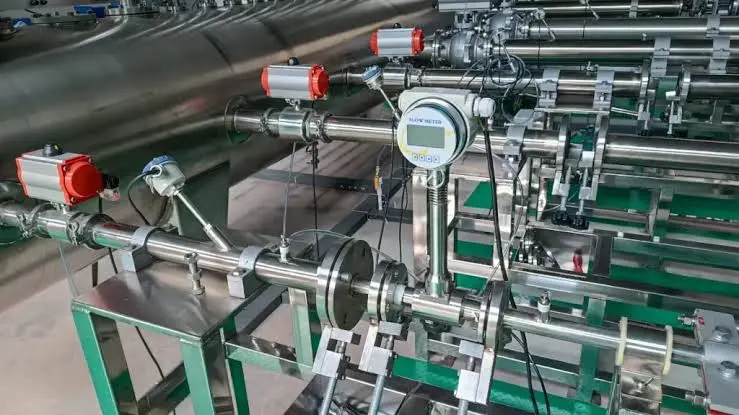
Natural gas flow meters play a crucial role in various industries, from energy production to residential usage. These devices are designed to accurately measure the flow rate of natural gas, which is essential for efficient operation, billing, and safety purposes. In this article, we will explore the different types of natural gas flow meters, their working principles, applications, and factors to consider when choosing one.
Types of Natural Gas Flow Meters
There are several types of natural gas flow meters available on the market, each with its own unique features and advantages. The most common types include differential pressure flow meters, positive displacement flow meters, turbine flow meters, and ultrasonic flow meters.
Differential Pressure Flow Meters: These flow meters work based on the principle that the pressure difference across a constriction in a pipe is related to the flow rate of the fluid. The most well – known type of differential pressure flow meter is the orifice plate meter. An orifice plate is a thin plate with a hole in the center that is placed in the pipeline. As the natural gas flows through the orifice, the pressure drops, and this pressure difference is measured using pressure sensors. Another type is the venturi meter, which has a more streamlined design compared to the orifice plate. It causes less permanent pressure loss and can provide more accurate measurements, especially for high – flow applications.
Positive Displacement Flow Meters: Positive displacement flow meters measure the volume of natural gas by trapping and releasing fixed volumes of the gas. They typically consist of chambers or compartments that fill with gas and then empty as the gas flows through the meter. Rotary vane meters and diaphragm meters are common examples of positive displacement flow meters. Rotary vane meters use rotating vanes to trap and measure the gas volume, while diaphragm meters use flexible diaphragms. These meters are highly accurate for low – flow applications and are often used in residential and small – commercial settings for gas billing.
Turbine Flow Meters: Turbine flow meters operate on the principle that the rotation speed of a turbine placed in the gas flow is proportional to the flow rate of the gas. As the natural gas passes through the meter, it causes the turbine to spin. The rotation of the turbine is detected by a sensor, which then converts it into an electrical signal that represents the flow rate. Turbine flow meters are suitable for medium – to high – flow applications and are known for their relatively high accuracy and fast response time.
Ultrasonic Flow Meters: Ultrasonic flow meters use ultrasonic waves to measure the velocity of the natural gas. There are two main types: transit – time ultrasonic flow meters and Doppler ultrasonic flow meters. Transit – time ultrasonic flow meters measure the difference in time it takes for ultrasonic waves to travel upstream and downstream in the gas flow. By knowing the distance between transducers and the time difference, they can calculate the flow velocity and then the flow rate. Doppler ultrasonic flow meters, on the other hand, work by detecting the frequency shift of ultrasonic waves reflected from particles or bubbles in the gas. These meters are non – intrusive (in some cases), have no moving parts, and are suitable for a wide range of flow rates and pipe sizes.
Working Principles
Differential Pressure Principle: For differential pressure flow meters, the Bernoulli’s equation is the fundamental principle behind their operation. According to Bernoulli’s equation, the sum of the pressure energy, kinetic energy, and potential energy of a fluid in a streamline remains constant. When the natural gas flows through the constriction (such as an orifice plate), its velocity increases, and the pressure decreases. The pressure difference between the upstream and downstream of the constriction is related to the square of the flow velocity. By measuring this pressure difference, the flow rate can be calculated using calibration equations that take into account factors such as pipe diameter, fluid density, etc.
Positive Displacement Principle: In positive displacement flow meters like the rotary vane meter, as the gas enters the meter, it fills one side of a chamber formed by the vanes. As the vanes rotate, the trapped volume of gas is moved to the outlet side and released. The number of rotations of the vanes is directly proportional to the volume of gas that has passed through the meter. Each rotation corresponds to a fixed volume of gas, and by counting these rotations, the total volume can be determined. Diaphragm meters work in a similar way, with the diaphragms expanding and contracting as the gas enters and leaves the chambers.
Turbine Principle: The turbine inside a turbine flow meter rotates due to torque exerted by flowing gas. The drag force on the turbine blades is proportional to the gas flow velocity. As the gas flows through at different rates, it causes the turbine to spin at different speeds. The sensor, which can be a magnetic pickup or an optical sensor, detects the rotational speed of the turbine. The output signal from the sensor is then processed to calculate the flow rate based on pre – calibrated relationships between rotational speed and actual volumetric or mass flow rate.
Ultrasonic Principle: In transit – time ultrasonic flow meters, the ultrasonic transducers send signals in both the upstream and downstream directions. The time it takes for the ultrasonic wave to travel upstream againstthe gas flow is longer than when it travels downstream with the gasflow. The difference in transit times is related to the average velocityof the gas. By knowing the pipe diameter and the cross – sectionalarea, the volumetric flow rate can be calculated using appropriate equations.In Doppler ultrasonicflowmeters, the ultrasonic waves are scattered by particles or bubblesin the gas. The frequency shift of the scattered wavesis proportionalto the velocity of these moving elements,which is assumed to be the same as thegas flow velocity. After measuring the frequency shift,the flowrate can be determined.
Applications
In the Energy Industry: In natural gas production, flowmeters are used to measure the amount of gas extracted from wells. This information is crucial for reservoir management and production optimization.By accurately measuring the flow rate, operators can determine the productivity of each welland make decisions about drilling new wells or enhancing the production of existing ones. In gas processing plants,fuel consumption, ensuring efficient operationand minimizing waste. In addition, flowmeters are used in these plantsfor custody transfer, where the ownership of thegas changes hands between different entities. Accurate measurement is essential in these transactions to ensure fair billing.
In Residential Usage: Positive displacement flow meters, such as diaphragm meterson the gas consumption of each household. These meters provide accurate measurements for billing purposes.The data collected from these meterson the overall gas distribution network and enabling better planningfor future demand.In some cases, smart meters are being installed, which can transmit usage data remotelyto the utility company,thereby improving the efficiency of the billing process.
In Industrial Applications: Many industrial processes rely on natural gas as a fuel or raw material. For example, in the manufacturing of glassand ceramics, natural gas is used in high – temperature furnaces.Flowmeters are used to control the amount of gas suppliedto these furnaces,ensuring consistent product qualityand energy efficiency. In the chemical industry,natural gas is a feedstock for the production of various chemicals.Flowmeters are usedto accurately measure and control the flowof gas in chemical reactions,preventing over – or under – supplyof the reactants.
In Transportation: Natural gas is increasingly being usedas a fuel for vehicles, especially heavy – duty trucks and buses.Flowmeters are installed in natural gas refueling stations to measure the amount of gas dispensed to the vehicles. This ensures accurate billingfor the vehicle ownersand provides data on the fuel consumption of the vehicles. In addition, flowmeters are used in the pipeline transportation ofnatural gas to monitor the flow rateand ensure the safe and efficient operation of the pipeline network.
Factors to Consider When Choosing a Natural Gas Flow Meter
Flow Range: Oneof themost important factorsis the flow range of the application. Different flow meters are suitable for different flow rates. For example,turbine flow meters are better suited for medium – tohigher flow rates, while positive displacement flow meters are more accurate for low – flow applications. Itis essentialto chooseaflow meter that can accurately measure the expected flow rate within the range of the application. Ifa flow meter is selectedwith a flow range that is too largeor too small,it may lead to inaccurate measurementsand reduced performance.
Accuracy Requirements: The required accuracy level depends onthe application. In custody transfer applications,where financial transactions are involved,high accuracyis crucial.A small errorin measurementcan resultin significant financial lossesfor the parties involved. On the other hand, in some industrial processes where approximate flow rate information is sufficient, a lower accuracy level may be acceptable. Itis importantto understand the accuracy requirements of the application and choose a flow meter that can meet those requirements.
Gas Properties:The properties of the natural gas, such as density, viscosity,and composition, can affect the performance of the flowmeter. For example, differentialpressure flow meters are sensitive to changes in gas density. If the gas composition changes, which can affect the density, the accuracy of the differential pressure flow meter may be compromised. Ultrasonic flow meters may be affected by the presence of particles or bubbles in the gas. Itis necessaryto consider these gas properties when selecting a flow meter and ensure that the meter is compatible withthe specific gas characteristics.
Installation Requirements: Different flow meters have different installation requirements.Some flow meters, such as ultrasonic flow meters, can be installed non – intrusively, which means they do not require cutting into the pipeline. This can be advantageousin situations where itis difficultor costly to shut down the pipeline for installation.Other flow meters, like turbine flowmetersand positive displacement flow meters, usually require direct installation in the pipeline and may need a certain lengthof straight pipe upstream and downstream for accurate measurements. The installation location and available space also needto be considered.
< p>Cost: The costof the flow meter includes not only the purchase price but also the installation cost, maintenance cost,and calibration cost.Different types of flow meters have different price ranges. For example, positive displacement flow meters are generally less expensive than ultrasonicflow meters. However, the long – term cost of ownership should also be considered. A more expensive flow meter with lower maintenance requirements and higher accuracy may be more cost – effectivein the long run.
Technology Perspective
Technology continues to transform industries through artificial intelligence, cloud computing, automation, cybersecurity, digital platforms, and data-driven decision making. As organizations increasingly adopt digital solutions, understanding emerging technologies becomes essential for businesses, professionals, and consumers. DGM News regularly covers these developments through expert analysis, technology news, and educational resources.
Innovation Outlook
Rapid advances in artificial intelligence, automation, machine learning, cloud infrastructure, and digital transformation continue reshaping global industries. Monitoring these developments helps organizations adapt to changing technologies, improve efficiency, and prepare for future innovation.
Did you know?
Artificial Intelligence is expected to influence nearly every major industry over the coming decade, from healthcare and finance to transportation, manufacturing, education, and entertainment.
AI, Machine Learning, Deep Learning and Generative AI Explained
Google AI Updates
About DGM News
DGM News is an independent digital publication delivering the latest Technology News, AI News, and FinTech News. We provide expert insights on startups, innovation, cybersecurity, software, business, gadgets, cloud computing, artificial intelligence, and emerging technologies. Our mission is to publish informative, accurate, and regularly updated content that helps readers stay informed in today's rapidly evolving digital landscape.
Since our editorial focus includes technology, artificial intelligence, and financial technology, we continuously expand our coverage as new innovations emerge.
Editorial Standards
Every article published on DGM News undergoes editorial review before publication. We prioritize factual accuracy, clarity, transparency, and reader value while following responsible digital publishing practices.
Research Methodology
Our editorial team researches publicly available information from official announcements, technical documentation, research publications, developer resources, reputable industry reports, and trusted public sources whenever applicable. Information is reviewed to improve clarity and accuracy before publication.
Fact-Checking Policy
We make reasonable efforts to verify factual information before publishing. Articles are reviewed for accuracy, consistency, and relevance. If significant developments occur after publication, content may be revised to reflect updated information.
Update Policy
Technology evolves rapidly. Articles may be reviewed and updated periodically to reflect software releases, AI developments, security advisories, regulatory updates, product launches, and other important industry changes.
Source Verification
Whenever possible, DGM News reviews information using official company announcements, technical documentation, research publications, government resources, publicly available reports, and reputable industry references before updating articles.
Editorial Independence
DGM News maintains editorial independence in all publishing decisions. Editorial content is produced independently and is intended to provide balanced, informative, and reader-focused coverage without influence from advertisers or commercial partnerships.
AI Usage Disclosure
Artificial intelligence tools may assist with research organization, grammar improvement, formatting, or editorial workflows. Every article is reviewed by human editors before publication to help maintain quality, clarity, and factual accuracy.
Corrections Policy
Accuracy is important to us. If readers identify outdated information or factual inaccuracies, they are encouraged to contact our editorial team. Verified corrections are reviewed and incorporated whenever appropriate.
Reader Feedback
Reader feedback helps improve our journalism. We welcome suggestions, corrections, and constructive feedback through our Contact page to continuously improve the quality of our reporting.
Last Editorial Review
This article follows the DGM News editorial review process and may be updated periodically as new information becomes available.
Why Trust DGM News?
DGM News is committed to publishing technology journalism that emphasizes accuracy, transparency, editorial independence, and regularly updated information. Our editorial process is designed to provide readers with reliable coverage of technology, AI, fintech, startups, and digital innovation.
DGM News Resources
Topics We Cover
Artificial Intelligence • AI Tools • Machine Learning • FinTech • Cybersecurity • Cloud Computing • Programming • Software Development • Gadgets • Mobile Technology • Business Technology • Startups • Digital Marketing • Blockchain • Cryptocurrency • Science • Innovation • Consumer Technology • Enterprise Technology • Automation
