

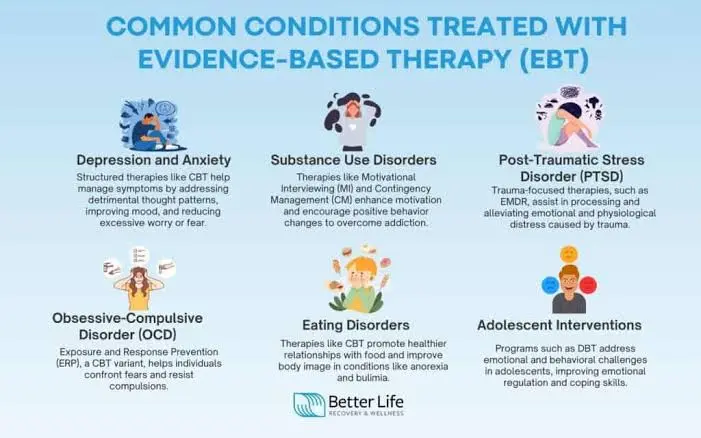
Most people seeking mental health support share a simple, understandable wish: they want something that actually works. Not a promising theory, not a therapist’s personal favorite technique, but an approach with real proof behind it. That is exactly what evidence-based therapy sets out to provide, and understanding how it works can make a meaningful difference in the quality of care someone receives.
This article breaks down what evidence-based therapy means in practice, which specific modalities fall under that umbrella, what the clinical research says about outcomes, and how to think about matching a particular approach to a particular problem. Whether you are exploring options for yourself or helping someone you care about, a clearer picture of the landscape will serve you well.
What Evidence-Based Therapy Actually Means
The phrase gets used a lot, but it has a specific meaning. Evidence-based practice in psychology, as defined by the American Psychological Association, integrates three things: the best available research, the clinician’s professional expertise, and the client’s own values and characteristics. Strip out any one of those three elements and the practice is no longer truly evidence-based.
The research component is the most visible part. A therapy earns an evidence-based label when multiple well-designed clinical trials, typically randomized controlled trials, demonstrate that it produces better outcomes than doing nothing, or better outcomes than a comparison treatment. Peer review, replication across different populations, and publication in reputable journals all raise confidence that the results are real and not a fluke.
The clinician expertise component matters because research is conducted on groups of people, while therapy happens with individuals. A skilled therapist reads the room, adjusts pacing, notices when a technique is landing or falling flat, and applies research findings with judgment rather than rigidity. The client’s values and preferences round out the picture, because someone who fundamentally distrusts a particular method is unlikely to engage with it well regardless of what the studies say.
Major Evidence-Based Approaches and What They Target
Several therapeutic modalities have accumulated enough rigorous research to be widely recognized as evidence-based. They are not interchangeable. Each one was developed with specific problems in mind, and matching the right approach to the right condition matters as much as choosing an evidence-based path in the first place.
| Therapy Modality | Primary Target Conditions | Core Mechanism |
| Cognitive Behavioral Therapy (CBT) | Depression, anxiety disorders, PTSD, OCD | Identifying and restructuring distorted thought patterns |
| Dialectical Behavior Therapy (DBT) | Borderline personality disorder, self-harm, emotional dysregulation | Building distress tolerance and interpersonal skills |
| Eye Movement Desensitization and Reprocessing (EMDR) | PTSD, trauma-related conditions | Reprocessing traumatic memories via bilateral stimulation |
| Motivational Interviewing (MI) | Substance use disorders, ambivalence about change | Strengthening intrinsic motivation through guided conversation |
| Acceptance and Commitment Therapy (ACT) | Anxiety, depression, chronic pain | Psychological flexibility and values-driven behavior |
| Prolonged Exposure (PE) | Post-traumatic stress disorder | Gradual, controlled confrontation of trauma-related fears |
CBT is arguably the most studied of all psychotherapies. A 2021 meta-analysis published in the journal Psychological Medicine, covering more than 400 randomized controlled trials, found CBT to be effective across a wide range of conditions, with particularly strong effect sizes for panic disorder and generalized anxiety disorder. DBT, originally developed by Dr. Marsha Linehan at the University of Washington, has been shown in multiple studies to significantly reduce suicidal behavior and self-harm in people with borderline personality disorder. EMDR has strong support for PTSD specifically; the World Health Organization included it in its guidelines for trauma treatment as early as 2013.
How Evidence-Based Therapy Differs from Other Approaches
Plenty of therapeutic approaches exist that have not been subjected to rigorous clinical trials. That does not automatically make them harmful or useless. Some are newer and simply have not had time to accumulate a full body of research. Others draw on traditions where controlled trials are difficult to design. A few are genuinely unsupported by data despite long histories of use.
The key distinction is transparency about the evidence base. An ethical practitioner using a less-studied approach will say so and explain the reasoning. A practitioner presenting an unsupported technique as proven is a different story. Consumers of mental health care deserve to ask direct questions about why a specific method is being recommended and what research supports it.
It is also worth noting that evidence-based therapy is not a single fixed protocol delivered the same way every session. Good therapists adapt. They combine approaches when appropriate, modify pacing for individual clients, and sometimes blend elements from multiple modalities. The research supports flexible application of these frameworks, not robotic adherence to a script.
What the Research Says About Outcomes
The data on psychotherapy outcomes, broadly speaking, is encouraging. A landmark meta-analysis by Smith, Glass, and Miller in 1980 found that the average person who received psychotherapy fared better than about 80 percent of those who received no treatment. Decades of subsequent research have refined and generally supported that finding, though effect sizes vary considerably by condition and modality.
For specific conditions, the numbers are even more concrete. The National Institute for Health and Care Excellence in the United Kingdom, which sets clinical standards for the National Health Service, rates CBT as a first-line treatment for depression and most anxiety disorders, citing consistent evidence of meaningful symptom reduction. Research on EMDR and PTSD shows response rates that rival or exceed those of medication in many studies, with some participants achieving what clinicians classify as full remission.
Dropout rates are a legitimate concern across all forms of therapy, evidence-based or otherwise. When people disengage early, they miss most of the benefit. Research suggests that the therapeutic alliance, meaning the quality of the working relationship between client and therapist, predicts outcomes more reliably than the specific technique used. This is one reason why matching with the right therapist matters alongside matching with the right modality.
Practical Considerations When Seeking This Type of Care
Knowing that evidence-based therapies exist is one thing. Actually accessing quality care is another challenge entirely. A few practical factors shape what options are realistically available to any given person.
- Training verification: Therapists should be able to name their training background in specific modalities and any certifications they hold. EMDR practitioners, for example, can be certified through the EMDR International Association.
- Condition specificity: Ask whether the therapist has experience treating your specific concern, not just general mental health issues. A generalist background is fine for many presentations, but complex trauma or severe OCD may call for more specialized training.
- Session structure: Evidence-based therapies tend to be structured and goal-oriented. If therapy feels entirely unstructured week after week with no sense of progress tracking, that is worth discussing openly with your provider.
- Insurance and cost: Many evidence-based therapies are delivered in outpatient settings and covered at least partially by insurance. Specialized programs, particularly for trauma or substance use, may involve higher levels of care with different cost structures.
- Format options: CBT, ACT, and other modalities have been adapted for group formats and digital delivery. Research on these adaptations is growing, and some people respond well to them, particularly when individual therapy is inaccessible.
One helpful starting point when researching options is finding evidence therapy programs that clearly outline which modalities they use, the credentials of their clinical staff, and the populations they serve. Transparency at that level is a reasonable baseline expectation.
Common Misconceptions Worth Clearing Up
A few persistent misunderstandings tend to cloud conversations about evidence-based therapy, and they are worth addressing directly.
“Evidence-based” does not mean cold or mechanical
Some people picture evidence-based therapy as a rigid, checklist-driven process with no room for human warmth. That picture is inaccurate. The research consistently shows that empathy, genuine curiosity about the client’s experience, and a strong therapeutic alliance are core ingredients of effective treatment, not optional extras. The structured elements of CBT or DBT exist within a relational context, not in spite of one.
Duration is not unlimited
Many people assume therapy always takes years. Evidence-based approaches are often shorter than that expectation suggests. CBT for depression typically runs 12 to 20 sessions. Prolonged Exposure for PTSD is often completed in 8 to 15 sessions. The goal-oriented nature of these therapies tends to keep treatment time focused and defined, which is a feature rather than a limitation.
Research support does not mean universal effectiveness
Even the most well-supported therapies do not work for everyone. Response rates in clinical trials for leading treatments often fall in the range of 50 to 70 percent, which means a meaningful portion of participants do not experience full symptom relief. This is why clinical expertise matters: good practitioners monitor progress, recognize when something is not working, and adjust the approach rather than simply repeating what is not helping.
A Few Final Thoughts
Choosing therapy is a significant decision, and the quality of that decision improves with better information. Evidence-based therapies represent decades of careful research translated into practical clinical tools. They are not perfect, and they are not a guarantee. But they offer something genuinely valuable: a reasonable basis for confidence that the approach you are investing time and energy into has been tested, evaluated, and found to make a real difference for a meaningful number of people facing similar struggles. That is a better starting point than most alternatives.
Technology Perspective
Technology continues to transform industries through artificial intelligence, cloud computing, automation, cybersecurity, digital platforms, and data-driven decision making. As organizations increasingly adopt digital solutions, understanding emerging technologies becomes essential for businesses, professionals, and consumers. DGM News regularly covers these developments through expert analysis, technology news, and educational resources.
Innovation Outlook
Rapid advances in artificial intelligence, automation, machine learning, cloud infrastructure, and digital transformation continue reshaping global industries. Monitoring these developments helps organizations adapt to changing technologies, improve efficiency, and prepare for future innovation.
Did you know?
Artificial Intelligence is expected to influence nearly every major industry over the coming decade, from healthcare and finance to transportation, manufacturing, education, and entertainment.
AI, Machine Learning, Deep Learning and Generative AI Explained
Google AI Updates
About DGM News
DGM News is an independent digital publication delivering the latest Technology News, AI News, and FinTech News. We provide expert insights on startups, innovation, cybersecurity, software, business, gadgets, cloud computing, artificial intelligence, and emerging technologies. Our mission is to publish informative, accurate, and regularly updated content that helps readers stay informed in today's rapidly evolving digital landscape.
Since our editorial focus includes technology, artificial intelligence, and financial technology, we continuously expand our coverage as new innovations emerge.
Editorial Standards
Every article published on DGM News undergoes editorial review before publication. We prioritize factual accuracy, clarity, transparency, and reader value while following responsible digital publishing practices.
Research Methodology
Our editorial team researches publicly available information from official announcements, technical documentation, research publications, developer resources, reputable industry reports, and trusted public sources whenever applicable. Information is reviewed to improve clarity and accuracy before publication.
Fact-Checking Policy
We make reasonable efforts to verify factual information before publishing. Articles are reviewed for accuracy, consistency, and relevance. If significant developments occur after publication, content may be revised to reflect updated information.
Update Policy
Technology evolves rapidly. Articles may be reviewed and updated periodically to reflect software releases, AI developments, security advisories, regulatory updates, product launches, and other important industry changes.
Source Verification
Whenever possible, DGM News reviews information using official company announcements, technical documentation, research publications, government resources, publicly available reports, and reputable industry references before updating articles.
Editorial Independence
DGM News maintains editorial independence in all publishing decisions. Editorial content is produced independently and is intended to provide balanced, informative, and reader-focused coverage without influence from advertisers or commercial partnerships.
AI Usage Disclosure
Artificial intelligence tools may assist with research organization, grammar improvement, formatting, or editorial workflows. Every article is reviewed by human editors before publication to help maintain quality, clarity, and factual accuracy.
Corrections Policy
Accuracy is important to us. If readers identify outdated information or factual inaccuracies, they are encouraged to contact our editorial team. Verified corrections are reviewed and incorporated whenever appropriate.
Reader Feedback
Reader feedback helps improve our journalism. We welcome suggestions, corrections, and constructive feedback through our Contact page to continuously improve the quality of our reporting.
Last Editorial Review
This article follows the DGM News editorial review process and may be updated periodically as new information becomes available.
Why Trust DGM News?
DGM News is committed to publishing technology journalism that emphasizes accuracy, transparency, editorial independence, and regularly updated information. Our editorial process is designed to provide readers with reliable coverage of technology, AI, fintech, startups, and digital innovation.
DGM News Resources
Topics We Cover
Artificial Intelligence • AI Tools • Machine Learning • FinTech • Cybersecurity • Cloud Computing • Programming • Software Development • Gadgets • Mobile Technology • Business Technology • Startups • Digital Marketing • Blockchain • Cryptocurrency • Science • Innovation • Consumer Technology • Enterprise Technology • Automation
