

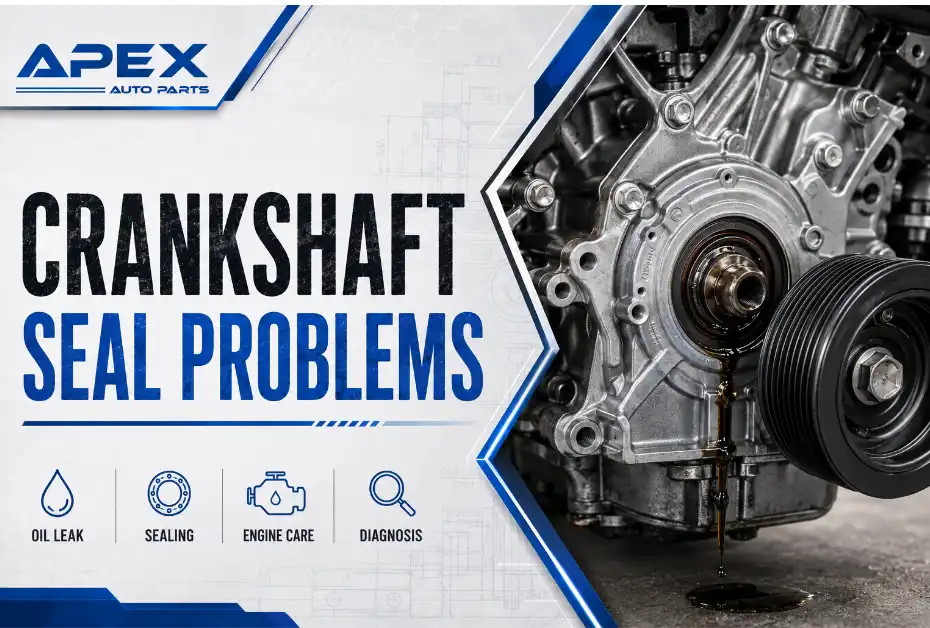
Engine oil is one of the most important fluids in any vehicle. It protects moving parts, lowers friction, controls heat, and helps the engine last longer. But for oil to do its job, it must stay inside the engine. That is where the crankshaft seal plays an important role.
A crankshaft seal is a small part, but it works in a tough place. It seals the area where the crankshaft exits the engine block. The crankshaft spins every time the engine runs, so the seal must retain oil while allowing smooth rotation. Over time, heat, age, oil pressure, dirt, vibration, and poor fitting can all cause the seal to fail.
When a crankshaft seal leak starts, it may look minor. You may only see a few drops of oil on the driveway. But oil leaks rarely fix themselves. A small leak can spread across the undertray, drip onto belts or exhaust components, lower the oil level, and cause more serious engine wear.
This article explains what a crankshaft seal does, the difference between front and rear crankshaft seals, the warning signs of failure, why leaks return after repair, and how drivers can reduce the risk of repeat problems. This is not a step-by-step DIY fitting guide or an exact labor cost guide because access and repair time can vary widely by vehicle model. Instead, it focuses on how to spot the issue early and make the right repair decision, so check the source of the leak carefully and act before the problem gets worse.
What Does a Crankshaft Seal Do?
The crankshaft is the main rotating shaft inside the engine. It turns as the pistons move, helping transmit power to the gearbox and wheels. Because the crankshaft passes through the engine block, oil needs to be sealed around it.
The crankshaft seal creates that barrier. It stops engine oil from escaping while the crankshaft spins at high speed. It also helps keep dirt and road grime away from the sealing area.
Most engines have two main seals. The front crankshaft seal sits near the crank pulley. The rear crankshaft oil seal sits at the back of the engine, between the engine and gearbox. Both seals perform the same basic function, but they differ in location and repair access.
The front seal is usually easier to access. A leak from this area may show oil around the crank pulley, lower timing cover, auxiliary belt, or undertray. The rear seal is harder to reach because the gearbox often needs to be removed. That is why a rear crankshaft oil seal leak can become more expensive, even when the seal itself is not a costly part.
Front Crankshaft Seal vs Rear Crankshaft Oil Seal
A front crankshaft seal leak often appears at the lower front of the engine. Oil may spread across pulleys, belts, covers, or the bottom of the engine. If oil reaches rubber belts, it can cause them to slip, swell, or wear out faster.
The rear seal is also known as the crankshaft rear main seal. It seals the back of the crankshaft near the flywheel or flex plate. If this seal leaks, oil often appears where the engine and gearbox meet. On a manual car, oil can sometimes reach the clutch area, which may cause clutch slip.
A rear leak should be checked carefully before replacing the seal. Oil can travel down from other areas, making it appear as if the rear main seal is leaking. Rocker cover gaskets, oil filter housings, sump gaskets, timing covers, turbo oil lines, and other engine leaks can all leave oil near the gearbox area.
This is why proper diagnosis matters. Replacing a rear main seal on the crankshaft without confirming the leak source can waste time and money.
Common Symptoms of a Crankshaft Seal Leak
The most obvious sign of a crankshaft seal leak is oil under the vehicle. At first, it may be a small spot. Later, it may become regular dripping. Some drivers also notice a burning oil smell when oil comes into contact with hot exhaust parts.
Other signs include oil around the front pulley, oil between the engine and gearbox, oil on the undertray, a low oil level, oil on the belts, or a dirty, oily engine bay. In manual cars, a rear seal leak may also cause clutch slipping if oil reaches the clutch plate.
The car may still drive normally at first, which is why many drivers delay the repair. But this can be risky. If the oil level drops too low, the engine can lose the protection it needs. Bearings, crankshaft journals, camshafts, timing parts, and other moving parts all depend on clean oil.
If the oil warning light comes on, stop the engine as soon as it is safe to do so and arrange for the vehicle to be checked. That warning can mean oil pressure is low, and damage can happen quickly.
When Is Crankshaft Seal Replacement Needed?
Crankshaft seal replacement is needed when the seal is leaking, cracked, hardened, damaged, or no longer sealing correctly. A front seal is usually replaced when oil is found near the crank pulley. A rear seal is replaced when oil is confirmed between the engine and gearbox, and other leak sources have been ruled out. If you notice these signs, have the vehicle inspected promptly.
Sometimes replacement makes sense during related repairs. For example, if the gearbox has already been removed for clutch work, a mechanic may inspect the crankshaft seal at the same time.
Engine oil is one of the most important fluids in any vehicle. It protects moving parts, lowers friction, controls heat, and helps the engine last longer. But for oil to do its job, it must stay inside the engine. That is where the crankshaft seal plays an important role.
A crankshaft seal is a small part, but it works in a tough place. It seals the area where the crankshaft exits the engine block. The crankshaft spins every time the engine runs, so the seal must retain oil while allowing smooth rotation. Over time, heat, age, oil pressure, dirt, vibration, and poor fitting can all cause the seal to fail.
When a crankshaft seal leak starts, it may look minor. You may only see a few drops of oil on the driveway. But oil leaks rarely fix themselves. A small leak can spread across the undertray, drip onto belts or exhaust components, lower the oil level, and cause more serious engine wear.
This article explains what a crankshaft seal does, the difference between front and rear crankshaft seals, the warning signs of failure, why leaks return after repair, and how drivers can reduce the risk of repeat problems. This is not a step-by-step DIY fitting guide or an exact labor cost guide because access and repair time can vary widely by vehicle model. Instead, it focuses on how to spot the issue early and make the right repair decision.
What Does a Crankshaft Seal Do?
The crankshaft is the main rotating shaft inside the engine. It turns as the pistons move, helping transmit power to the gearbox and wheels. Because the crankshaft passes through the engine block, oil needs to be sealed around it.
The crankshaft seal creates that barrier. It stops engine oil from escaping while the crankshaft spins at high speed. It also helps keep dirt and road grime away from the sealing area.
Most engines have two main seals. The front crankshaft seal sits near the crank pulley. The rear crankshaft oil seal sits at the back of the engine, between the engine and gearbox. Both seals perform the same basic function, but they are not equal in terms of repair work.
The front seal is usually easier to access. A leak from this area may show oil around the crank pulley, lower timing cover, auxiliary belt, or undertray. The rear seal is harder to reach because the gearbox often needs to be removed. That is why a rear crankshaft oil seal leak can become more expensive, even when the seal itself is not a costly part.
Front Crankshaft Seal vs Rear Crankshaft Oil Seal
A front crankshaft seal leak often appears at the lower front of the engine. Oil may spread across pulleys, belts, covers, or the bottom of the engine. If oil reaches rubber belts, it can cause them to slip, swell, or wear out faster.
The rear seal is also known as the crankshaft rear main seal. It seals the back of the crankshaft near the flywheel or flex plate. If this seal leaks, oil often appears where the engine and gearbox meet. On a manual car, oil can sometimes reach the clutch area, which may cause clutch slip.
A rear leak should be checked carefully before replacing the seal. Oil can flow down from other areas, making it appear as if the rear main seal is leaking. Rocker cover gaskets, oil filter housings, sump gaskets, timing covers, turbo oil lines, and other engine leaks can all leave oil near the gearbox area.
This is why proper diagnosis matters. Replacing a rear main seal on the crankshaft without confirming the leak source can waste time and money.
Common Symptoms of a Crankshaft Seal Leak
The most obvious sign of a crankshaft seal leak is oil under the vehicle. At first, it may be a small spot. Later, it may become regular dripping. Some drivers also notice a burning oil smell when oil comes into contact with hot exhaust parts.
Other signs include oil around the front pulley, oil between the engine and gearbox, oil on the undertray, low oil level, oil on belts, or a dirty, oily engine bay. In manual cars, a rear seal leak may also cause clutch slipping if oil reaches the clutch plate.
The car may still drive normally at first, which is why many drivers delay the repair. But this can be risky. If the oil level drops too low, the engine can lose the protection it needs. Bearings, crankshaft journals, camshafts, timing parts, and other moving parts all depend on clean oil.
If the oil warning light comes on, the engine should be stopped as soon as it is safe to do so. That warning can mean oil pressure is low, and damage can happen quickly.
Why Do Crankshaft Seals Fail?
A crankshaft seal can fail simply because it gets old. Rubber hardens with heat and time. Once the seal loses flexibility, it can no longer grip the crankshaft properly, and oil can pass through.
But age is not the only cause. High crankcase pressure is another common reason. If the engine breather system is blocked, pressure can build inside the engine and push oil past the seal. In that case, fitting a new seal without addressing the breather issue may cause another leak.
Poor fitting can also cause early failure. If the seal is installed at the wrong depth, fitted at an angle, damaged during fitting, or placed on a dirty surface, it may leak again. A worn crankshaft surface can also stop the seal from sealing properly.
Other causes include the wrong or dirty oil, overheating, engine vibration, low-quality parts, and damage from previous repairs.
When Is Crankshaft Seal Replacement Needed?
Crankshaft seal replacement is needed when the seal is leaking, cracked, hardened, damaged, or no longer sealing correctly. A front seal is usually replaced when oil is found near the crank pulley. A rear seal is replaced when oil is confirmed between the engine and gearbox, and other leak sources have been ruled out.
Sometimes replacement makes sense during related repairs. For example, if the gearbox has already been removed for clutch work, a mechanic may inspect the rear main seal on the crankshaft and recommend replacement if it is old or showing early signs of leakage. This can save labor later.
Still, the cause of the leak should always be checked. If crankcase pressure is too high or the crankshaft surface is worn, a new seal may not solve the problem for long.
Why Do Quality Parts Matter?
Engine seals work under heat, oil, pressure, and constant movement. A cheap seal may look fine when new, but poor rubber or weak sealing lips can harden quickly and leak again.
This is especially important with the rear crankshaft oil seal because labor can be high. Nobody wants to remove the gearbox twice because a poor-quality seal failed early.
Apex Auto Parts supports UK drivers, garages, and trade buyers with engine parts that matter for fitment. With seals, guessing by shape or picture is risky. The correct seal should match the vehicle make, model, year, engine code, and part number where possible. The right part helps protect the repair and reduces the chance of repeat leaks.
How to Help Prevent Crankshaft Seal Failure?
You cannot make a crankshaft seal last forever, but you can reduce the risk of early failure. Change the engine oil and filters on time. Use the correct oil grade. Check the oil level often. Keep the crankcase breather system clear. Fix overheating issues. Repair small leaks early. Use quality seals and make sure sealing surfaces are clean during repair.
If oil leaks appear from more than one area, the breather system should be checked. Too much crankcase pressure can push oil past seals and gaskets across the engine.
Final Thoughts
The crankshaft seal is small, but its job is important. It keeps oil inside the engine while the crankshaft spins at high speed. When it fails, oil can leak from the front or rear of the engine.
A small leak may not stop the car straight away, but it should never be ignored. Oil loss can lead to low oil level, belt damage, clutch problems, burning smells, messy engine bays, and serious engine wear.
The best repair starts with proper diagnosis. Find the actual leak source, check the crankcase pressure, inspect the sealing surface, and fit the correct-quality part.rt. If you need engine parts or fitment support, Apex Auto Parts can help you choose the right replacement and avoid costly repeat repairs. Check the crankshaft and recommend replacement if it is old or showing early signs of leakage. This can save labor later.
Still, the cause of the leak should always be checked. If crankcase pressure is too high or the crankshaft surface is worn, a new seal may not solve the problem for long.
Technology Perspective
Technology continues to transform industries through artificial intelligence, cloud computing, automation, cybersecurity, digital platforms, and data-driven decision making. As organizations increasingly adopt digital solutions, understanding emerging technologies becomes essential for businesses, professionals, and consumers. DGM News regularly covers these developments through expert analysis, technology news, and educational resources.
Innovation Outlook
Rapid advances in artificial intelligence, automation, machine learning, cloud infrastructure, and digital transformation continue reshaping global industries. Monitoring these developments helps organizations adapt to changing technologies, improve efficiency, and prepare for future innovation.
Did you know?
Artificial Intelligence is expected to influence nearly every major industry over the coming decade, from healthcare and finance to transportation, manufacturing, education, and entertainment.
AI, Machine Learning, Deep Learning and Generative AI Explained
Google AI Updates
About DGM News
DGM News is an independent digital publication delivering the latest Technology News, AI News, and FinTech News. We provide expert insights on startups, innovation, cybersecurity, software, business, gadgets, cloud computing, artificial intelligence, and emerging technologies. Our mission is to publish informative, accurate, and regularly updated content that helps readers stay informed in today's rapidly evolving digital landscape.
Since our editorial focus includes technology, artificial intelligence, and financial technology, we continuously expand our coverage as new innovations emerge.
Editorial Standards
Every article published on DGM News undergoes editorial review before publication. We prioritize factual accuracy, clarity, transparency, and reader value while following responsible digital publishing practices.
Research Methodology
Our editorial team researches publicly available information from official announcements, technical documentation, research publications, developer resources, reputable industry reports, and trusted public sources whenever applicable. Information is reviewed to improve clarity and accuracy before publication.
Fact-Checking Policy
We make reasonable efforts to verify factual information before publishing. Articles are reviewed for accuracy, consistency, and relevance. If significant developments occur after publication, content may be revised to reflect updated information.
Update Policy
Technology evolves rapidly. Articles may be reviewed and updated periodically to reflect software releases, AI developments, security advisories, regulatory updates, product launches, and other important industry changes.
Source Verification
Whenever possible, DGM News reviews information using official company announcements, technical documentation, research publications, government resources, publicly available reports, and reputable industry references before updating articles.
Editorial Independence
DGM News maintains editorial independence in all publishing decisions. Editorial content is produced independently and is intended to provide balanced, informative, and reader-focused coverage without influence from advertisers or commercial partnerships.
AI Usage Disclosure
Artificial intelligence tools may assist with research organization, grammar improvement, formatting, or editorial workflows. Every article is reviewed by human editors before publication to help maintain quality, clarity, and factual accuracy.
Corrections Policy
Accuracy is important to us. If readers identify outdated information or factual inaccuracies, they are encouraged to contact our editorial team. Verified corrections are reviewed and incorporated whenever appropriate.
Reader Feedback
Reader feedback helps improve our journalism. We welcome suggestions, corrections, and constructive feedback through our Contact page to continuously improve the quality of our reporting.
Last Editorial Review
This article follows the DGM News editorial review process and may be updated periodically as new information becomes available.
Why Trust DGM News?
DGM News is committed to publishing technology journalism that emphasizes accuracy, transparency, editorial independence, and regularly updated information. Our editorial process is designed to provide readers with reliable coverage of technology, AI, fintech, startups, and digital innovation.
DGM News Resources
Topics We Cover
Artificial Intelligence • AI Tools • Machine Learning • FinTech • Cybersecurity • Cloud Computing • Programming • Software Development • Gadgets • Mobile Technology • Business Technology • Startups • Digital Marketing • Blockchain • Cryptocurrency • Science • Innovation • Consumer Technology • Enterprise Technology • Automation
