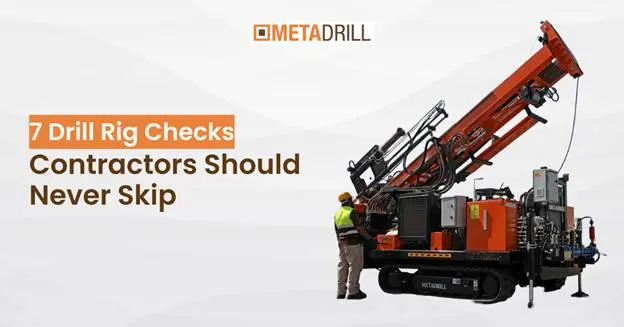
You start a new drilling project with a tight schedule. Because the soil feels harder than expected, the crew speeds up to stay on time. For the first few holes, everything goes fine, but then the drill bit gets stuck. As the pressure builds, the rig starts to shake, the turning feels hard, and the samples get worse. Because work slows down, the client asks why progress has stopped.
In that moment, the problem rarely comes from bad luck. In most cases, the issue traces back to skipped checks before drilling began. With pressure on timelines, crews often rely on experience instead of preparation. Through that habit, small issues stay hidden until load, depth, and resistance expose them. Because of that, a drill rig must be checked with discipline, not assumption, before every shift.
Contractors often believe inspections take time away from drilling. In reality, missed checks cost far more time once the rig is under load. Through basic verification of components, fluids, alignment, and safety systems, many failures never happen. With a consistent routine, crews protect tools, samples, and schedules at the same time.
Below are seven drill rig checks contractors should never skip, especially when ground conditions change or deadlines tighten.
- Structural alignment and frame condition
Before rotation starts, the rig frame, mast, and base must sit straight and level. With an uneven setup, extra force moves into joints, pins, and bearings. Under load, that force can cause shaking, slow drilling, and early wear. By checking alignment early, crews stop small movement before it damages the rig or the hole.
Key points to verify rig while drilling:
- Level stance with firm base contact
- Straight mast with quick crack checks
- Pins, bolts, and fasteners tightened properly
- Signs of rust or tired metal near heavy-load areas
- Hydraulic pressure and hose integrity
Hydraulic systems help the rig turn, push down, and pull back. With low pressure or old hoses, power becomes weak and uneven. Because of leaks or trapped air, the rig can respond slowly, heat up, and feel hard to control. Before drilling, check the pressure, hoses, and fittings, so the rig moves smoothly instead of jerking or stopping.
Key points to verify:
- Hose wear, rubbing marks, and tight clamps
- Fitting leaks around pumps and valves
- Pressure readings within safe range
- Reservoir level and filter condition
- Rotation system and drive response
Rotation should feel smooth and steady, so the rig turns without fighting itself. With worn parts, loose connections, or dirty oil, turning can feel heavy inside the system. Under load, that heavy turning can cause sudden force jumps and make the bit get stuck. By testing rotation before drilling, crews spot stiffness early and protect drilling rig tools and equipment, including key drilling rig tools like the bit, rods, and couplings, as the hole gets deeper.
Key points to verify:
- Smooth start and stop response
- No abnormal vibration during rotation
- Coupling and drive connections secured
- Heat buildup signs near the drive system
- Tooling condition and connection integrity
Drilling tools take the most pressure during drilling. With damaged threads, worn joints, or bent rods, force spreads in the wrong way along the drill string. As the hole gets deeper, those weak spots can fail first. Before drilling, check each tool for straightness, clean threads, and a tight fit, so power goes into the ground instead of into damage.
Key points to verify:
- Threads clean, sharp, and undamaged
- Rod straightness and joint wear checks
- Correct torque and secure locking
- Bit condition, cutting edge wear, and seating
- Fluid systems and cooling flow
Fluids help control heat, carry soil cuttings out, and protect tool life. With low fluid, blocked lines, or the wrong mix, friction goes up, and sample quality gets worse. Then, with weak flow, the bit can overheat and get stuck in hard ground. Before drilling, check the pump, tank, and return flow, so cooling and lubrication stay consistent and drilling stays smooth.
Key points to verify:
- Correct fluid level and mix consistency
- Pump performance and steady flow rate
- Lines clear with no blockage
- Return flow visible and stable
- Safety systems and emergency response
Safety systems protect the crew and the rig. With broken shutdowns, loose guards, or ignored alarms, small problems can turn into big accidents. Before drilling, check the emergency stop, warning lights, and safety controls, so the crew can react fast if something changes underground. With safety ready, work keeps moving without sudden shutdowns or injuries.
Key points to verify:
- Emergency stop function tested
- Guards, covers, and safety signage intact
- Alarms, lights, and indicators working
- Relief systems and shutdown responses active
- Pre-shift functional test
Before drilling deeper, run the rig through a short test cycle. With this test, feed, rotation, and pullback can show problems before the rig is under heavy load. If you hear strange sounds, or if movement feels slow or rough, you get an early warning. This last step connects all checks and confirms the rig is ready to drill.
Key points to verify:
- Short cycle of feed and pullback
- Rotation test under light load
- No unusual sounds, jerks, or lag
- Control response consistent and smooth
These checks work best when applied in the same order every day. Through repetition, crews build habit, speed, and confidence. With a reliable drill rig daily checklist, no step gets skipped, even under pressure. That consistency turns inspections into muscle memory rather than paperwork.
Stop failures before ground resistance exposes them
Many breakdowns that people blame on hard ground often start above ground. Because checks get skipped, small worn parts stay hidden until the rig meets real pressure once drilling begins. When that happens, the bit can stick, the rig can shake, and the crew loses time fixing problems. By taking a few minutes for checks at the start, contractors avoid surprise stops and save hours later with smoother work.
Choose Drilling That Protects Time and Tools
Strong drilling results come from preparation, not guesswork. Through disciplined checks and controlled execution, our team protects your schedule, your drilling rig tools, and your drilling rig tools and equipment from the first meter to the last. With every system verified before load, the rig runs smoothly, crews stay in control, and work moves forward without costly stops. When deadlines matter and ground conditions change, choosing our drilling services means choosing reliability over risk.