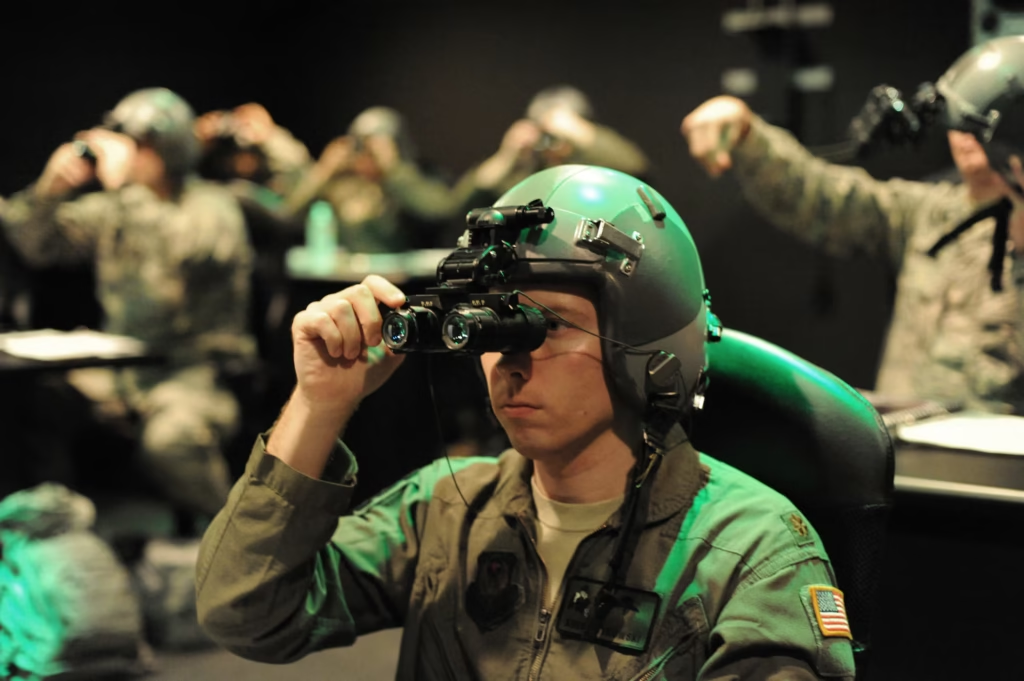
In 2026, hobbies are changing fast. People want skills, not just distractions. They want challenge, purpose, and something that feels different. That’s why night vision training courses are quickly gaining attention among enthusiasts who enjoy learning rare, hands-on abilities.
Within the first few weeks, many hobbyists realise these activities don’t just fill spare time. Instead, they build confidence, awareness, and real-world competence. While mainstream hobbies still exist, uncommon hobbies now offer deeper value and lasting excitement.
So, if you’re bored of routine pastimes, this guide is for you.
Introduction: Why Night Vision Training Courses Are Redefining Modern Hobbies
Night vision training courses are no longer limited to military or professional use. In fact, civilians are now embracing them as a serious hobby that blends learning, safety, and advanced technology.
At the same time, people crave experiences that feel immersive. They want hobbies that challenge the mind and body together. As a result, niche activities are growing rapidly, especially those rooted in skill development and controlled risk.
Let’s explore eight uncommon hobbies set to stand out in 2026, starting with the most talked-about one.
1. Night Vision Training Courses
Night vision training courses teach you how to operate, move, and observe in low-light environments using specialised optics. While it sounds intense, the learning process is structured and safe.
First, you gain a strong understanding of equipment handling. Then, you practise navigation, depth perception, and situational awareness. Over time, these skills sharpen your focus and decision-making.
Moreover, these courses attract photographers, outdoor explorers, security enthusiasts, and tech lovers alike. You don’t need a tactical background to begin. You only need curiosity and discipline.
Because of this, night vision training courses are now viewed as both educational and rewarding.
2. Urban Exploration Mapping
Urban exploration isn’t new. However, mapping abandoned structures with modern tools has become a refined hobby.
Instead of just exploring, hobbyists now document layouts, entry points, and architectural details. They use drones, 3D scanners, and GPS tools to create detailed records.
Meanwhile, safety and ethics are taken seriously. Responsible explorers respect boundaries and avoid trespassing. As a result, this hobby now focuses more on preservation than thrill-seeking.
If you enjoy history and quiet adventure, this one delivers both.
3. Tactical Fitness Training
Traditional gym routines can feel repetitive. Tactical fitness changes that entirely.
This hobby focuses on functional movement. You train endurance, grip strength, balance, and coordination. Every workout simulates real-world movement rather than isolated muscle exercises.
Additionally, training often includes obstacle courses and team challenges. Therefore, it keeps both the body and mind engaged.
People who enjoy night vision training courses often pair them with tactical fitness, as the skills complement each other well.
4. Advanced Bushcraft Skills
Basic camping has evolved into advanced bushcraft. This hobby goes far beyond setting up a tent.
Participants learn fire crafting, shelter building, natural navigation, and tool making. More importantly, they practise self-reliance in controlled environments.
Although it takes patience, the reward is confidence. You learn how to adapt calmly under pressure.
As technology grows louder, this quiet and grounded hobby feels refreshing.
5. Amateur Signal Intelligence (SIGINT)
Signal intelligence isn’t just for professionals anymore. Hobbyists now explore radio signals, encrypted transmissions, and frequency analysis.
With the right legal equipment, you can learn how communication systems work. Over time, you develop technical thinking and analytical skills.
However, responsibility matters. Ethical guidelines and local laws must always be followed.
For tech-minded individuals, this hobby feels like solving a puzzle that never ends.
6. Night Photography with Infrared Tech
Photography at night has reached a new level. Infrared and low-light techniques allow hobbyists to capture scenes invisible to the naked eye.
This hobby requires patience. You must learn exposure control, light sensitivity, and movement tracking.
Interestingly, many photographers enrol in night vision training courses to improve their understanding of darkness and visual perception.
As a result, their work becomes more intentional and precise.
7. Precision Air Rifle Sports
Precision air rifle shooting is growing quietly but steadily. It’s technical, calm, and highly disciplined.
Rather than power, the focus is accuracy and control. Shooters practise breathing, posture, and mental clarity.
Because equipment is accessible, beginners can start easily. Over time, competitions and leagues provide structure and motivation.
This hobby appeals to those who value patience and measurable improvement.
8. Survival Psychology Training
Survival psychology focuses on mental resilience. It teaches how the brain reacts under stress and how to stay calm when things go wrong.
Training includes scenario planning, stress management, and decision-making drills. Although it sounds intense, it’s deeply empowering.
Many people pair this with outdoor or tactical hobbies. In particular, those attending night vision training courses often find psychological training enhances their performance.
Ultimately, this hobby strengthens confidence beyond the activity itself.
How to Choose the Right Uncommon Hobby
Before committing, ask yourself a few questions.
Do you prefer physical movement or mental challenge?
Do you enjoy structured learning or creative freedom?
Are you drawn to solo activities or group settings?
Once you answer honestly, the right hobby often becomes obvious.
Also, start small. Most uncommon hobbies offer beginner-friendly entry points. Over time, you can invest more deeply as your interest grows.
Safety and Responsibility Matter
Uncommon hobbies often involve specialised tools or environments. Therefore, safety should always come first.
Training, supervision, and legal awareness are essential. This is especially true for technical hobbies like night vision training courses or signal analysis.
When done responsibly, these activities remain enjoyable and sustainable.
FAQs
What are night vision training courses, and who can join them?
Night vision training courses teach safe and practical use of night vision equipment. They’re open to civilians, beginners, and enthusiasts with no prior experience.
Are uncommon hobbies expensive to start?
Some require investment, while others don’t. Many hobbies offer entry-level options so you can start small and upgrade later.
Is safety training necessary for these hobbies?
Yes, especially for technical or outdoor activities. Proper training reduces risk and improves overall enjoyment.
Can night vision training courses be treated as a long-term hobby?
Absolutely. Many people continue developing their skills over years, combining training with related hobbies like photography or navigation.
Final Thoughts: Why Night Vision Training Courses Fit the Future of Hobbies
Night vision training courses perfectly reflect what modern hobbyists want. They combine learning, technology, and personal growth in a controlled setting.
In the final analysis, uncommon hobbies are no longer about being extreme. Instead, they’re about being intentional. People want hobbies that teach real skills and build lasting confidence.
If you’re looking to try something different in 2026, start with curiosity. From there, explore the path that excites you most.