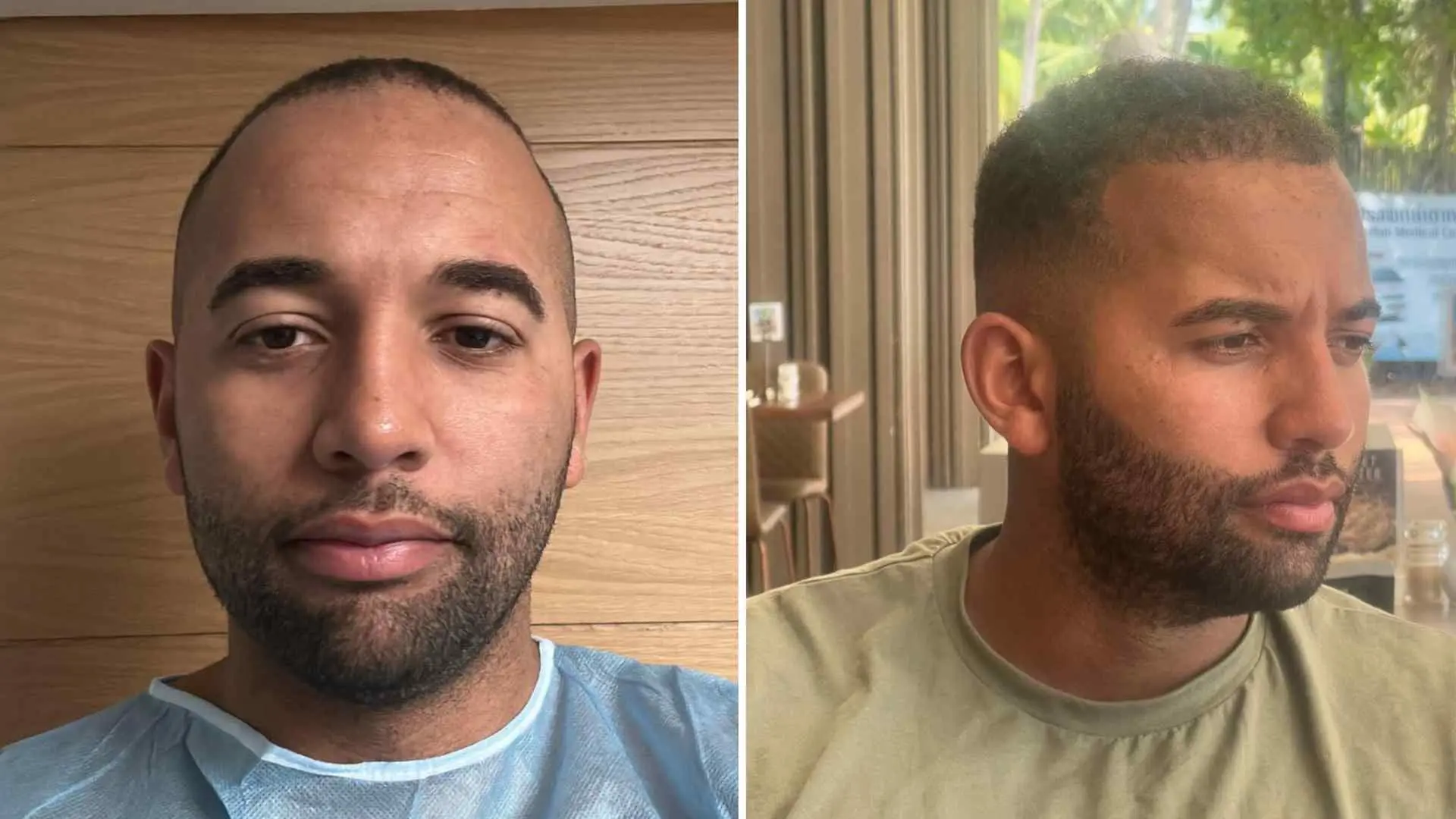
For many individuals with textured, curly, or coily hair, a hair transplant is more than just a cosmetic procedure—it is a restoration of identity. However, because Afro-textured hair has a unique C-shaped follicle and a distinct growth pattern, the recovery process requires a specialized approach.
If you are traveling from the USA to Turkey for this life-changing procedure, understanding the “why” and “how” of healing is crucial for protecting your investment. Turkey Hair Center provides a specialized focus on the intricate needs of Afro hair, ensuring that every graft is nurtured from the moment it is placed until it reaches full maturity.
In this comprehensive guide, we will walk you through the day-by-day and month-by-month recovery timeline, specifically tailored for the Afro-descendant community.
Phase 1: The First 72 Hours – The Critical Anchor Period
The first three days are the most delicate. During this window, the newly implanted follicles are “anchoring” themselves into their new environment. For Afro hair, where the follicles are naturally curved, this stage is vital to ensure the angle of the hair remains consistent with your natural growth pattern.
Immediate Post-Op Care
- Sleeping Position: You must sleep with your head elevated at a 45-degree angle. This prevents facial swelling, which is common in the forehead and around the eyes.
- The “No-Touch” Rule: It is tempting to feel the texture of the new grafts, but touching can dislodge them or introduce bacteria.
- Avoid the Sun: Direct UV rays can damage the sensitive incisions.
Phase 2: Days 4 to 10 – Washing and Scab Management
By day four, the washing process begins. For Afro hair, moisture management is key. Afro hair tends to be naturally drier than other hair types, and the healing scalp can feel tight or itchy.
The Gentle Wash Technique
Standard protocol at Turkey Hair Center involves specific medical shampoos and lotions to protect the delicate grafts. The process usually includes:
- Lotion Application: Softening the scabs with a moisturizing lotion for 15–20 minutes.
- The Foam Method: Creating a lather in your hands and gently “tapping” it onto the scalp. Never rub.
- Rinsing: Using lukewarm water poured gently from a cup or a very low-pressure showerhead.
Scab Shedding
By day 10, the scabs (crusts) should start to fall off. Do not pick them! Picking scabs can pull out the follicle underneath. If they haven’t fallen off by day 12, a very gentle circular massage during washing can help them transition.
Phase 3: Weeks 2 to 6 – The “Ugly Duckling” Stage
This is the phase that tests a patient’s patience. Around week three, you will likely experience Shock Loss.
Note: Shock loss is the temporary shedding of the newly transplanted hair shafts. This is a normal biological response to the “trauma” of surgery. The follicle remains safe under the skin; only the hair fiber falls out.
For those with Afro hair, the scalp may look patchy or sparse during this time. Don’t panic—this is a sign that the hair cycle is resetting, making way for permanent, healthy growth.
Phase 4: Months 3 to 6 – The First Sprouts
Between months three and four, the first signs of new growth begin to appear. Fine, thin hairs will begin to break through the surface.
Texture and Curl Formation
Initially, the hair may appear straighter or finer than your original texture. This is common. As the follicle matures and strengthens its blood supply, the natural coil and “kink” of your Afro hair will return. By month six, most patients see about 50-60% of their eventual density.
Phase 5: Months 6 to 12 – Maturation and Density
This is where the results become truly visible. The hair begins to thicken significantly. Because Afro hair occupies more volume per strand due to its curl pattern, the visual “coverage” often looks much fuller at this stage than it would for someone with straight hair.
- Styling: You can now begin to style your hair more freely, but it is recommended to avoid tight braids, cornrows, or chemical relaxers until the 12-month mark to avoid “traction” on the new grafts.
- Moisture: Continue to use sulfate-free products. Afro hair thrives on moisture, and a healthy scalp equals healthy growth.
Why Choose Turkey for Afro Hair Transplants?
For US-based patients, the decision to travel to Turkey is often driven by a combination of expertise and cost-effectiveness. However, Afro hair transplants are technically more demanding than Caucasian hair transplants.
The Challenge of the Curved Follicle
Afro hair follicles are curved beneath the skin. If a surgeon uses a standard straight extraction technique, they risk “transection”—cutting the bulb of the hair and making it unusable. Specialized clinics utilize custom-diameter punches and “high-angle” extraction techniques to safely harvest these delicate curls.
Essential Post-Op “Dos and Don’ts” for Afro Hair
- DO Stay Hydrated: Water is essential for skin elasticity and follicle health.
- DON’T Wear Tight Hats: Avoid snapbacks or beanies for at least 14 days.
- DO Use Silk/Satin Pillowcases: These reduce friction on the donor and recipient areas, preserving moisture.
- DON’T Exercise Heavily: Avoid heavy lifting and cardio for 2 weeks to prevent scalp irritation.
Final Thoughts: The Reward of Patience
Recovery from an Afro hair transplant is a marathon, not a sprint. While the first few weeks require diligent care, the results are permanent. By choosing a facility that understands the specific biology of curly hair, you ensure a hairline that looks natural and density that is maximized for a lifetime.