
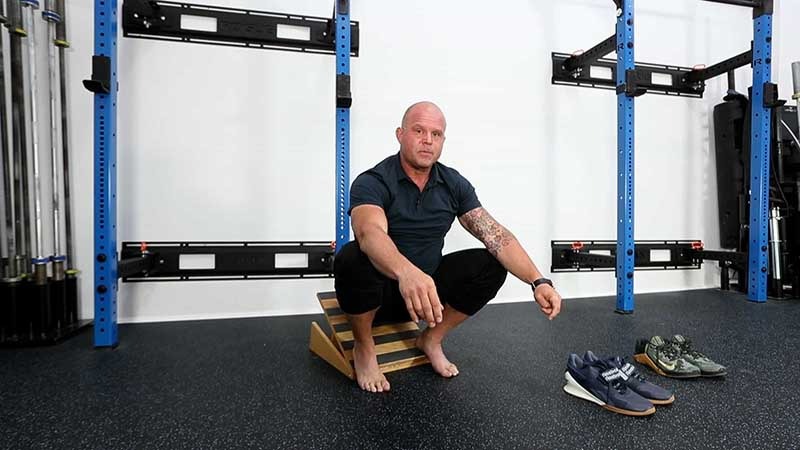
Limited ankle mobility is one of the most common reasons people struggle with squats. You may feel tightness at the bottom position, notice your heels lifting, or feel unstable when trying to reach depth. In many cases, the issue is not strength, but how well your ankles can move and control load.
Understanding ankle mobility for squats helps you identify why certain positions feel difficult and what practical steps you can take to improve them over time.
Why Ankle Mobility Affects Squat Performance
During a squat, the ankles must bend forward as the knees track over the toes. This movement, known as dorsiflexion, allows the hips to drop while the torso stays balanced.
When ankle mobility is limited, the body often compensates by:
- Lifting the heels
- Leaning the torso forward excessively
- Cutting squat depth short
These compensations are not always painful, but they reduce control and consistency, especially under load.
Common Signs of Limited Ankle Mobility in Squats
You may be dealing with ankle mobility restrictions if you notice:
- Your heels come off the floor near the bottom of the squat
- You feel unstable or rushed out of the hole
- Depth varies from rep to rep
- Squats feel harder than they should at lighter weights
These signs often show up long before pain or injury, which is why addressing ankle mobility early can improve both performance and confidence.
What Limits Ankle Mobility
Ankle mobility issues usually come from a combination of factors rather than a single cause.
Tight Calf Muscles
The calf muscles cross the ankle joint. When they are stiff, they restrict forward ankle movement, especially in deep knee bend positions.
Joint Stiffness
Past injuries, long periods of sitting, or limited movement variety can reduce ankle joint range of motion.
Poor Movement Exposure
If you rarely load the ankle through full ranges, the body has little reason to maintain that mobility.
Tools That Can Support Ankle Mobility for Squats
While exercises and stretching form the foundation, certain tools can support better ankle positioning during training and mobility work.
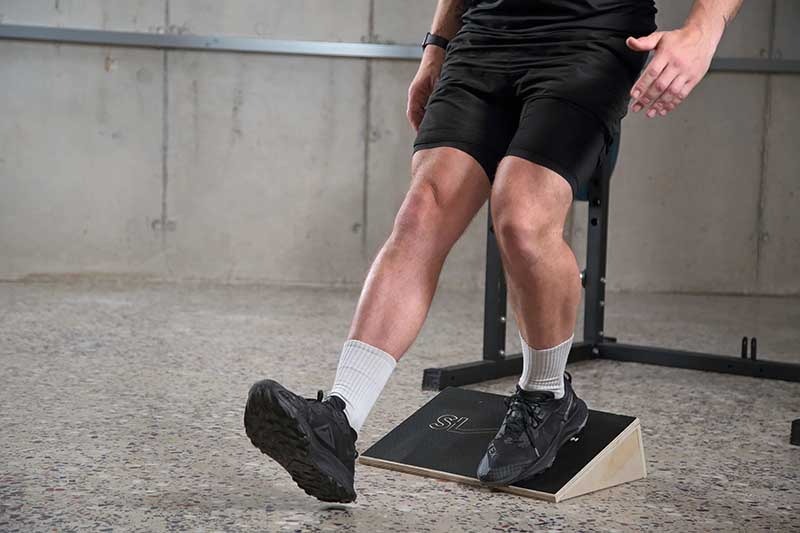
One commonly used option is a slant board, which places the ankle in a controlled, elevated position. This setup allows you to explore deeper ranges safely, especially during warm-ups or dedicated mobility sessions.
Using tools strategically can help you maintain better squat positions while you work on long-term mobility improvements.
Simple Ankle Mobility Drills to Try
You do not need an extensive routine to improve ankle mobility for squats. Consistency matters more than complexity.
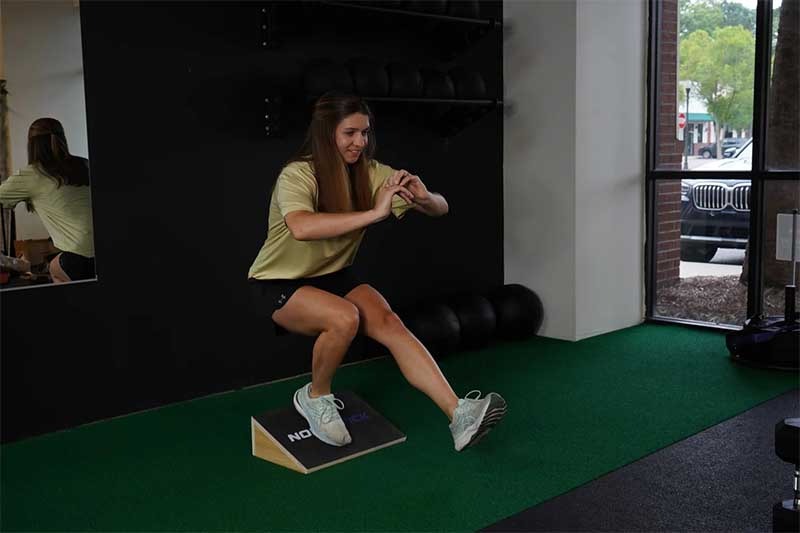
Weighted Knee-to-Wall
This drill gently loads the ankle in a forward position while keeping the heel down.
Slow Eccentric Calf Raises
Lowering slowly builds strength and control through the ankle’s range of motion.
Paused Squats
Holding the bottom position encourages the ankles to adapt to deeper ranges under control.
Start with short sessions and focus on quality rather than intensity.
How Heel Elevation Fits Into the Picture
Heel elevation can make squatting feel smoother when ankle mobility is limited. By slightly reducing the demand on the ankle, you can maintain better balance and posture.
However, heel elevation should be viewed as a support, not a permanent fix. It allows you to train effectively while you continue improving mobility through targeted work.
Balancing Mobility Work and Squat Training
One mistake many people make is separating mobility from training entirely. The best results often come from combining the two.
For example:
- Use mobility drills before squatting to prepare the ankles
- Apply controlled heel elevation during training when needed
- Gradually reduce reliance on support tools as mobility improves
This approach keeps training productive while addressing the root cause.
How Long Does It Take to See Improvement
Ankle mobility improves gradually. Some people notice changes within a few weeks, while others need more time depending on their history and consistency.
Short, frequent sessions tend to work better than long, infrequent ones. Even five minutes a day can add up when done consistently.
Many training insights on squat mechanics and lower-body mobility can be found on SlantBoardPro, where educational guides focus on practical movement fundamentals.
Final Thoughts
Ankle mobility for squats plays a major role in depth, balance, and overall squat quality. Limited ankle movement often leads to compensations that make squatting feel harder than it needs to be.
By understanding what restricts ankle mobility and using simple drills and supportive tools wisely, you can improve your squat mechanics over time. The goal is not perfection, but steady progress toward more stable and confident movement.