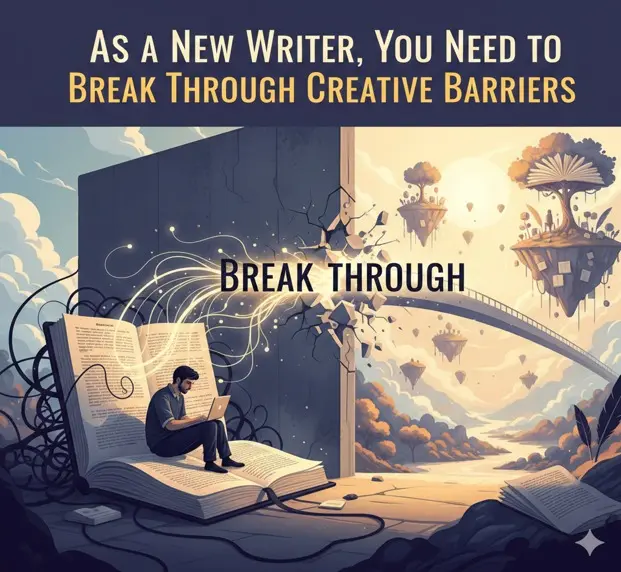
Writing is a journey that writers must take because it leads to new ideas and creative expression and makes them feel good inside. Writers can run into their first creative block at any point in the writing process, from the first draft of their article to the end of their book project, when they have mastered the art of writing.
The blog gives readers useful tips on how to get past their problems while still being productive and making steady progress. The problem has two parts: writer mental blocks and writer productivity obstacles. We will look at each of these parts before giving you useful solutions.
The Myth of the “Perfect First Draft”
Perfectionism Is the Problem That Stops Progress
A lot of new writers think that their first draft has to be perfect, which stops them from getting anything done. Writing anything becomes hard when every sentence feels like a test.
Solution: Let Yourself Be Flawed
A lot of the time, great work starts out rough. When you accept that the first draft will be messy, your creative ideas can flow freely, and revisions can improve the quality over time.
Set a timer for 20 to 30 minutes and write without stopping to make changes. Don’t worry about grammar or structure; just focus on ideas.
This exercise trains your brain to put making things ahead of fixing them, which can help you get over your fear of being judged, even by yourself. Professional content writers often use the same technique to get ideas flowing quickly.
Knowing What’s Stopping You from Writing
Problem: You Don’t Know Why You’re Stuck
There isn’t just one place where creative blocks come from. Sometimes they are emotional, other times they are technical, and most of the time they are just because the goals are not clear.
Find the Root Cause as a Solution
Think about it:
- Are you having trouble with the idea itself?
- Are you overwhelmed by the scope?
- Do you fear getting bad feedback?
Knowing what kind of block you have will help you choose the right strategy. For example, if you’re stuck because you’re not sure about the structure, a simple outline can help you see things more clearly right away. If you’re afraid of being judged, writing in a diary or private journal can help you say what you want to say without feeling like you have to. Many book writers recommend this method when facing creative blocks.
Making a Routine for Writing
Problem: Inconsistency Causes Delays
A lot of new writers only write when they feel like it, which makes their work inconsistent and keeps them from getting over obstacles for a long time.
Solution: Make Writing a Habit and Stick to It
Routine teaches the brain to be creative on cue.
Example of a daily writing habit:
- Every morning, write 500 words.
- Every other day, answer comments from readers.
- Set aside one session each week just for editing.
Over time, this makes writing a habit instead of something you do once in a while. Consistency is also a principle used by professional content writers and book writers to keep projects on track.
Using Outlines to Make Things Clearer
Problem: Writing Without a Plan Can Make You Tired
Writers can lose focus in the middle of a draft if they don’t have a roadmap, which can be frustrating and drain their creative energy.
Solution: Use Outlines to Structure Writes
Outlines help you organise your thoughts and see the whole project before you start working on each part.
Sample Outline for a Book or Blog:
- Hook and intention in the introduction
- Statement of the Problem
- Sub-topics and answers
- Examples or case studies
- Conclusion
Outlines are very useful for long projects, like eBooks or novels. A simple structure at first keeps things from getting confusing later. Using outlines is a strategy often suggested by affordable book writing services.
When and How to Work with Professional Writers
Problem: Big Projects Make You Feel Overwhelmed
Some creative blocks aren’t just in your head; they’re also in the way things are set up. You might have ideas but not know how to put them into action on a large scale.
Solution: Look into an Affordable Book Writing Service or a Skilled Content Writer
It’s not cheating to hire professionals; it’s smart. A lot of new writers work with experts to make their ideas come to life, especially when they’re working on their first big project.
How to Choose
- Set your budget and what you want.
- Ask for examples of work they’ve done in the past.
- Make sure you understand what you need to do: outlines, drafts, edits, formatting, and changes.
Working together with a ghostwriter in Canada or a professional book writer can help you finish a project that has been stuck for a while, and you won’t lose your voice.
How to Deal with Self-Doubt and Creative Fear
Problem: Your Inner Critic Mutes Your Writing Voice
One of the biggest problems new writers have is self-doubt. You might think things like, “Who am I to write?” or “This isn’t good enough.”
Solution: Talk to Yourself in a Healthy Way
Instead of fighting self-doubt, accept it without letting it make decisions for you.
Changes in Mindset:
- Change “I’m not ready” to “I am learning.”
- Don’t judge feedback; treat it like data.
- Give rewards for hard work, not for being perfect.
Even professional content writers face self-doubt, but regular practice and positive habits help overcome it.
Setting Goals and Deadlines That Are Possible
Problem: Undefined Goals Mean Undefined Progress
Unclear writing goals make things take longer and make you more frustrated.
Solution: Set Clear, Doable Goals
Structure pushes you to move forward, no matter what you’re trying to do:
- One blog post a week, or
- Ten pages a day on your book manuscript
Set SMART goals: Specific, Measurable, Attainable, Relevant, and Time-bound.
Instead of saying, “I want to finish my book,” say, “I will write three chapters in the next ten days.” Many affordable writing services and professional Canadian writers suggest goal-setting as a key strategy for completing projects.
Reading to Get Your Creative Juices Flowing
Problem: Writers’ Ideas Seem Stuck or Going in Circles
Without new ideas, creative wells can run dry.
Solution: Read a Lot and With a Purpose
Reading isn’t just taking in information; it’s also noticing things.
When you read, pay attention to the structure, style, and pace.
Watch how writers create characters or make their points.
Reflect on what resonates with you and why.
This practice helps you think more clearly, gives you more words, and encourages you to come up with new ideas for your own work. Many content writers recommend reading widely to spark inspiration.
Getting Past the “Block Plateau”
Problem: Losing Interest in the Middle of a Project
A lot of writers start off strong but then slow down in the middle.
Solution: Change the Way You Look at Things
Use one of these methods:
- Get up and move around a bit or change your surroundings
- Take a break and write something else
- Talk about your project with a friend or teacher
New things and movement spark creativity. Changing your point of view can help you focus and often help you find solutions to problems that seemed impossible to solve just a few minutes ago. Ghostwriter Canada and other professional book writers often recommend this approach for stalled projects.
Getting Feedback and Learning From It Without Losing Your Voice
Problem: Fear of Criticism Slows Things Down
Getting feedback can be scary, especially when you’re just starting to write.
Solution: Use Feedback as a Way to Grow
You don’t have to use all of the feedback you get, but every piece of criticism teaches you something. Concentrate on:
- Knowing what’s working
- Finding patterns in criticism
- Choosing what fits with your goal
Good editors, professional content writers, and book writers will help you improve your work without changing your unique voice.
Tools and Resources That Really Work
Problem: Too Many Writing Tools Can Be Overwhelming
There are a lot of programs that say they can help writers, like grammar checkers and idea generators. Having too many options can make you freeze.
Solution: Use Tools That Boost Productivity
Here are some types of categories that really help with writing:
- Tools for outlining and planning to help you stay organised
- Focus timers or apps can help you stay on task
- Editing tools to make things clear and easy to read
- Writing groups to be accountable and get help
At first, keep your tools to a minimum and only add things that will help you get your work done faster. Many writers rely on minimal tools to maintain flow and focus.
The Long View: Creativity Is a Skill, Not a Gift
Problem: Writers Believe Creativity Is Innate
A lot of people think that creativity is something you are born with, not something you can learn.
Solution: Treat Writing Like a Skill You Can Learn
Like any other craft, writing gets better with:
- Practice
- Comments
- Looking back
- Changes
This way of thinking helps you be strong when you hit a creative block and confident when things aren’t moving as quickly as you’d like. Many professional writers and Ghostwriter Canada experts emphasize the importance of practice over innate talent.
Conclusion
Breaking down barriers isn’t a choice; it’s a skill.
Everyone has creative blocks. They happen to every writer, whether they are new or have been writing for a while. The difference is in how you deal with them.
By:
- Figuring out why you are blocked
- Making habits that are disciplined
- Making outlines and setting goals
- Working with professionals
- Smart reading
- Letting things be imperfect
- You turn problems into opportunities.
Writing isn’t just about getting things done; it’s also about growing, expressing yourself, and connecting with others. Pick one thing from this list and do it right away if you’re ready to get past your creative blocks today. Even small steps forward are important because they keep your writing voice alive and moving forward.