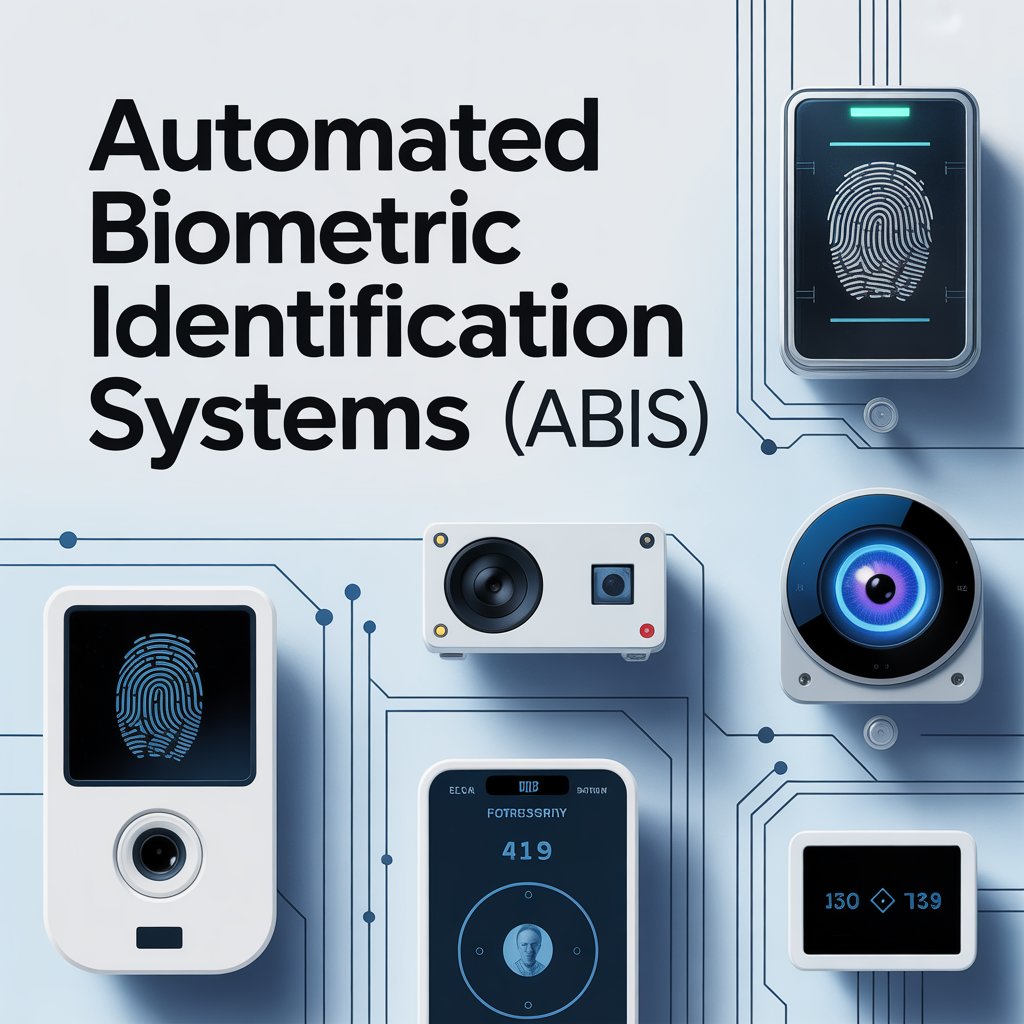
Biometrics has quietly become part of everyday life. From unlocking smartphones to verifying identities at borders, biometric technology is working behind the scenes to answer one simple question: Is this person who they claim to be? At the heart of many large scale biometric deployments sits an ABIS, short for Automated Biometric Identification System.
In this article, we will break down how an ABIS system works, explore the biometric modalities it typically supports, and dive into the many industries that rely on ABIS software today. Special attention will be given to national ID programs and how ABIS enables nationwide enrollment at massive scale.
What Is an ABIS System?
An ABIS is a centralized software platform designed to collect, store, compare, and manage biometric data for identification and verification purposes. Unlike simple biometric matching used on personal devices, ABIS systems are built to handle millions or even hundreds of millions of identities.
Think of ABIS as a highly organized digital vault combined with a super fast search engine. It stores biometric templates and can compare a new sample against an entire database in seconds.
The Core Purpose of ABIS
At its core, an ABIS system serves three main purposes:
- Establishing a unique identity for each individual
- Preventing duplicate or fraudulent enrollments
- Enabling fast and accurate identity verification
These capabilities make ABIS essential for large population systems where manual identity checks would be impossible.
How an ABIS System Works Step by Step
Understanding how ABIS works is easier when you break it down into stages. Each stage plays a crucial role in ensuring accuracy, scalability, and reliability.
Biometric Data Capture
Everything starts with data capture. During enrollment or verification, biometric traits are captured using certified devices such as fingerprint scanners, facial cameras, or iris scanners.
The quality of this step matters a lot. Poor lighting, low resolution, or improper positioning can impact accuracy later on.
Data Preprocessing and Quality Checks
Once captured, the raw biometric data goes through preprocessing. This includes:
- Noise reduction
- Image normalization
- Quality assessment
If the biometric sample does not meet quality thresholds, the system may request a recapture. This ensures only usable data enters the system.
Template Creation
Instead of storing raw images, ABIS converts biometric data into mathematical representations called templates. These templates contain only the features needed for matching and cannot be reconstructed into the original image.
This approach improves both performance and data privacy.
Biometric Matching and Search
This is where ABIS truly shines. When a new enrollment or query is submitted, the system performs one of two types of searches:
- 1:1 verification to confirm a claimed identity
- 1:N identification to find a match within the entire database
Advanced matching algorithms allow ABIS to search millions of templates in seconds while maintaining high accuracy.
Decision Making and Result Handling
After matching, the system returns a result with a similarity score. Based on predefined thresholds, the system determines whether a match is accepted, rejected, or flagged for manual review.
These results can then be passed to other systems such as national registries, law enforcement platforms, or access control systems.
Common Biometric Modalities Supported by ABIS
Modern ABIS platforms are designed to be flexible. They often support multiple biometric modalities to improve accuracy and inclusivity.
Fingerprint Recognition
Fingerprint biometrics remains one of the most widely used modalities. It is affordable, reliable, and supported by decades of research.
ABIS fingerprint matching can handle flat fingerprints, rolled fingerprints, and even latent prints in some deployments.
Facial Recognition
Facial recognition has gained massive adoption due to its contactless nature. ABIS facial matching works by analyzing facial landmarks such as eye spacing, nose shape, and jawline structure.
It is commonly used in border control, surveillance, and civil ID programs.
Iris Recognition
Iris recognition is known for its high accuracy. The unique patterns in the human iris remain stable throughout life, making it ideal for high security applications.
ABIS systems that support iris biometrics are often used in national ID and refugee registration programs.
Palmprint and Palm Vein Recognition
Palm based biometrics analyze either surface patterns or vein structures beneath the skin. These modalities are especially useful in environments where fingerprints may be worn or damaged.
Multimodal Biometrics
Many ABIS deployments use more than one biometric trait. This is called multimodal biometrics.
By combining fingerprints, face, and iris, ABIS systems can significantly reduce false matches and improve coverage across diverse populations.
Key Features of a Modern ABIS Platform
Not all ABIS systems are created equal. Advanced platforms typically include the following capabilities.
Scalability and Performance
An ABIS must scale effortlessly as databases grow. Whether managing one million or one hundred million identities, performance must remain consistent.
Interoperability
ABIS software often integrates with enrollment kits, document management systems, and third party databases. Open standards and APIs are critical here.
Security and Privacy Controls
Strong encryption, role based access, and audit logs are essential to protect sensitive biometric data and comply with regulations.
Duplicate Detection and De Duplication
One of the most important functions of ABIS is preventing duplicate identities. During enrollment, the system performs 1:N searches to ensure the individual has not already been registered.
Industry Applications of ABIS Software
ABIS technology is used across a wide range of industries, each with its own unique requirements.
National ID Programs
National ID systems are among the most demanding ABIS use cases. Governments rely on ABIS to uniquely identify every resident and citizen.
During nationwide enrollment, ABIS ensures that each individual is registered only once, even when enrollment happens across thousands of locations.
ABIS enables:
- Real time de duplication during enrollment
- Centralized identity management
- Secure authentication for public services
To explore how biometrics supports these initiatives, you can visit this page.
Civil Registration and Vital Statistics
ABIS helps link biometric identities to birth, death, and marriage records. This improves data accuracy and reduces identity fraud within civil registries.
Border Control and Immigration
At borders, ABIS enables fast identity checks against watchlists and immigration databases. Multimodal biometrics are often used to improve accuracy in high traffic environments.
Law Enforcement and Criminal Identification
Law enforcement agencies use ABIS to identify suspects, match crime scene evidence, and manage criminal records. Fingerprint and facial recognition are the most common modalities here.
Elections and Voter Registration
ABIS helps prevent duplicate voter registrations and ensures fair elections. Biometric voter verification systems rely on ABIS to confirm voter identity on election day.
Financial Services and Banking
Banks and fintech platforms use ABIS to strengthen customer onboarding and fight identity fraud. Biometric verification reduces reliance on passwords and physical documents.
Healthcare Identity Management
In healthcare, ABIS ensures patients are correctly identified across multiple facilities. This reduces medical errors and improves continuity of care.
Refugee and Humanitarian Programs
Humanitarian organizations use ABIS to register displaced populations and ensure fair distribution of aid. Biometrics prevents duplicate registrations and improves accountability.
ABIS and Nationwide Enrollment Challenges
Nationwide enrollment is not a small task. It involves millions of people, diverse environments, and varying levels of infrastructure.
Handling Large Scale Enrollment
ABIS systems are designed to ingest biometric data from thousands of enrollment stations simultaneously. Centralized processing ensures consistency and quality control.
Ensuring Inclusion and Coverage
By supporting multiple biometric modalities, ABIS accommodates individuals with worn fingerprints, disabilities, or other challenges.
Maintaining Data Integrity Over Time
ABIS platforms support re enrollment, updates, and identity lifecycle management. This ensures records remain accurate for years or decades.
Choosing the Right ABIS Solution
Selecting an ABIS platform requires careful consideration. Key factors include accuracy, scalability, compliance, and vendor expertise.
If you want to discover more about ABIS, you can explore detailed information through this resource.
Future Trends in ABIS Technology
ABIS continues to evolve alongside advances in biometric science and computing.
AI Enhanced Matching Algorithms
Modern ABIS platforms use advanced machine learning techniques to improve matching accuracy across demographics and age groups.
Cloud and Hybrid Deployments
Governments and enterprises are increasingly adopting cloud or hybrid ABIS architectures for flexibility and cost efficiency.
Stronger Privacy by Design
Future ABIS systems are being built with privacy enhancing technologies such as template protection and decentralized identity models.
Conclusion
An Automated Biometric Identification System is the backbone of large scale biometric identity solutions. By securely managing biometric data and enabling fast, accurate matching, ABIS makes it possible to uniquely identify individuals across massive populations.
From national ID programs to border control, healthcare, and humanitarian efforts, ABIS software plays a critical role in building trusted identity ecosystems. As technology continues to advance, ABIS will remain central to how societies manage identity in a digital world.