Two terms that appear constantly in conversations about basement moisture management are waterproofing and damp proofing. They are often used as though they mean the same thing, and that confusion leads homeowners to invest in the wrong solution for their specific problem, with predictable and expensive results. Getting clear on what each actually does, and what conditions each is designed to address, is essential before any money changes hands.
Toronto and the surrounding GTA have soil conditions and seasonal water behaviour that put basements under sustained and varied stress. Spring thaw sends significant volumes of water through upper soil layers. Summer storms can saturate ground that was dry just days before. Winter freeze-thaw cycles create hydrostatic pressure cycles that exploit any weakness in a foundation wall or floor-wall joint. The solution you choose needs to match the actual mechanism by which water is getting in.
Understanding the distinction is the starting point, but diagnosing what your specific basement is experiencing requires an on-site evaluation. Professional basement leak repair and waterproofing services that begin with identifying the source and pathway of moisture entry are far more likely to produce durable results than solutions applied without that diagnostic step.
What Damp Proofing Actually Does
Damp proofing is a coating applied to the exterior of a foundation wall, typically during original construction, that is designed to resist the movement of soil moisture through the wall. It is not designed to withstand hydrostatic pressure, which is the pressure created when water accumulates against the foundation and actively pushes through it. It is a barrier against passive moisture migration, not against pressurized water.
Most residential foundations built before the widespread adoption of modern waterproofing standards have some form of damp proofing applied during construction, often a brushed or sprayed-on bituminous coating. This material degrades over time, can crack with foundation movement, and was never intended to be the long-term solution it is often assumed to be.
What Waterproofing Actually Does
True waterproofing is designed to resist hydrostatic pressure, meaning it can hold back water that is actively trying to push through the wall. This involves either the application of a membrane system that physically bonds to the foundation and spans cracks as they develop, or a drainage system approach that intercepts water before it can build up sufficient pressure against the wall.
The distinction matters enormously in practice. If your basement takes in water during heavy rain events or during the spring thaw, that is hydrostatic pressure at work, and damp proofing will not solve it. A proper waterproofing system, either exterior membrane, interior drainage, or a combination of both, is what the situation requires.
Exterior Waterproofing: The Comprehensive Approach
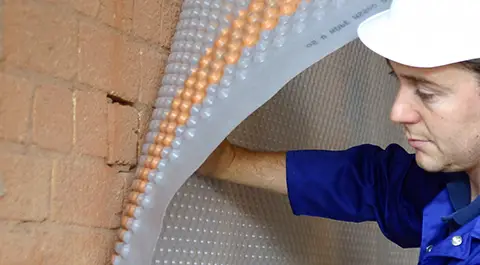
Exterior waterproofing involves excavating the soil around the foundation, cleaning and repairing the foundation wall surface, applying a waterproofing membrane or system directly to the exterior of the wall, installing a drainage board to channel water away from the wall surface, and typically installing or upgrading the perimeter drainage system that carries water away from the footing.
This approach addresses the problem at its source by keeping water away from the foundation wall entirely rather than managing it after it has entered the building envelope. It carries the longest warranties for good reason. The limitation is cost and disruption: excavating around a foundation is a significant undertaking that affects landscaping, driveways, and the surrounding grade.
Interior Waterproofing: Managing Water That Has Entered
Interior waterproofing does not prevent water from reaching the foundation wall. Instead, it intercepts water that has entered the wall or is coming through the floor-wall joint and channels it to a sump system before it can flood the basement floor. A perimeter drainage channel is installed along the base of the interior walls, water is collected and directed to a sump pit, and a pump expels it away from the foundation.
For many homeowners in the GTA, interior waterproofing is the practical solution because it can be installed without major exterior excavation, is accessible year-round, and addresses the most common form of water entry in older residential foundations. It is effective when properly installed and maintained.
Crack Injection: Addressing Specific Entry Points
Poured concrete foundation walls often develop cracks over time as the concrete cures and as the structure responds to soil and temperature changes. These cracks are a direct pathway for water and require targeted repair. Epoxy or polyurethane injection seals the crack through its full depth, stopping the water pathway at that specific location.
Crack injection is appropriate for active leaks at a specific crack location but is not a substitute for a comprehensive waterproofing system if the foundation is experiencing broader moisture issues. Using it as a targeted repair alongside a drainage system, or as the right solution for a limited crack in an otherwise dry basement, is appropriate.
The Sump Pump: Critical Infrastructure, Not a Backup Plan
Any interior waterproofing system depends on a functioning sump pump to be effective. The pump is not secondary protection; it is the system’s active component that removes the water the drainage channels collect. A pump failure during a heavy rain event can flood a basement that the drainage system was successfully managing right up until the moment the pump stopped working.
Sump pump maintenance, including regular testing, cleaning the pit, and ensuring the discharge line is clear, is not optional for basements that depend on interior waterproofing. Battery backup systems provide protection during power outages, which frequently accompany the heaviest rain events. For a finished basement, that backup investment is straightforward insurance.
Getting the Diagnosis Right Before Choosing the Solution
The most important step in any basement moisture project is identifying precisely where and how water is entering. Is it coming through a crack in the wall? Through the floor-wall joint? Through the concrete floor itself? Through a window well that is not draining? Through condensation on cold surfaces rather than actual water infiltration? Each has a specific solution, and applying the wrong one wastes money while leaving the actual problem unresolved.
A professional evaluation that maps the moisture entry points and assesses contributing factors, such as grade slope, gutter drainage, soil conditions, and the age and type of existing damp proofing, provides the foundation for a solution that actually addresses what is happening in your specific basement.