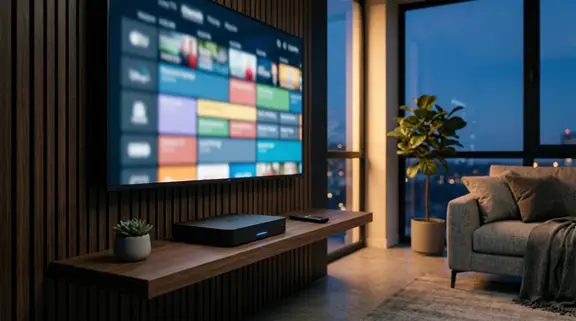
Most buyer guides for the best IPTV devices rank the same five boxes in the same order every year, usually the ones paying the highest affiliate commissions. Real streamers in communities like r/Streaming_Solutions tend to tell a sharper, shorter story.
The gap between a dedicated IPTV box and a generic streaming stick shows up the moment an EPG tries to load 600 channels, or when a firmware update quietly disables a codec six months after purchase. These are the details that decide whether a device feels fast or painful every single evening.
This guide takes a community-informed angle: what top-tier IPTV hardware actually does differently, which categories fit which buyer, and the factors most 2026 guides skip.
What the Streaming Community Is Actually Saying in 2026
Spend a few hours in r/Streaming_Solutions, r/iptv, or AVForums and a few patterns become obvious. Formuler is the default recommendation for anyone who watches IPTV as their primary TV experience. Reddit users repeatedly describe the Formuler Z11 Pro Max and the newer Z12 Ultra as the closest thing to a “just works” dedicated IPTV box on the market.
Long-time NVIDIA Shield owners often push back against buying a Shield for IPTV alone. Community sentiment is consistent: the Shield is stable and performant, yet expensive overkill for viewers who will only run an IPTV player and maybe Plex.
On the Fire TV side, users report a different frustration. IPTV players often run fine on a Fire Stick 4K Max for a while, then start choking on large playlists or losing EPG data after Amazon pushes a background update.
MAG still has a quiet but loyal following in Linux-focused IPTV circles, although the platform is dated.
What Really Separates a Top-Tier IPTV Device from a Generic Streaming Stick
A good IPTV device is not defined by its RAM or CPU clock speed. It is defined by how well its hardware and software handle the specific workload of live TV streaming over IP.
Three things matter most. Codec support depth decides whether the box can decode HEVC Main10 at 10-bit, VP9 Profile 2, and increasingly AV1 without dropping frames. A dedicated IPTV remote with channel up/down and number keys sounds minor until a viewer flips through a 600-channel lineup every evening. And the IPTV player software itself decides how fast the EPG loads, how cleanly M3U playlists parse, and whether catch-up and time-shift actually function.
Reputable providers paired with polished player apps like IPTV Smarters tend to pull ahead here, because the software handles XMLTV parsing, favorites, recording, and multi-screen logic the way regular IPTV viewers expect. Firmware update cadence is just as important. A device with a one-year support window will drop codec and TLS support long before the hardware itself fails.
HDMI 2.1, VRR, and ALLM rarely appear on IPTV box spec sheets, yet they determine whether the same device can double as a game-streaming front end for a console or a cloud gaming service.
Dedicated IPTV Boxes vs Android TV Boxes vs Streaming Sticks
The market splits cleanly into three categories, and the right choice depends less on brand loyalty than on use case.
Dedicated IPTV boxes include Formuler, BuzzTV, MAG, Dreamlink, and TVIP. These are built specifically for IPTV workloads. The remotes have IPTV-friendly buttons. The firmware ships with a native player. EPG parsing is fast. These devices are the correct pick for viewers who want IPTV to feel like traditional broadcast TV with zero configuration friction.
General Android TV and Google TV boxes include the NVIDIA SHIELD TV Pro, Xiaomi TV Box S, Ugoos SK1, and similar hardware. These boxes offer flexibility. They run Netflix in proper HD, Disney+, YouTube in AV1, Plex, Kodi, and whatever IPTV player the user prefers. The downside is that IPTV itself runs through a third-party app, which means slower EPG loads, weaker remote integration, and more firmware-related quirks.
Streaming sticks like the Fire TV Stick 4K Max and Fire TV Cube are the cheapest entry point. They work. They will also frustrate any viewer running playlists over 300 channels, because RAM is tight and Amazon’s background processes compete for resources.
Short verdict: choose dedicated hardware for IPTV-first households, Android TV boxes for mixed streaming households, and streaming sticks for secondary rooms or travel setups.
The IPTV Devices Worth Considering Right Now
Rather than an arbitrary 1-to-10 ranking, the short list below groups devices by the buyer they actually suit.
Formuler Z12 Ultra BT3 Edition (flagship dedicated IPTV)
Formuler’s flagship pairs Android 12 on a Realtek RTD1319C with 4GB DDR4 at 2400 MHz and 128GB of internal storage. It supports 4K UHD at 60fps with Dolby Vision, HDR10+, and Dolby Atmos. Wi-Fi 6E tri-band plus Gigabit Ethernet remove most networking excuses. Priced around 209 euros through Dutch retailers, it is the cleanest “buy once and forget” option for serious IPTV viewers in 2026.
Formuler Z11 Pro Max (value dedicated IPTV)
The Z11 Pro Max gives up some storage (32GB) and keeps everything important: 4K UHD output, MyTVOnline 3 built in, and dedicated IPTV remote buttons. Reddit users have repeatedly called it the closest thing to an IPTV appliance currently on sale. Households that pair a solid box with a reliable Dutch IPTV service usually gravitate toward established names, and IPTV Nederland is among the providers commonly cited in this segment. For viewers who already know they will use IPTV as their primary TV source, the Z11 Pro Max remains the smartest under-flagship pick.
NVIDIA SHIELD TV Pro (flexibility pick)
Nothing matches the Shield for general-purpose Android TV. It handles Dolby Vision, stable 4K, Plex server duties, and practically every streaming service in circulation. For IPTV alone it is overkill, yet for a household that wants one box to do everything, nothing else competes on long-term firmware support.
Xiaomi TV Box S (2nd Gen) (budget Google TV)
At roughly $59.99, the Xiaomi TV Box S runs Google TV with 4K HDR, Dolby Vision, and Chromecast built in. It will not match a Formuler on IPTV specifically, yet it is the most honest budget option for households that watch mixed content and dabble in IPTV.
BuzzTV XR4000 (middle-tier dedicated IPTV)
BuzzTV’s XR4000 ships with 2GB DDR3, 16GB storage, 4K and HDR support, and a customizable remote. It is less powerful than the current Formuler line, yet it remains a favorite for viewers who like the BuzzTV OS layout and want a dependable middle-tier dedicated box.
Buying Factors Most Guides Overlook
These are the details that rarely make the spec sheet summary, yet they shape the long-term ownership experience more than any benchmark.
Codec depth. AV1 is starting to matter for YouTube and several streaming services. HEVC Main10 at 10-bit is standard for HDR content. VP9 Profile 2 is still common. Devices that decode all of these in hardware age far better than those leaning on software fallback.
Firmware update cadence. Formuler and NVIDIA have historically committed to multi-year firmware support. Cheaper Android boxes often stop receiving updates within 12 months, at which point new apps start refusing to install.
Power draw. Dedicated IPTV boxes typically idle at 3 to 8 watts. A box that runs 16 hours a day adds up over the course of a year, and grey-import devices rarely publish realistic numbers.
Remote IR learning. A remote that can learn a TV’s power and volume codes removes the need for a second controller. This is standard on Formuler and BuzzTV lines. It is missing on most budget streaming sticks.
EPG load time. A 600-channel XMLTV guide can take 5 seconds on a modern Formuler and over 30 seconds on an underpowered streaming stick. Nobody advertises this figure, yet it is the single biggest usability difference between good and bad IPTV boxes.
What Dutch Buyers Should Check Before Ordering
For viewers in the Netherlands and Belgium, a few practical details matter.
Home bandwidth should comfortably exceed 25 Mbps per 4K HEVC stream, which usually means a Gigabit or at minimum 200 Mbps connection for households running multiple screens. Most modern boxes ship as EU versions with the correct plug and voltage, but grey imports from North American marketplaces occasionally arrive with the wrong PSU.
Dutch-language UI and regional app support also vary. Boxes sold by NL-focused retailers typically arrive preconfigured, while imports may require manual setup of Dutch channels and catch-up apps. Buyers who pair the hardware with a Dutch-focused subscription such as IPTV Smarters NL generally find the software setup friction drops sharply, because the player and the provider are designed around the same market.
Warranty is the final factor. NL retailers offer local support and standard 2-year EU warranty coverage; grey imports almost never match that.
Frequently Asked Questions
What is the best IPTV device for most users in 2026?
The Formuler Z12 Ultra BT3 Edition earns the default recommendation for IPTV-first households, thanks to its 128GB storage, Wi-Fi 6E, Android 12, and mature MyTVOnline 3 software. Buyers on a tighter budget are better served by the Formuler Z11 Pro Max, which keeps the important features at a lower price point.
Do I need a special box for IPTV, or can I use a Fire TV Stick?
A Fire TV Stick will play IPTV through third-party apps, yet it struggles with large playlists and EPG-heavy providers. Viewers who watch more than 300 channels or expect catch-up to work reliably should prefer a dedicated IPTV box.
Is Formuler better than NVIDIA Shield for IPTV?
Yes, for IPTV alone. The Shield is more flexible and has longer firmware support, but the Formuler lineup is built specifically for IPTV workloads and has the remote, the EPG handling, and the native player to prove it.
How much RAM does an IPTV box actually need?
2GB is enough for simple viewing and moderate playlists. 4GB or more becomes noticeable on large EPGs, multi-language audio tracks, or catch-up streams, which is why flagship boxes like the Z12 Ultra ship with 4GB DDR4.
Which IPTV device works best for Dutch viewers?
Dutch households tend to prefer Formuler boxes purchased through EU retailers, combined with a Dutch-focused provider. The combination of EU warranty, correct voltage, preconfigured UI, and localized support consistently beats grey-import alternatives.
Final Thoughts
The best IPTV devices in 2026 are rarely chosen on spec sheets alone. The long-term experience depends on codec depth, firmware support, EPG handling, and how well the hardware matches a specific viewing routine. Readers who start with the three-category framework above, apply the overlooked buying factors, and weigh community feedback rather than marketing rankings will end up with a box that still feels fast three years from now.