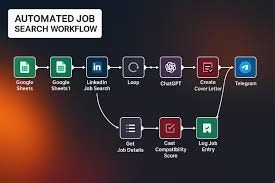
Job searching often feels chaotic. Opportunities appear scattered across platforms, deadlines overlap, and feedback is inconsistent or nonexistent. Many people respond by working harder—applying to more roles, refreshing inboxes, and constantly switching between tabs. Unfortunately, effort without structure usually leads to burnout rather than results.
A more effective approach treats the job search as a workflow rather than a scramble. When broken into clear stages and managed intentionally, the process becomes easier to track, easier to repeat, and far less overwhelming. A good workflow doesn’t remove uncertainty, but it does reduce friction and mental clutter.
Start by Defining the Stages of Your Job Search
Most job searches feel messy because everything happens at once. Applications, research, networking, and follow-ups blend together, making it hard to know what to do next.
The first step toward clarity is defining distinct stages. For example:
- Role discovery
- Opportunity evaluation
- Application preparation
- Submission and tracking
- Follow-up and review
Separating these stages allows focus on one type of task at a time. Instead of constantly switching contexts, you move forward deliberately, which improves both efficiency and accuracy.
Centralize Information to Reduce Cognitive Load
One of the biggest sources of stress in a job search is fragmented information. Job descriptions live in one place, resumes in another, notes in a third, and follow-up reminders somewhere else entirely.
A functional workflow relies on centralization. Keeping role details, application status, and notes in one system reduces the need to remember where things are. When information is easy to find, decisions become faster and less emotionally draining.
Centralization also makes progress visible. Seeing completed steps reinforces momentum, even when responses are slow.
Separate Discovery From Decision-Making
Many people evaluate jobs while they are discovering them, which often leads to rushed or inconsistent decisions. A more effective workflow separates these actions.
During discovery, the goal is volume and awareness, not judgment. Save roles that meet basic criteria without overthinking. Evaluation comes later, when you review opportunities side by side and decide where to invest energy.
This separation reduces decision fatigue and prevents good opportunities from being dismissed prematurely due to momentary stress or distraction.
Create Repeatable Application Steps
Reinventing the application process for every role wastes time and attention. While customization is important, the underlying steps should remain consistent.
A repeatable workflow might include:
- Reviewing role requirements
- Selecting the closest resume version
- Adjusting a short summary or cover section
- Logging submission details
Standardizing these steps reduces friction and lowers the mental barrier to starting. The easier it is to begin, the more consistent progress becomes.
Track Outcomes, Not Just Activity
Many job seekers focus on how many applications they send rather than what happens after. A good workflow tracks outcomes as well as actions.
Recording responses, timelines, and feedback—when available—helps identify patterns. Certain roles, industries, or resume versions may perform better than others. Over time, this information guides smarter decisions instead of guesswork.
Tracking outcomes turns the job search into a learning process rather than a series of disconnected attempts.
Use Tools That Support Discovery, Not Distraction
Job search tools should reduce complexity, not add to it. Platforms that surface relevant listings without demanding constant interaction can support a cleaner workflow.
Some people use job discovery platforms like Higher Hire as part of their system, allowing them to scan available roles in one place before deciding which opportunities deserve deeper attention. Used intentionally, such tools fit into a workflow rather than pulling focus away from it.
The key is using tools as inputs, not as places to linger endlessly.
Schedule the Job Search Like a System
Treating job searching as an open-ended task often leads to anxiety. A better approach assigns it defined time blocks.
Scheduling specific periods for discovery, applications, and follow-ups creates boundaries. Outside those windows, attention can return to rest, learning, or other responsibilities without guilt.
A workflow works best when it respects energy limits. Structure protects focus and prevents the job search from consuming every available moment.
Build in Review and Adjustment
No workflow should remain static. Periodic review helps identify what’s working and what isn’t.
A weekly or bi-weekly check-in allows you to adjust criteria, refine resumes, or change focus areas. This reflection ensures the system evolves with new information rather than repeating ineffective patterns.
Adjustments based on evidence feel purposeful, reducing frustration and restoring a sense of control.
Let the System Carry the Weight
Perhaps the most important benefit of a job search workflow is emotional. When a system exists, it carries part of the burden.
Instead of asking, “What should I do now?” the workflow answers that question. Instead of feeling behind, progress becomes measurable. Instead of reacting to uncertainty, actions follow structure.
The job search will always involve waiting and ambiguity. A workflow doesn’t remove those realities, but it creates stability within them.
Final Thoughts
A job search doesn’t need more urgency—it needs more structure. When approached as a workflow, the process becomes calmer, clearer, and more sustainable.
Progress comes not from doing everything at once, but from building a system that moves forward one step at a time. With the right workflow in place, effort turns into direction, and direction turns into meaningful results.