Choosing where your child will spend their early learning years is one of those decisions that quietly shapes a big part of their future. It’s not just about finding a safe place for them to stay while you work. It’s about finding an environment that helps growth mindset kids into curious, confident, and emotionally secure little humans.
For many parents, this decision feels overwhelming at first. There are tours to attend, questions to ask, and different philosophies to understand. But when you break it down into what truly matters in everyday life, it becomes much clearer.
Understanding what “good development” actually looks like
Child development is a broad term, but in simple terms, it refers to how a child grows in thinking, language, emotions, and physical skills. A good early environment doesn’t rush this process—it supports it naturally through play, interaction, and routine.
For example, think about how children learn to share. It rarely happens because someone lectures them about sharing. Instead, it happens in small everyday moments—like waiting for a turn on a slide or passing toys during group play. In a well-structured environment, educators gently guide these moments so children learn patience, empathy, and cooperation without pressure.
The same applies to language development. A child listening to a story during group time is not just being entertained. They are building vocabulary, learning sentence patterns, and developing attention span. Even something as simple as singing nursery rhymes helps them understand rhythm, memory, and communication.
In many ways, it’s similar to how skills are built in workplaces. Just like apprentices learn through observation and guided practice, children learn best when they are supported rather than instructed too heavily. The environment matters as much as the lesson itself.
What to look for when visiting a centre
When you walk into a childcare setting, the first impression often tells you a lot. But it helps to look beyond the surface and focus on how children are actually engaging with their space.
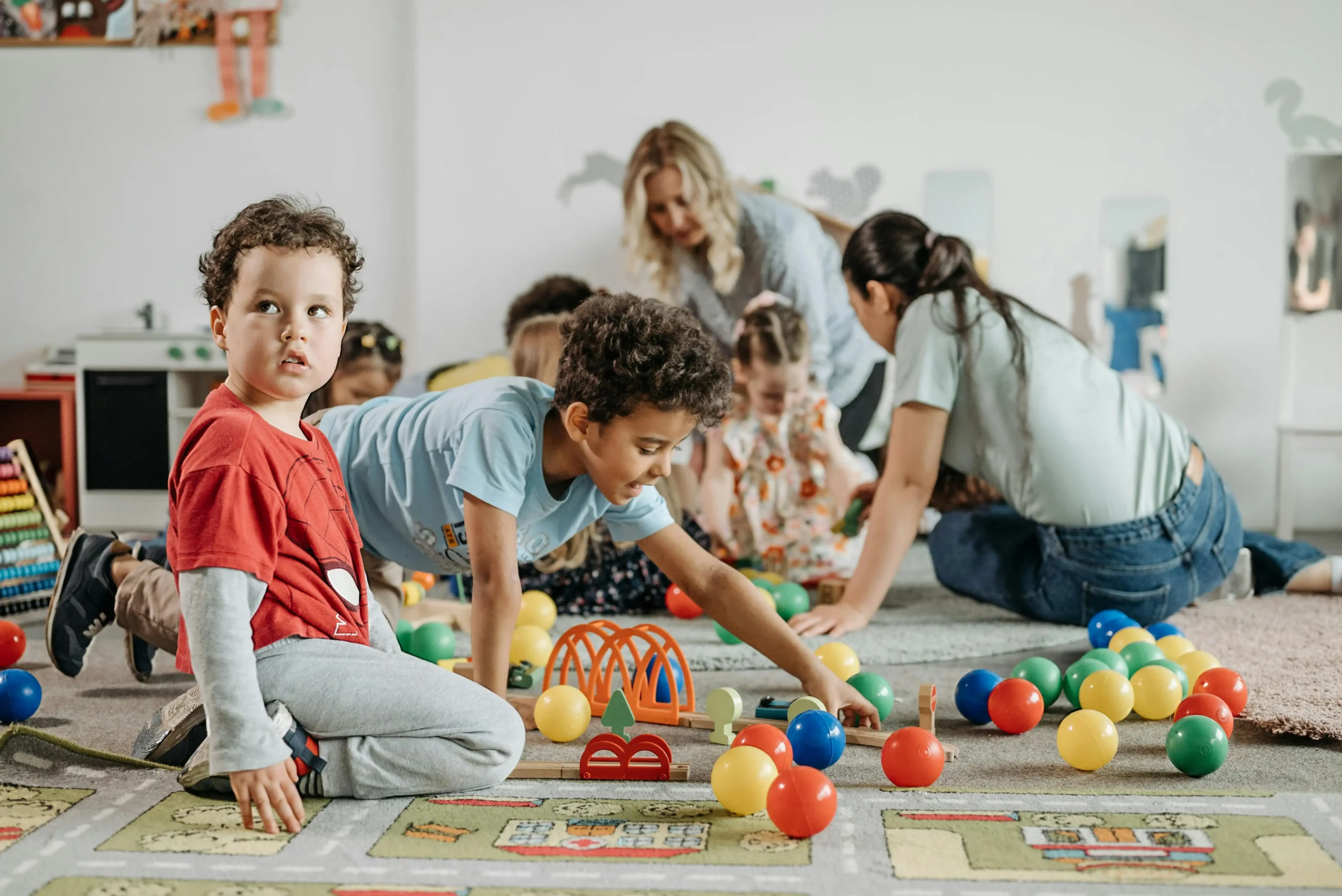
A strong early learning environment usually feels calm but active. You might see children building blocks together, others painting at a table, and a small group listening to a story. There’s movement, but it’s purposeful—not chaotic.
Pay attention to how educators interact with children. Do they get down to the child’s eye level when speaking? Do they listen patiently? These small behaviours reflect whether children feel respected and understood.
Another important sign is how conflicts are handled. For example, if two children want the same toy, a supportive educator won’t just take it away or make a quick decision. Instead, they might guide the children to take turns or find another activity together. This teaches problem-solving and emotional regulation—skills that are useful far beyond early childhood.
Even the physical setup matters. Open spaces, accessible toys, and natural light all encourage exploration. Think of it like office design in a modern company—when the environment is thoughtfully arranged, people naturally work better and feel more comfortable. The same principle applies to children.
When comparing options for an early learning centre, these details help you see beyond brochures and marketing words. You begin to notice how learning actually happens in real time.
Daily routines that shape lifelong habits
Young children thrive on routine. It gives them a sense of safety and predictability, which helps them focus on learning instead of uncertainty.
A typical day might include arrival time, group activities, outdoor play, meals, rest, and creative sessions. But what matters is not just the schedule—it’s how each part is experienced.
For instance, mealtime can be more than just eating. In many quality settings, children are encouraged to serve themselves, talk about food, and clean up afterward. These small tasks teach independence and responsibility. It’s similar to how adults learn workplace habits—through repetition and structure rather than instruction alone.
Outdoor play is another important part. Running, climbing, and balancing aren’t just physical activities; they build coordination, risk awareness, and confidence. A child who learns to climb a small structure today is also learning how to assess challenges and trust their abilities.
Even rest time has value. It teaches children to slow down, listen to their bodies, and recharge. In a world that often moves quickly, this is an important life skill that carries into adulthood.
These routines work together like building blocks. Each one supports a different area of growth, creating a balanced foundation for future learning.
The role of connection, curiosity, and confidence
At the heart of early education is connection. Children learn best when they feel safe, seen, and valued. That emotional security becomes the foundation for everything else.
A child who feels connected is more likely to try new things. They might attempt painting even if they are unsure about colors, or join a group activity even if they are shy. This is where confidence begins—not from praise alone, but from repeated positive experiences.
Curiosity is another powerful driver. Children are naturally curious, and a good learning environment doesn’t suppress that—it encourages it. You might see educators asking open-ended questions like “What do you think will happen next?” instead of giving direct answers. This helps children think independently.
In everyday life, this is similar to how innovation happens in industries like technology or design. Progress often starts with curiosity—asking questions, testing ideas, and learning from outcomes. Children experience this process in simple ways, like experimenting with water and sand or building structures with blocks.
When these experiences are supported consistently, children begin to trust their own thinking. That confidence becomes a lifelong advantage, helping them navigate school, relationships, and future challenges.
Choosing a supportive early learning centre is ultimately about finding a place where this kind of growth is encouraged every day, not just occasionally.
Final thoughts
Choosing the right environment for your child is less about perfection and more about alignment. You’re looking for a place where your child feels safe, engaged, and supported to grow at their own pace.
When you step into a centre, try to observe the small things—the conversations, the laughter, the way challenges are handled. These everyday moments often reveal more than any brochure or website ever could.
In the end, early learning is not just preparation for school. It’s the beginning of how a child understands the world, builds relationships, and develops confidence in themselves. And when that foundation is strong, everything that follows becomes a little easier to build.