Agencies today operate in an increasingly complex environment. Whether it’s a digital marketing agency, design studio, or consulting firm, managing multiple clients, projects, and communication channels can quickly become overwhelming. Emails get lost, updates are delayed, and clients often feel disconnected from progress. This is exactly where a client portal for agencies becomes a powerful solution.
- What Is a Client Portal for Agencies?
- Why Agencies Need a Client Portal
- Key Features of a Client Portal for Agencies
- Centralized Communication
- Real-Time Project Tracking
- Document and File Sharing
- Reporting and Analytics
- Task and Workflow Management
- Benefits of Using a Client Portal
- Improved Client Experience
- Increased Efficiency
- Better Organization
- Scalability
- Stronger Client Relationships
- Common Challenges Without a Client Portal
- How a Client Portal Helps Agencies Scale
- Automation of Repetitive Tasks
- Standardized Processes
- Better Resource Management
- Enhanced Collaboration
- Choosing the Right Client Portal for Your Agency
- The Role of AI in Client Portals
- Real-World Use Cases
- Future Trends in Client Portals
- Why Client Portals Are a Competitive Advantage
- Conclusion
A client portal is more than just a dashboard—it is a centralized system that brings structure, transparency, and efficiency to agency operations. It allows agencies to manage client relationships, streamline workflows, and provide real-time visibility into projects. In a competitive landscape where client experience is a key differentiator, having a well-structured portal can significantly improve retention and growth.
What Is a Client Portal for Agencies?
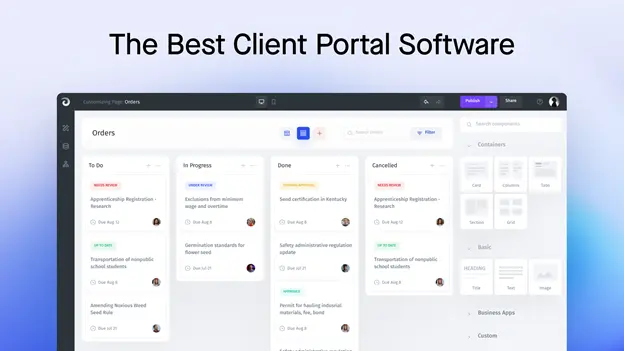
A client portal for agencies is a secure digital platform where agencies and their clients can interact, collaborate, and manage projects in one place. It eliminates the need for scattered communication across emails, spreadsheets, and multiple tools.
Typically, a client portal includes:
- Project tracking and updates
- File sharing and document management
- Communication tools
- Reporting dashboards
- Task and workflow management
This centralized approach ensures that both the agency and the client are always aligned.
Why Agencies Need a Client Portal
As agencies scale, manual processes become inefficient. Managing multiple clients through traditional methods leads to confusion, delays, and missed opportunities.
A client portal addresses these challenges by:
- Centralizing communication
- Improving transparency
- Reducing administrative work
- Enhancing client experience
In short, it replaces chaos with structure.
Key Features of a Client Portal for Agencies
A well-designed client portal includes several features that improve both internal operations and client interactions.
Centralized Communication
Instead of juggling emails and messages across platforms, all communication happens in one place. This ensures that nothing gets lost and everyone stays informed.
Real-Time Project Tracking
Clients can see the progress of their projects in real time. This reduces the need for constant follow-ups and builds trust.
Document and File Sharing
Secure file sharing allows agencies to send reports, creatives, and documents without relying on email attachments.
Reporting and Analytics
Clients want to see results. A client portal provides access to performance metrics, making it easier to demonstrate value.
Task and Workflow Management
Agencies can assign tasks, set deadlines, and track progress efficiently.
Benefits of Using a Client Portal
Improved Client Experience
Clients appreciate transparency and easy access to information. A portal provides both.
Increased Efficiency
Automation and centralized systems reduce manual work and save time.
Better Organization
All data, communication, and tasks are stored in one place.
Scalability
As the agency grows, a client portal helps manage increased workloads without adding complexity.
Stronger Client Relationships
Clear communication and visibility build trust and long-term partnerships.
Common Challenges Without a Client Portal
Agencies that do not use a client portal often face:
- Miscommunication with clients
- Delayed project updates
- Difficulty tracking tasks
- Inefficient reporting processes
- Increased administrative workload
These challenges can limit growth and affect client satisfaction.
How a Client Portal Helps Agencies Scale
Scaling an agency requires systems that can handle increased demand. A client portal provides the infrastructure needed for growth.
Automation of Repetitive Tasks
Tasks such as reporting, notifications, and updates can be automated, freeing up time for strategic work.
Standardized Processes
A portal ensures that workflows are consistent across all projects and clients.
Better Resource Management
Agencies can allocate resources more effectively based on real-time data.
Enhanced Collaboration
Teams and clients can collaborate seamlessly, improving efficiency and outcomes.
Choosing the Right Client Portal for Your Agency
Selecting the right solution is critical for success.
Custom vs Off-the-Shelf Solutions
Off-the-Shelf:
- Faster setup
- Lower initial cost
Custom Solutions:
- Tailored to agency needs
- Better scalability
- Seamless integration
Agencies with complex workflows often benefit more from custom-built portals.
Key Considerations
- Ease of use
- Integration with existing tools
- Security features
- Scalability
- Customization options
The Role of AI in Client Portals
Artificial intelligence is transforming client portals by adding intelligence to automation.
Smart Reporting
AI can generate insights and reports automatically.
Predictive Analytics
AI helps identify trends and optimize strategies.
Automated Communication
Chatbots and automated responses improve client support.
Real-World Use Cases
Client portals are used by various types of agencies:
Digital Marketing Agencies
Manage campaigns, track performance, and share reports.
Creative Agencies
Share designs, gather feedback, and manage revisions.
Consulting Firms
Provide updates, share documents, and manage client communication.
Future Trends in Client Portals
The future of client portals includes:
- AI-driven automation
- Real-time collaboration tools
- Mobile-first platforms
- Deeper integrations with business systems
These advancements will further enhance efficiency and user experience.
Why Client Portals Are a Competitive Advantage
In a crowded market, client experience can set an agency apart.
A client portal provides:
- Transparency
- Efficiency
- Professionalism
- Better communication
These factors contribute to higher client satisfaction and retention.
Conclusion
A client portal for agencies is no longer a luxury—it is a necessity for modern agency operations. By centralizing communication, automating workflows, and improving transparency, it enables agencies to operate more efficiently and deliver better results.
As agencies continue to grow and face increasing demands, having a structured system in place becomes critical. A well-designed client portal not only simplifies operations but also strengthens client relationships and drives long-term success.
In the end, agencies that embrace systems and technology will always outperform those that rely on manual processes. And a client portal is one of the most powerful tools to make that transition.