Step into a thoughtfully designed executive office, and one element almost always anchors the space. The desk. Its position, scale, and orientation quietly communicate how work happens there and who is responsible for the outcomes. Among all desk configurations, the corner office desk continues to carry particular weight. Long associated with leadership and decision making, it remains relevant not because of tradition alone, but because it aligns with how authority, focus, and accountability are experienced in modern work environments.
As offices evolve toward flexibility and hybrid models, physical design still plays a critical role in shaping behavior. Workplace strategists, organizational psychologists, and design professionals widely agree that the built environment influences concentration, confidence, and perception. The corner office desk sits at the intersection of these insights, offering a blend of symbolism and function that supports effective leadership without excess or spectacle.
The Origins of the Corner Office as a Leadership Space
The association between leadership and the corner office developed from practical considerations. Corner rooms in commercial buildings traditionally offered more space, natural light, and privacy. These advantages were naturally allocated to senior leaders whose roles required confidentiality and sustained attention. Over time, the desk within that space became a visual shorthand for authority and responsibility.
This association endured even as corporate culture shifted away from rigid hierarchies. Behavioral science has long shown that people interpret spatial cues instinctively. Room position, furniture orientation, and control of space shape assumptions about role and influence. The corner desk came to represent not just seniority, but stewardship. It suggested that important decisions were made there and that the individual behind it bore responsibility for guiding others.
While the meaning has softened in contemporary settings, the signal remains recognizable. The corner desk still communicates leadership, though now it does so through intention rather than dominance.
How Spatial Placement Reinforces Authority
Authority in professional settings is reinforced through the environment as much as through titles or credentials. Studies in environmental psychology consistently highlight how spatial dominance and layout affect perceived power. A desk positioned in a corner creates a natural sense of command without placing the occupant in a confrontational or exposed position.
Unlike desks centered directly opposite entrances, corner desks reduce visual intrusion and unnecessary interruptions. This placement allows leaders to maintain awareness of their surroundings while preserving a sense of control over the space. Visitors often perceive the arrangement as calm and deliberate, reinforcing impressions of confidence and preparedness.
This balance matters. Modern leadership demands approachability alongside decisiveness. The corner desk supports both by creating a workspace that feels stable rather than imposing, intentional rather than defensive.
Supporting Focus in High-Responsibility Roles
Leadership roles demand sustained concentration. Strategic planning, financial oversight, and complex problem solving all require uninterrupted cognitive effort. Research on workplace productivity consistently points to distraction as a major barrier to effective thinking, particularly in open or high-traffic environments.
Corner office desks naturally mitigate these challenges. By occupying underutilized space, they reduce foot traffic and visual noise. This creates a defined zone for deep work, allowing leaders to engage fully with complex tasks. The psychological effect of having a clearly bounded workspace further reinforces focus and task ownership.
In industries such as finance, law, healthcare administration, and technology, where accuracy and judgment are critical, this focus is not optional. Industry experts frequently emphasize that well-designed executive workspaces contribute to better decision quality and lower stress. The corner desk aligns with these priorities by supporting both privacy and concentration.
The Evolution of Design and Functionality
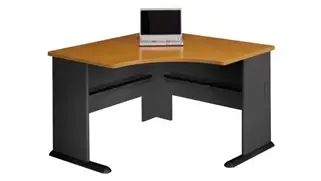
Modern corner office desks look very different from their traditional predecessors. Oversized, ornate furniture has largely given way to designs that prioritize ergonomics, efficiency, and adaptability. Clean lines, integrated storage, and effective cable management reflect the realities of technology-driven work.
Manufacturers and designers now approach corner desks as functional tools rather than symbols of rank. Height adjustability, modular components, and sustainable materials reflect broader trends in workplace design. These features allow corner desks to fit seamlessly into contemporary offices, executive suites, and home workspaces.
For professionals evaluating workspace solutions, thoughtfully designed corner office desks offer flexibility without sacrificing presence. They support digital workflows, encourage organization, and contribute to a professional atmosphere that feels current rather than dated.
Client Perception and Professional Credibility
In client-facing environments, physical space plays a subtle but powerful role in shaping trust. Legal practices, consulting firms, financial advisors, and healthcare administrators all operate in contexts where credibility and reassurance are essential. Clients may not consciously analyze office layouts, but they respond to cues that signal competence and structure.
A well-positioned executive desk in a corner frames interactions in a way that feels composed and deliberate. It establishes a clear professional setting without creating distance. Design consultants often note that clients feel more confident when meeting in spaces that appear orderly and purposeful. The desk becomes part of an unspoken narrative about expertise and reliability.
This effect is especially important during sensitive discussions involving strategy, finances, or long-term planning. The environment supports the conversation by reinforcing stability and professionalism.
Corner Desks in Hybrid and Home Offices
The shift toward hybrid work has increased the importance of intentional workspace design. When leaders split time between remote and in-office work, having a dedicated environment for focused tasks becomes even more valuable. Physical cues help signal transitions between collaboration and concentration.
Corner desks perform well in this context. In corporate offices, they provide a stable anchor within flexible layouts. In home offices, they create a clear boundary between professional responsibilities and personal life. This separation supports mental focus and reinforces a sense of role, even outside traditional office settings.
Workplace strategists increasingly recommend design choices that make leadership work visible and intentional. The corner desk contributes to this clarity by defining a space where strategic thinking happens.
Conclusion: A Subtle but Enduring Signal of Leadership
The continued relevance of the corner office desk is not rooted in hierarchy or nostalgia. It endures because it meets practical and psychological needs that remain central to leadership. By supporting focus, reinforcing authority, and shaping perception, it contributes to more effective work and clearer professional interactions.
As organizations rethink how offices function in a changing world, design choices that align the environment with responsibility become increasingly important. The corner desk offers a quiet form of structure, one that communicates purpose without excess and authority without intimidation.