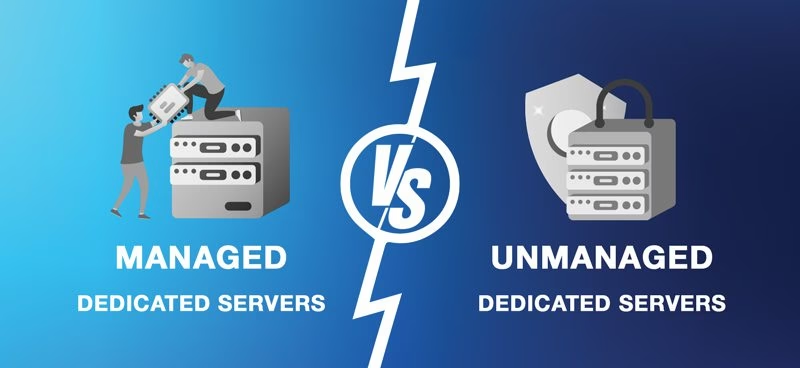
When you upgrade your business infrastructure, moving to a dedicated server is a massive milestone. It means you have outgrown shared hosting. But you need serious power. However, looking at the options can be confusing. You will see two distinct price tags for the same hardware. One is “Managed,” while the other one is “Unmanaged.”
The price difference can be huge. Sometimes hundreds of dollars per month. It’s tempting to grab the cheaper option. But before you jump in, figure out what you’re really signing up for. For users in Malaysia, a dedicated server from VPS Malaysia is the top pick. It delivers reliable performance and solid support.
The Simple Analogy: Hotel vs. Apartment
To grasp the difference without techy terms, consider housing.
Managed hosting is like a fancy hotel stay. You check in, and the staff handles it all. A lightbulb goes out? Call the desk—they fix it quick. Room gets messy? Housekeeping steps in. Sure, you pay more, but your role is simple: just relax and work. No fuss over upkeep, guards, or garbage.
Unmanaged hosting feels like renting a bare apartment. The landlord hands over the keys and space. That’s all. Leaky sink? You repair it yourself. Need chairs or beds? Shop around and buy. Door lock fails? You’re dialing the locksmith. It’s way cheaper than hotel life, but expect to roll up your sleeves a lot.
What is a Managed Dedicated Server?
In a managed environment, the hosting provider acts as your IT department. You are renting the hardware and the service of a team of experts.
What the Provider Handles
Paying for managed hosting buys you peace of mind. The provider takes care of most things.
- Initial Setup: They load the OS, add a control panel like cPanel, and set up key software.
- Security Patches: They push updates to the OS automatically, blocking hackers.
- Monitoring: Server dies at 3 AM Sunday? Their alerts catch it. Tech reboots before you stir.
- Backups: They run them on autopilot. Your data stays safe if trouble hits.
- Support Help: Email glitch or database snag? File a ticket. A real person sorts it out.
Who is This For?
Managed hosting suits business owners without tech skills. If your firm earns from selling shoes or writing pieces, or even giving legal tips, don’t waste time on Linux commands. Focus on what you do best, not debugging servers.
What is an Unmanaged Dedicated Server?
In an unmanaged setup, the hosting provider just covers the physical hardware and the internet link. Everything else falls on you.
The “Root Access” Responsibility
The provider sets up the basic OS. They hand you the root password—that’s admin access. Then they back off.
It means total freedom. But also full blame. You’re the ship’s captain now.
- Software Setup: Install the web server yourself, like Apache or Nginx. Add the database, say MySQL, and PHP too. All through the command line.
- Security Tweaks: Server starts wide open. You configure the firewall by hand. Shut risky ports. Build guards against brute-force hits.
- Updates: Log in every week to patch the kernel and apps. Forget it, get hacked? The provider won’t step in to save you.
- Fixing Issues: Site crashes? Dive into the error logs and solve it solo. No help desk waiting.
Who is This For?
Unmanaged hosting is for System Administrators and Developers. If you are comfortable using a command-line interface (CLI) and know how to fix a broken SQL database, this is a goldmine. You save a lot of money and get a server you can configure exactly how you want.
The Hidden “Cost” of Unmanaged Servers
Many people choose unmanaged servers because they look cheap. A server that costs $150/month managed might only cost $80/month unmanaged. You save $70 a month!
But is it really cheaper? You have to calculate the cost of your time.
Managing a server takes time. You gotta do daily checks and weekly upkeep.
- Daily Stuff: Look at disk space. Scan access logs for weird stuff. Check load averages too.
- Weekly Chores: Update software. Test those backups. Wipe out temp files.
Spend 5 hours a month on server stuff, with your time at $50 an hour? That $250 is gone. All of a sudden, that “pricey” managed server seems like a steal.
Security: The Critical Differentiator
Security is the biggest risk factor when choosing between the two.
In a Managed Server:
The provider has automated scripts that run 24/7. They block bad IP addresses, scan for malware, and update your firewall rules against new threats. If a major new virus is discovered, they patch the server immediately.
In an Unmanaged Server:
You are the security guard. You have to know when a new vulnerability is discovered.
For example, say a vulnerability pops up in the Linux kernel. You must read about it, understand it, and apply the patch yourself. If you’re on vacation or busy with other work, your server stays vulnerable. One mistake in your firewall settings could leave your database open to the entire world.
Performance and Control
Interestingly, unmanaged servers often offer better performance for specific tasks, provided you know what you are doing.
On a managed server, the provider installs standard software configurations designed to be safe for everyone. They might limit certain settings to ensure stability.
On an unmanaged server, you can tweak every single setting. You can strip out services you don’t need to save memory. You can tweak the database just for your unique app. For high-level developers, this granular control is essential. It squeezes every drop of speed out of the hardware.
Making the Decision: A Quick Checklist
If you are still unsure, read through this checklist.
Choose Managed if:
- You do not know how to use a Linux command line (SSH).
- You do not have a dedicated IT person on your payroll.
- You want 24/7 support that can fix software issues for you.
- You cannot afford downtime caused by your own configuration mistakes.
Choose Unmanaged if:
- You are a Linux expert or have a System Admin on your team.
- You need to install custom software that standard hosts don’t support.
- You want full “Root” access to modify the operating system kernel.
- You are running a massive cluster of servers and have your own automation tools.
Conclusion
Choosing between managed and unmanaged hosting isn’t mainly about the server itself. It’s more about the service you get.
Unmanaged hosting gives you a basic server. It’s powerful and cheaper, but not easy to handle if you’re not experienced. Managed hosting gives you everything set up and looked after. It’s safer and comes with support, but it costs more.
You should think honestly about your skills. If you’re not good with servers, saving money is not helpful. You might lose time and peace if something goes wrong and you can’t fix it.
And finally, whether you decide you need the support of a managed plan or the freedom of an unmanaged one, if you want to buy a dedicated server in Malaysia, VPS Malaysia is the best choice for your infrastructure needs.