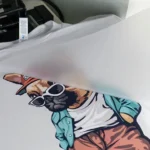
The apparel and custom merchandise industry continues to evolve as businesses adapt to faster production cycles and increased demand for personalized products. Traditional printing methods, once the backbone of garment manufacturing, are increasingly being supplemented — and in some cases replaced — by more flexible technologies. Among the most rapidly adopted solutions is Direct to Film (DTF) transfer printing.
DTF technology introduces a streamlined production model where designs are printed onto specialized film and later applied to garments using heat and pressure. By separating printing from garment application, businesses gain greater control over timing, quality management, and operational efficiency.
Responding to a More Dynamic Market
Modern apparel brands face a marketplace defined by short product cycles, influencer collaborations, and limited releases. Production systems that require extensive setup time or large minimum orders often struggle to keep up with this pace.
DTF transfer printing offers a more adaptable approach. It supports full-color designs with detailed graphics and works consistently across cotton, polyester, blended fabrics, and performance materials. This flexibility allows businesses to diversify product lines without changing production workflows.
For companies managing both online and offline sales channels, adaptability can significantly improve responsiveness to demand fluctuations.
Consistency and Quality Control
Quality consistency remains a major factor in maintaining brand credibility. Customers expect garments to retain their visual appeal even after repeated wear and washing.
DTF transfers are recognized for strong adhesion, vibrant color reproduction, and durability when applied correctly. Because transfers can be produced in advance and inspected before use, businesses can improve quality assurance processes and reduce the likelihood of defective output.
Many companies are partnering with providers specializing in DTF transfer printing to maintain consistent results without investing heavily in internal printing infrastructure.
Supporting Both Small and Large Production Runs
One of the advantages of DTF technology is its ability to support varying order volumes without significant workflow adjustments. Small-batch releases can be produced efficiently, while larger production runs benefit from the same standardized process.
This scalability allows brands to test new designs with lower risk and expand successful products without restructuring operations. For growing businesses, this balance between flexibility and efficiency is particularly valuable.
Leaner Operations and Reduced Overhead
Managing in-house printing equipment involves costs related to maintenance, consumables, and technical expertise. In contrast, outsourcing transfer production allows companies to focus on design, marketing, and distribution while relying on specialized partners for execution.
DTF transfer printing aligns well with lean business models that prioritize agility and cost control. By reducing operational complexity, companies can respond more quickly to market trends and allocate resources toward growth initiatives.
A Forward-Looking Manufacturing Strategy
As customization and rapid product iteration continue to define the apparel sector, manufacturing technologies must evolve accordingly. DTF transfer printing represents a shift toward adaptable, efficient workflows that match modern business demands.
Rather than eliminating traditional printing methods entirely, DTF complements them by providing a solution tailored to dynamic, design-driven operations. For businesses navigating competitive markets, adopting flexible production systems can offer a measurable strategic advantage.