You might be looking at your numbers and feeling a quiet knot in your stomach. Revenue is coming in, bills are going out, tax deadlines appear out of nowhere, and somewhere in the middle you are trying to make smart choices for the future. You work hard, yet your financial strategy might feel more like guesswork than a plan—especially when it comes to tax planning Dallas TX.
- Why does money feel so stressful, and where does an accountant fit in?
- What specific problems can an accountant help you untangle?
- Is it better to manage your own finances or hire an accountant?
- What can you do right now to strengthen your financial strategy?
- Closing thoughts when you are tired of worrying about money
It often starts small. You file your own taxes once or twice, you keep receipts in a box, you tell yourself you will “get organized” when things slow down. Then you realize you have no clear picture of cash flow, you are not sure what you can safely pay yourself, and you worry you might be missing deductions or even breaking rules without knowing it.
If that sounds familiar, you are not alone. Many people quietly carry this stress, and it can bleed into family life, sleep, and confidence. The good news is that this is exactly where a trusted accountant can step in and strengthen your financial strategy so it stops feeling like chaos and starts feeling like a plan you can explain in plain words.
In simple terms, a strong accountant does three things. They help you understand where you are, they help you decide where you want to go financially, and they build a practical path between the two. That is how accounting support for better financial planning becomes less about spreadsheets and more about peace of mind.
Why does money feel so stressful, and where does an accountant fit in?
Money stress usually comes from uncertainty. You might be wondering if you are paying too much tax, or not enough. You may worry that one letter from the tax authority could unravel everything you have built. You might also feel guilty that you are “bad with numbers,” even though what you really lack is time and guidance, not ability.
Here is the tension. You know your work. You know your customers, your craft, your team. Yet you are expected to also understand tax codes, financial ratios, and recordkeeping rules that change often. That gap between what you know and what you are expected to know can feel exhausting.
So where does that leave you? You can try to learn everything yourself, which eats into precious time and energy. Or you can bring in a tax accountant who lives and breathes this world and can translate complexity into clear next steps.
An accountant does far more than fill out tax forms. A seasoned tax accountant looks at the whole rhythm of your financial life. They track income and expenses, help you set aside tax money through the year, and show you which habits are quietly hurting your bottom line. They can also point you to reliable resources, like the IRS small business guidance, so you understand the rules, not just follow them blindly.
What specific problems can an accountant help you untangle?
Think about these common situations.
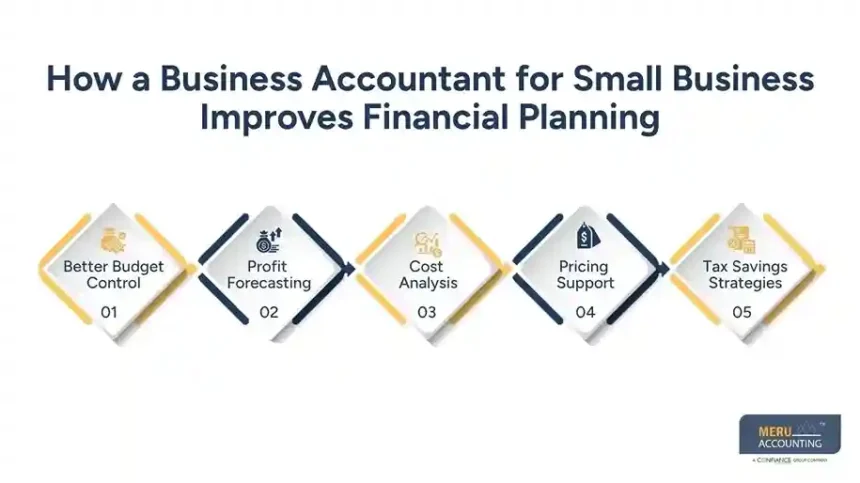
You have steady sales, but your bank balance always feels tight. An accountant can map your cash flow, show you when money typically comes in and goes out, and help you build a buffer so you stop living from invoice to invoice.
You are not sure which expenses are truly deductible. Instead of guessing and hoping, your accountant can build a simple chart of common deductions that fit your work, then help you create a clean recordkeeping system that protects you during an audit and lowers your taxable income in a legal way.
You want to grow, but you do not know if you can afford to hire or invest. A strong accountant connects your current numbers with your future goals. They can build scenarios. For example, if you hire one part time employee, what happens to your profit, your own pay, and your tax bill. Because of this, decisions become less emotional and more grounded in facts.
Even the basics can feel confusing. How long should you keep records. What forms do you really need. What happens if you get a notice. A good accountant guides you through these questions and may refer you to clear sources like the Taxpayer Advocate’s tips on filing and recordkeeping so you can see the expectations in writing.
When you have this kind of partner, your financial strategy stops being a pile of worries and becomes a set of planned actions. That is how a simple “tax service” grows into a long term financial advisory relationship.
Is it better to manage your own finances or hire an accountant?
You might be wondering if you should keep doing things yourself to save money, or if working with a tax accountant is worth the cost. A clear comparison can help.
| Approach | Short term cost | Time & stress | Risk of errors | Impact on long term strategy |
|---|---|---|---|---|
| DIY bookkeeping and tax filing | Low cash cost. You pay for software and your own time. | High. Even with software, you must learn rules, track changes, and handle notices yourself. | Moderate to high. Missed deductions, late filings, or incorrect forms are common. | Limited. You react year by year, with little planning for growth, retirement, or cash flow. |
| Working with a professional accountant | Moderate cash cost. You pay fees, but save time and reduce surprise bills. | Lower. You still review and decide, but the technical work is shared or handled. | Lower. A trained eye catches issues early and keeps you aligned with rules. | Stronger. You build a repeatable process, with forecasts, budgets, and tax planning. |
Independent guidance also exists for managing finances, such as the U.S. Small Business Administration’s finance guide. An accountant can walk through resources like this with you and translate them into a plan that fits your size, your goals, and your risk comfort.
For many people, the question is not “Can I do this myself” but “What is the cost of continuing to carry this alone.” When you see the tradeoffs clearly, the value of professional accounting support becomes easier to measure.
What can you do right now to strengthen your financial strategy?
You do not need to overhaul everything overnight. A few focused steps can start shifting you from worry to clarity.
1. Get your numbers in one place
Gather your recent bank statements, tax returns, and any bookkeeping records. Put them in a single folder, physical or digital. This simple act reduces anxiety, because chaos shrinks once it is contained. When you are ready to talk with an accountant, this will also shorten the time it takes for them to understand your situation.
2. Write down your top three money questions
Instead of carrying a vague sense of “I am behind,” turn your concerns into clear questions. For example. Am I paying more tax than I should. How much can I safely set aside for myself each month. What do I need to change so I am ready for an audit. These questions become the agenda for a first meeting and help a tax accountant focus on what matters most to you.
3. Have one honest conversation with a professional
Reach out to a qualified accountant or tax accountant service and ask for a consultation. You are not committing to a lifetime relationship. You are gathering information. Share your numbers, your questions, and your fears openly. A good professional will respond with clarity, not judgment, and will outline what support could look like over the next year.
Closing thoughts when you are tired of worrying about money
You do not need to become a finance expert to have a strong financial strategy. You only need enough understanding to make good decisions and the courage to ask for help where your expertise ends. That is where an accountant becomes a true partner, not just at tax time, but throughout the year as your life and business change.
Money will always matter. It does not have to always hurt. With the right support, your numbers can start to tell a story of stability, growth, and choice, instead of stress and guesswork.
If you are feeling that quiet knot in your stomach, treat it as a signal, not a verdict. Gather your records, name your questions, and take one step toward working with a tax accountant who can help you build a strategy you actually trust.