A casino pulls people in like a magnet. It is rarely empty and almost never suffers from a shortage of visitors. Yet while everyone walks through the same doors, the reasons behind their visit are very different. For some, gambling is a thrilling form of risk; for others, it is a way to unwind and enjoy the process without worrying too much about wins or losses.
Many players arrive simply to distract themselves, relax after a long day, or relieve built-up tension. The bright lights, constant motion and sounds of the gaming floor create the illusion of endless energy. However, this very atmosphere can also amplify fatigue rather than erase it.
There is also a very different category of visitors: those focused on winning money. They chase patterns, calculate probabilities, track cards in Blackjack or analyse the wheel in roulette. Their approach is methodical and intense, often involving long stretches of mental concentration. As the hours pass, this intensity quietly transforms into stress, irritability and – most importantly – fatigue.
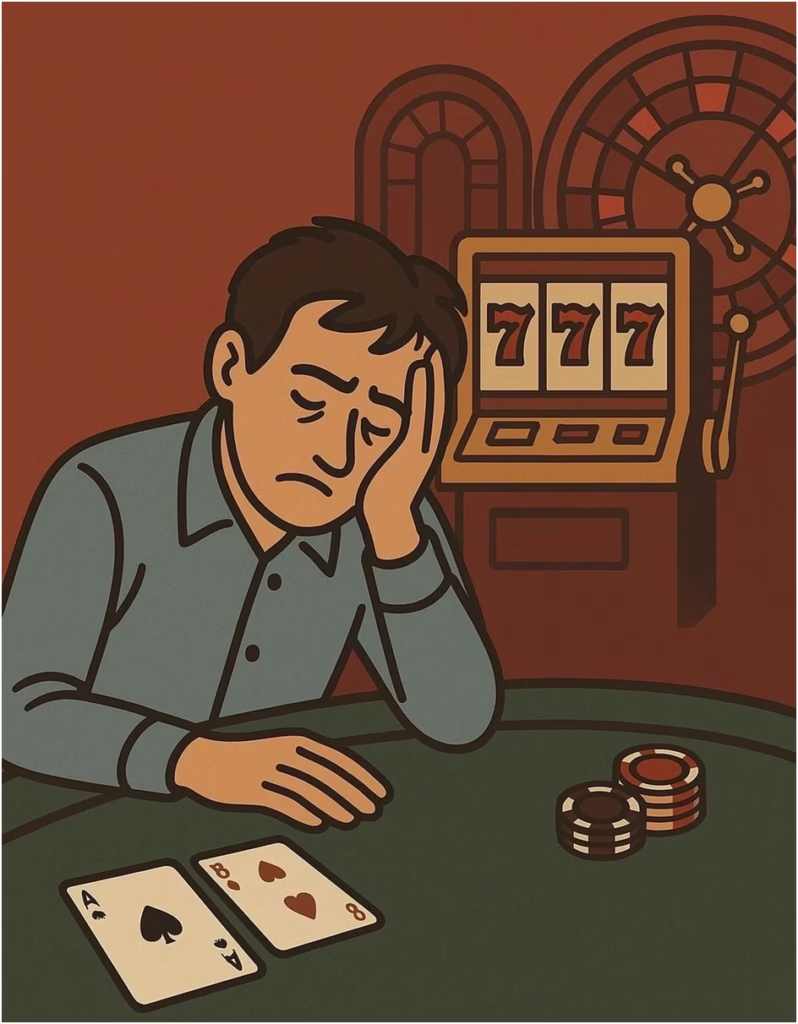
It may seem that the casino is the perfect place to forget tiredness. Still, for many players, the opposite happens. Mental exhaustion begins to accumulate after several hours of emotional swings, decision-making and sensory overload. A tired player behaves differently: their reactions slow down, their confidence fluctuates and the quality of their decisions drops noticeably.
During high-intensity play, fatigue is not just unpleasant—it is dangerous. At the start, a player is focused, logical and disciplined. But the more tired they become, the easier it is to make careless moves, miscalculate bets or overlook crucial details. In this sense, fatigue should be viewed as a full-fledged risk factor in gambling. When you feel exhausted, the smartest decision is not to push forward but to step away from the gaming floor entirely.
Consider the example of Blackjack, a game where success depends on calculated moves and consistent mental focus. As gambling specialists have repeatedly demonstrated, maintaining profit requires constant card tracking. A well-rested player handles these calculations easily. Yet as fatigue sets in, the brain becomes less reliable, patterns blur, and even an experienced gambler may begin making elementary errors. Without timely self-control, a winning session can rapidly turn into a loss.
To maintain clarity and increase your chances of winning, players who rely on strategy rather than luck should follow a few simple principles:
- sleep well before visiting the casino;
- approach the game with a calm, positive mindset;
- take regular breaks to reset your concentration;
- set a time limit for continuous gambling sessions;
- stop immediately when you feel your attention drifting.
These are small habits, yet they directly influence the quality of your decisions at the table. As Benjamin Franklin famously said,
“Fatigue is the best pillow.”
His point remains relevant: tiredness always catches up with you, and when it does, even the sharpest mind becomes unreliable.
If your goal is not to win but simply to relax, chat with new people and have fun, then there is no need to focus on probability tables or complex calculations. Enjoy the experience of the casino itself – the sounds, the atmosphere, the lighthearted nature of the games. In that case, fatigue becomes less of an enemy and more of a reminder to take your time and savour the moment.
Whether you’re chasing big wins or simply enjoying the night, remember that your state of mind plays a decisive role. A refreshed, rested player has the highest chance of leaving the casino satisfied – with their wallet intact and their mood even better.