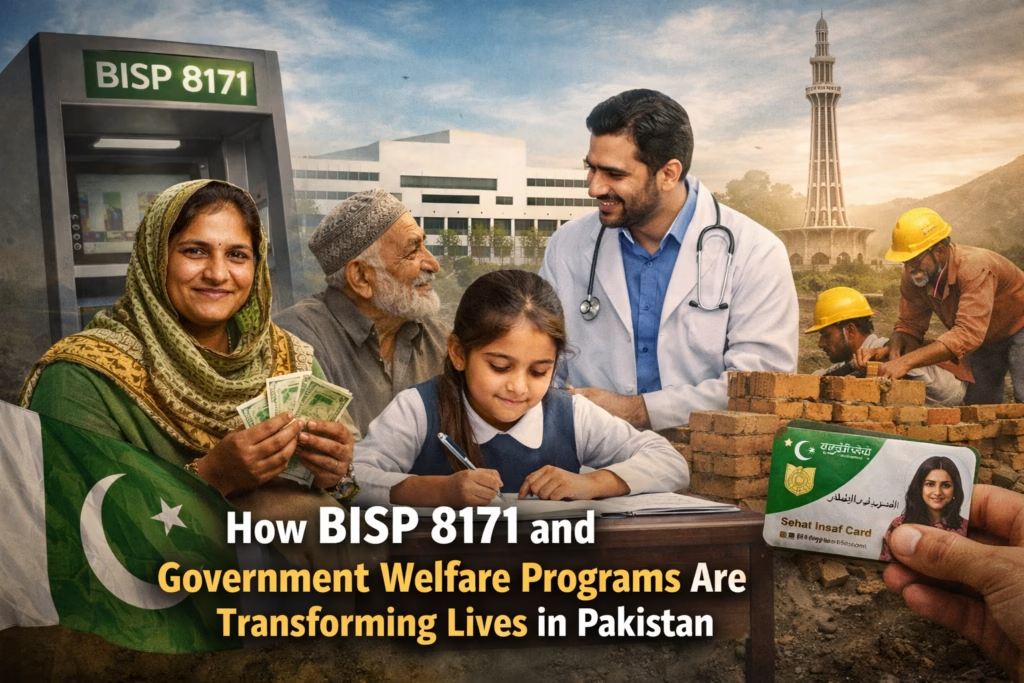
In recent years, BISP 8171, the Benazir Income Support Program, has played a significant role in transforming the lives of millions of low-income families across Pakistan. As a comprehensive social welfare initiative, BISP aims to alleviate poverty, provide financial support, and empower the disadvantaged sectors of society. But how effective has it been in creating real, tangible change? And what other programs are contributing to similar goals?
In this article, we explore how government welfare programs like BISP are reshaping lives in Pakistan, enhancing socio-economic conditions, and offering new opportunities to those who need it most. We’ll also touch on the BISP 8171 payment status check 2026 and how it has evolved to better serve the people of Pakistan.
The Need for Welfare Programs in Pakistan
Pakistan, like many other developing countries, faces significant challenges related to poverty, income inequality, and limited access to basic resources. According to recent reports, a large segment of the population lives below the poverty line, struggling to meet their basic needs such as food, healthcare, and education.
This socio-economic disparity has made it imperative for the government to take proactive steps to provide financial assistance to vulnerable families. Programs like BISP have become a lifeline for millions of people, offering crucial financial support and empowering individuals to break the cycle of poverty.
The Impact of BISP on Low-Income Families
Launched in 2008, the Benazir Income Support Program has provided direct financial aid to households that fall within the poorest segments of society. The initiative is named after Benazir Bhutto, the former Prime Minister of Pakistan, and was designed to improve the socio-economic status of women, particularly those from rural areas, by providing monthly financial assistance.
Since its inception, BISP has reached millions of families, helping them meet their daily needs and make significant improvements in their living standards. The funds provided by BISP have enabled recipients to pay for education, healthcare, and food, directly impacting their quality of life. In some cases, the program has allowed families to start small businesses or invest in skills training, further lifting them out of poverty.
One of the key features of BISP is its emphasis on empowering women. By targeting female heads of households, the program ensures that financial support is directly channeled to women, giving them the autonomy to make decisions that improve the lives of their families.
BISP 8171 and the Modernization of Payment Systems
With technological advancements, BISP 8171 has continuously improved its service delivery. The introduction of the BISP 8171 payment status check 2026 feature allows beneficiaries to track their payments online, ensuring transparency and ease of access. This development is part of the government’s commitment to using technology to enhance the efficiency and accessibility of social welfare programs.
The BISP 8171 payment status check 2026 system has made it easier for beneficiaries to check their eligibility and track the progress of their payments. By reducing manual processes and incorporating digital solutions, the program has become more streamlined, reducing fraud and ensuring that aid reaches the intended recipients.
Other Government Initiatives Supporting Welfare
While BISP is one of the most prominent welfare programs in Pakistan, it is not the only one. The government has launched several initiatives aimed at improving the welfare of the underprivileged.
- Ehsaas Program: The Ehsaas Program is another major initiative that aims to provide financial assistance to the poor. It targets women, low-income families, and marginalized communities to ensure they have access to necessary resources. Ehsaas offers cash grants, food assistance, and educational support, making it one of the most comprehensive welfare programs in Pakistan.
- Kamyaab Jawan Program: This initiative focuses on empowering youth by providing them with loans and skill development opportunities. It aims to reduce unemployment and create economic opportunities for young people in Pakistan, especially in rural areas.
- Sehat Insaf Card: The Sehat Insaf Card provides free healthcare services to eligible families, ensuring that individuals do not have to choose between food and medical care. This program has played a crucial role in making healthcare accessible to the masses.
The Challenges and Future of Welfare Programs in Pakistan
Despite their success, welfare programs like BISP face several challenges. One of the most significant hurdles is ensuring that the benefits reach the intended recipients. Issues such as fraud, mismanagement, and lack of awareness can hinder the program’s effectiveness.
Moreover, with the growing population and economic fluctuations, there is an ongoing need to expand and adapt these programs to meet the evolving needs of the population. This includes increasing the financial aid provided, expanding eligibility criteria, and improving the payment delivery systems.
The future of welfare programs in Pakistan lies in greater integration of technology. Digital platforms, mobile apps, and online payment systems have the potential to revolutionize the way social welfare is delivered, making it faster, more efficient, and more transparent.
Conclusion
Government welfare programs like BISP 8171 are essential in addressing poverty and social inequality in Pakistan. By providing financial aid, empowering women, and improving access to education and healthcare, these programs are playing a crucial role in transforming the lives of millions. While challenges remain, ongoing reforms and technological advancements are paving the way for a brighter future for Pakistan’s most vulnerable populations.
As Pakistan continues to grow and modernize, welfare programs like BISP will remain at the heart of the nation’s efforts to create a more just and equitable society. By supporting and enhancing these programs, the government can ensure that the benefits of progress reach those who need it most.
FAQs
- What is BISP 8171 and how does it help people?
- BISP 8171 is a government initiative designed to provide financial aid to low-income families in Pakistan. It helps improve the quality of life for recipients by providing direct cash transfers, especially focusing on women.
- BISP 8171 is a government initiative designed to provide financial aid to low-income families in Pakistan. It helps improve the quality of life for recipients by providing direct cash transfers, especially focusing on women.
- How can I check my BISP payment status in 2026?
- You can check your BISP 8171 payment status check 2026 online through the official BISP website or mobile app. This feature allows beneficiaries to track their payment status, ensuring transparency and ease of access.
- You can check your BISP 8171 payment status check 2026 online through the official BISP website or mobile app. This feature allows beneficiaries to track their payment status, ensuring transparency and ease of access.
- What other programs are available to help low-income families in Pakistan?
- In addition to BISP, programs like the Ehsaas Program, Kamyaab Jawan Program, and Sehat Insaf Card offer financial, educational, and healthcare support to eligible individuals and families in Pakistan.
- In addition to BISP, programs like the Ehsaas Program, Kamyaab Jawan Program, and Sehat Insaf Card offer financial, educational, and healthcare support to eligible individuals and families in Pakistan.
- Who is eligible for the Benazir Income Support Program?
- BISP is targeted towards low-income families in Pakistan. The program prioritizes female heads of households and marginalized communities, ensuring that financial support is directed toward those who need it most.
- BISP is targeted towards low-income families in Pakistan. The program prioritizes female heads of households and marginalized communities, ensuring that financial support is directed toward those who need it most.
- What are the challenges faced by welfare programs like BISP?
- Some challenges include issues of fraud, mismanagement, and limited awareness among potential beneficiaries. However, the program is continuously evolving to address these issues through technology and improved service delivery.