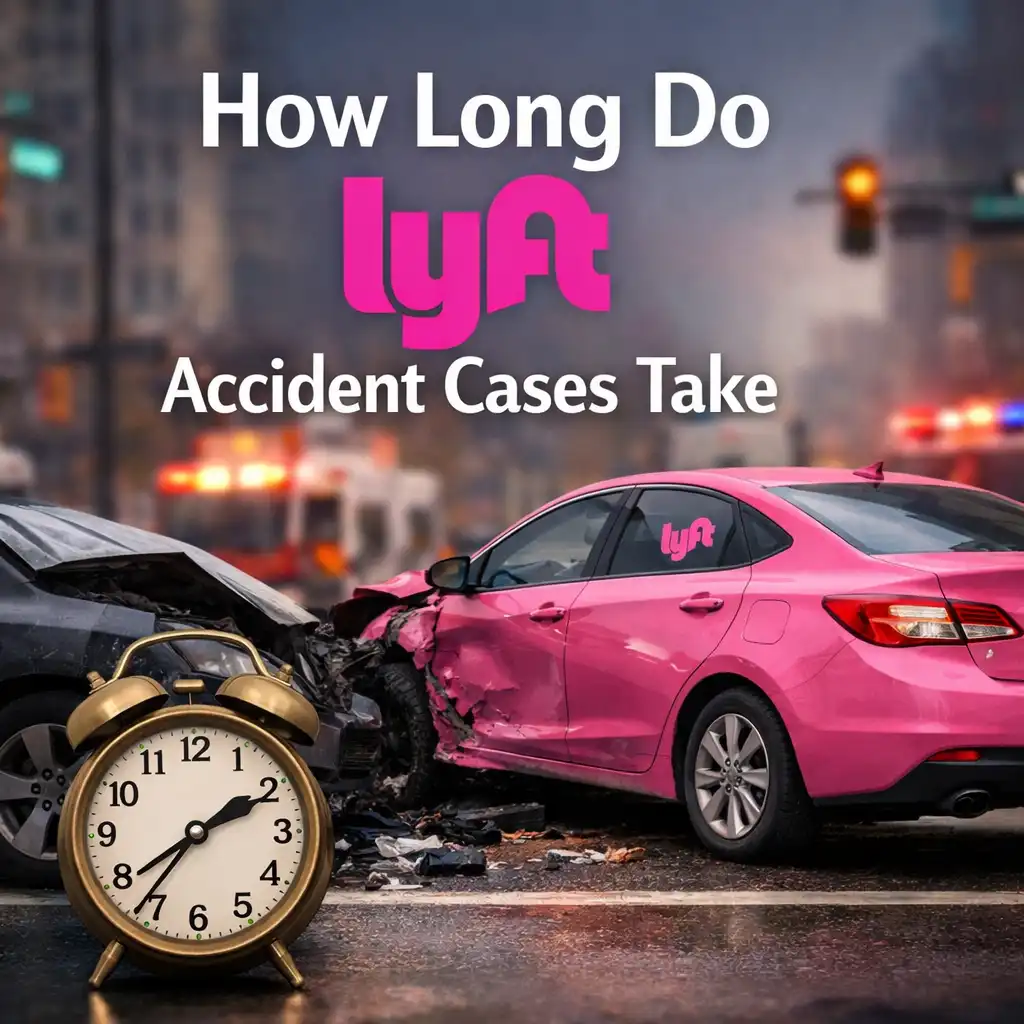
A Lyft accident case does not resolve overnight. The legal process can take anywhere from months to years. The timeline depends on your liability disputes, injury severity, insurance investigations and negotiation progress. Lyft’s insurance carrier must acknowledge a claim within forty days. But that requirement is only the start of the process. Settlement discussions can almost always extend well beyond that initial response window. When liability or damages are disputed – the case timeline can stretch much further.
In cities like Delray Beach, Lyft vehicles are part of daily traffic patterns. Rideshare drivers traverse through Atlantic Avenue, residential streets and beach access roads throughout the day. Tourists rely on Lyft for short trips. Local residents use it mostly to avoid parking congestion. This constant activity can increase accident exposure and will add complexity to claims that involve rideshare companies.
Understanding how long Lyft accident cases normally take can help you set realistic expectations. It will also help you avoid rushed decisions that may affect long-term compensation.
What Determines the Length of a Lyft Accident Case
Lyft accident cases do not follow a timely schedule. Several factors can influence how long the process takes from start to finish. Some cases can be solved quickly, while others may require months of litigation.
Key factors that affect the timeline include:
- Whether the fault is clearly established
- The severity and duration of medical treatment
- The number of vehicles or parties involved
- Insurance company response behavior
- Availability of evidence such as app data or video footage
Each of these factors can add weeks or months to your overall process.
Typical Timeline for Lyft Accident Cases
Most Lyft accident cases fall into three general timeline ranges. These ranges help explain what usually happens in real situations.
Short-term cases
These cases may resolve within three to five months. Liability is normally clear when injuries are minor and medical treatment is quick. Insurance negotiations tend to move faster because disputes are limited.
Mid-range cases
These cases often take six to twelve months. Medical treatment continues over time. Insurance adjusters review records carefully. Negotiations involve multiple rounds of discussion before settlement.
Long-term cases
These cases may take one to three years or longer. Fault is disputed. Injuries are serious. Multiple parties may be involved. Lawsuits often become necessary to move the case forward.
Every case follows its own path. Small issues often cause significant delays.
Why Lyft Accident Cases Take Longer Than Standard Car Accidents
Lyft accident claims involve more layers than typical car accidents. Coverage depends on the driver’s status within the Lyft app. Insurance responsibility changes based on that status.
A Lyft driver may be offline at the time of the crash. The driver may be waiting for a ride request. They may be actively transporting a passenger. Each scenario triggers different insurance coverage rules. Verifying the driver’s app status requires access to Lyft records and insurer review.
Higher insurance limits also slow the process. Lyft policies often involve larger coverage amounts. Insurance carriers investigate these claims more aggressively. That additional scrutiny increases case length.
The First Steps After a Lyft Accident
The case timeline begins when the accident is reported to Lyft. This is usually done through the Lyft application or customer support system. Lyft then assigns the claim to its insurance carrier.
The insurance carrier must acknowledge the claim within forty days. This step does not indicate acceptance or denial. It simply confirms that the claim has been received.
During this early stage, documentation matters. Police reports establish initial facts. Medical records show injury treatment. Photos and videos preserve scene details. Missing documents often cause delays that are difficult to correct later.
Investigation and Evidence Review Phase
Lyft accident investigations are detailed and time-consuming. Insurance adjusters review app data to confirm the driver’s activity status. GPS records show vehicle speed and location. Time stamps help establish the sequence of events.
Witness statements are evaluated for consistency. Medical records are reviewed line by line. Gaps in treatment often raise questions. Prior injuries may become part of the investigation.
This phase can take several months. Limited communication during this time is common. A lack of updates does not mean the case has stalled.
How Medical Treatment Affects the Case Timeline
Medical treatment plays a major role in how long a Lyft accident case takes. Settlement discussions usually wait until treatment stabilizes. Insurance companies want clarity on total medical costs.
Ending treatment too early often reduces compensation. Ongoing treatment extends the timeline but protects future recovery needs. Serious injuries require careful documentation and time.
Doctors may need months to assess long-term effects. Prognosis reports often influence settlement value. Rushing this phase can create problems later in the case.
Settlement Negotiations and Common Delays
Once medical treatment stabilizes, settlement negotiations begin. Initial settlement offers are often low. Insurance carriers test patience during this stage.
Adjusters may request additional records. Repeated documentation requests are common. Counteroffers take time to exchange. Each negotiation round adds weeks or months.
A Lyft accident lawyer is often involved at this stage to challenge delays and keep discussions moving. Legal guidance helps prevent unnecessary stalling tactics. Once an agreement is reached, payment typically follows within thirty days.
When a Lawsuit Becomes Necessary
Some Lyft accident cases do not resolve through negotiation alone. Filing a lawsuit is the next logical step. Litigation does not automatically lead to a trial.
Many cases settle during litigation. Court deadlines create structure. Discovery requires both sides to share evidence.
Litigation can add months to your timeline. Depositions must be scheduled. Motions may delay your progress. Court calendars can further affect your pacing.
If a trial becomes necessary, the case timeline increases significantly. Trials may extend the process by years. Appeals can add further delays.
How Multiple Parties Affect Case Duration
Multi-party Lyft accidents take longer to resolve. Several insurance companies may be involved. Each insurer attempts to limit responsibility.
Disputes arise over driver conduct. App status may be contested. Injury causes may be questioned repeatedly.
Blame-shifting can cause significant delays. These cases normally move more slowly than single-vehicle accidents.
Why Lyft Accident Cases in Delray Beach Can Take Longer
Local conditions affect timelines. Delray Beach experiences heavy rideshare use near nightlife areas and beach zones. Tourist drivers increase fault disputes.
Surveillance footage from nearby businesses may exist. This footage can disappear fast. Delays in evidence collection affect negotiations.
Pedestrian and cyclist involvement can add more complexity. Insurance carriers challenge liability more aggressively in these situations.
What Can Help Speed Up a Lyft Accident Case
Certain actions reduce unnecessary delays. Prompt medical care creates clear records. Consistent treatment avoids documentation gaps. Early photos preserve evidence.
Clear liability shortens negotiations. Independent witnesses strengthen claims. Traffic camera footage helps confirm events.
Early legal guidance prevents mistakes that often slow cases down.
What Commonly Slows Lyft Accident Cases
A disputed fault adds months to the process. Multiple vehicles complicate insurance coverage. Inconsistent medical treatment raises questions.
Insurance carriers may delay intentionally. Repeated document requests often signal stalling behavior. Early settlement discussions before treatment ends reduce leverage.
Understanding these delays can help manage your expectations.
What Happens If the Case Goes to Trial
Trials require significant time. Court schedules control pacing. Evidence presentation takes preparation.
Both sides present witness testimony and expert opinions. Insurance carriers challenge damage calculations. Jury decisions may resolve the case.
Appeals can extend timelines even further.
Why Patience Matters in Lyft Accident Cases
Waiting creates stress during recovery. Bills arrive before settlement payments. Insurance silence increases frustration.
Understanding the process reduces uncertainty. Delays often reflect strategy rather than neglect. Rushing resolution often leads to lower compensation.
Time allows evidence to strengthen. Medical clarity improves settlement accuracy.
Final Thoughts
Lyft accident cases rarely resolve quickly. Some cases settle within months. Others take several years. The timeline depends on liability disputes, injury severity, insurance behavior and evidence availability.
In Delray Beach, rideshare traffic can add more challenges. Tourist drivers, busy corridors, and app-based evidence affect timing.
Understanding the process will protect your long-term interests. Speed matters – but accuracy matters more. A well-handled case can take time but it protects your future stability.